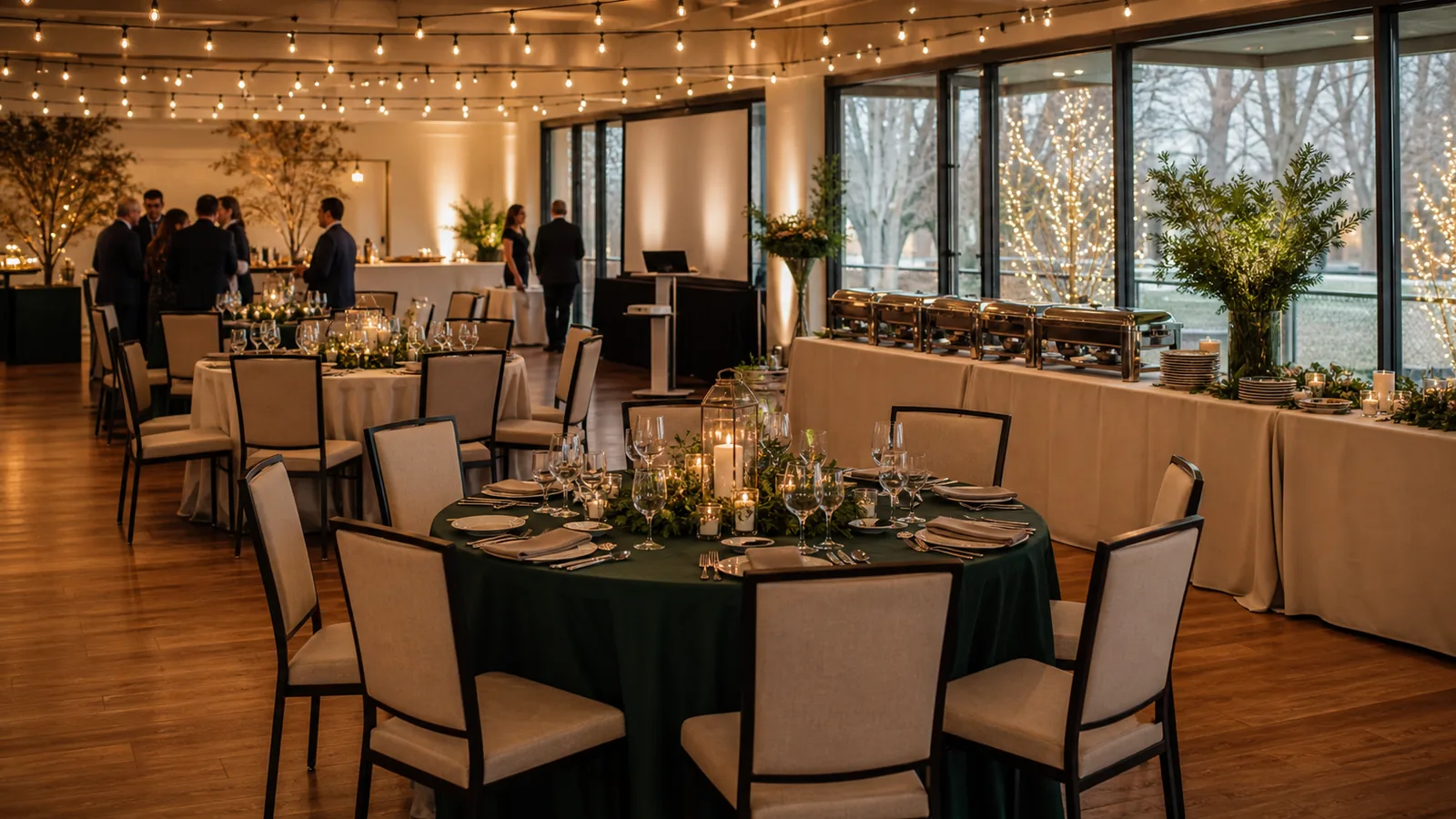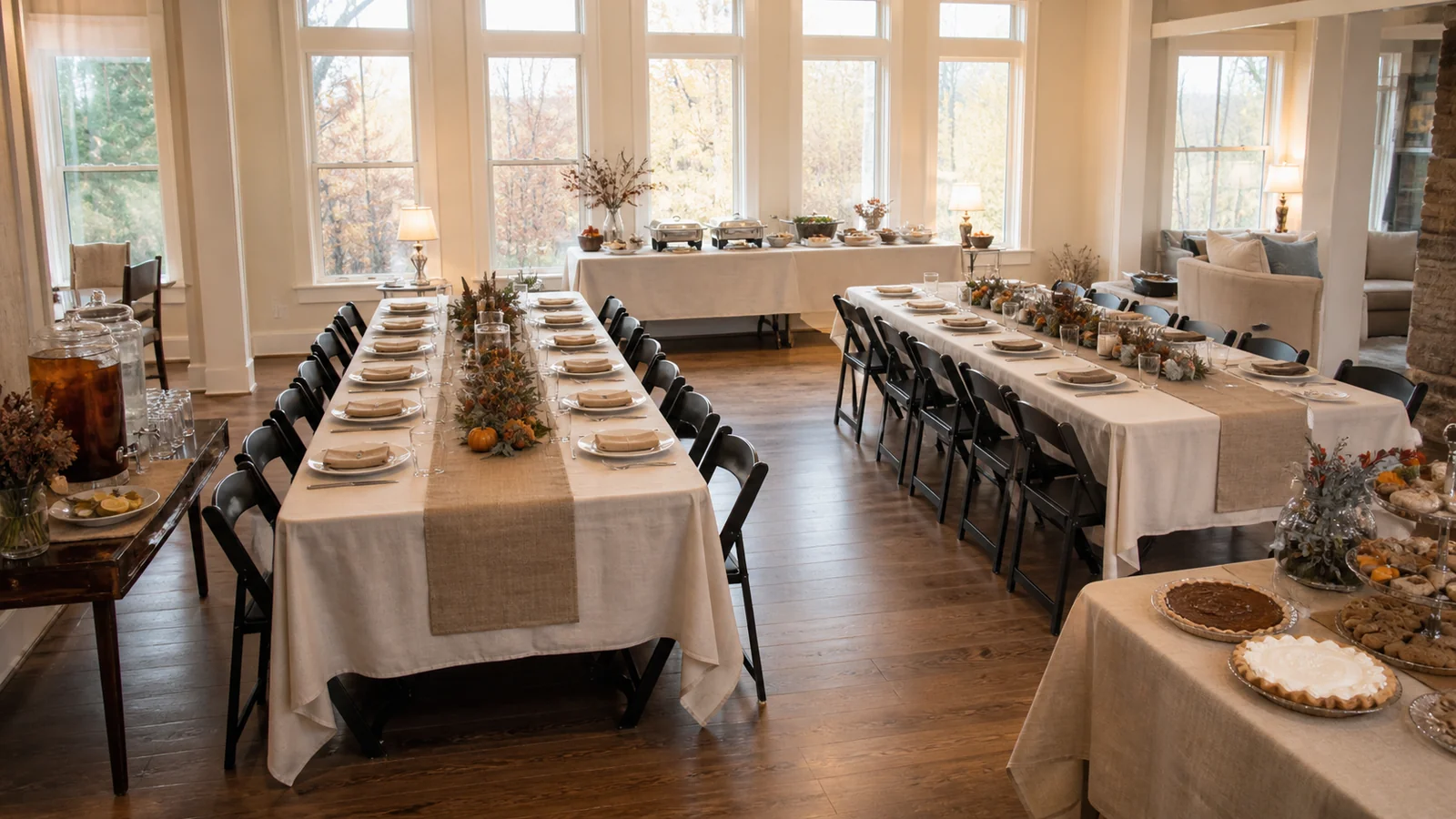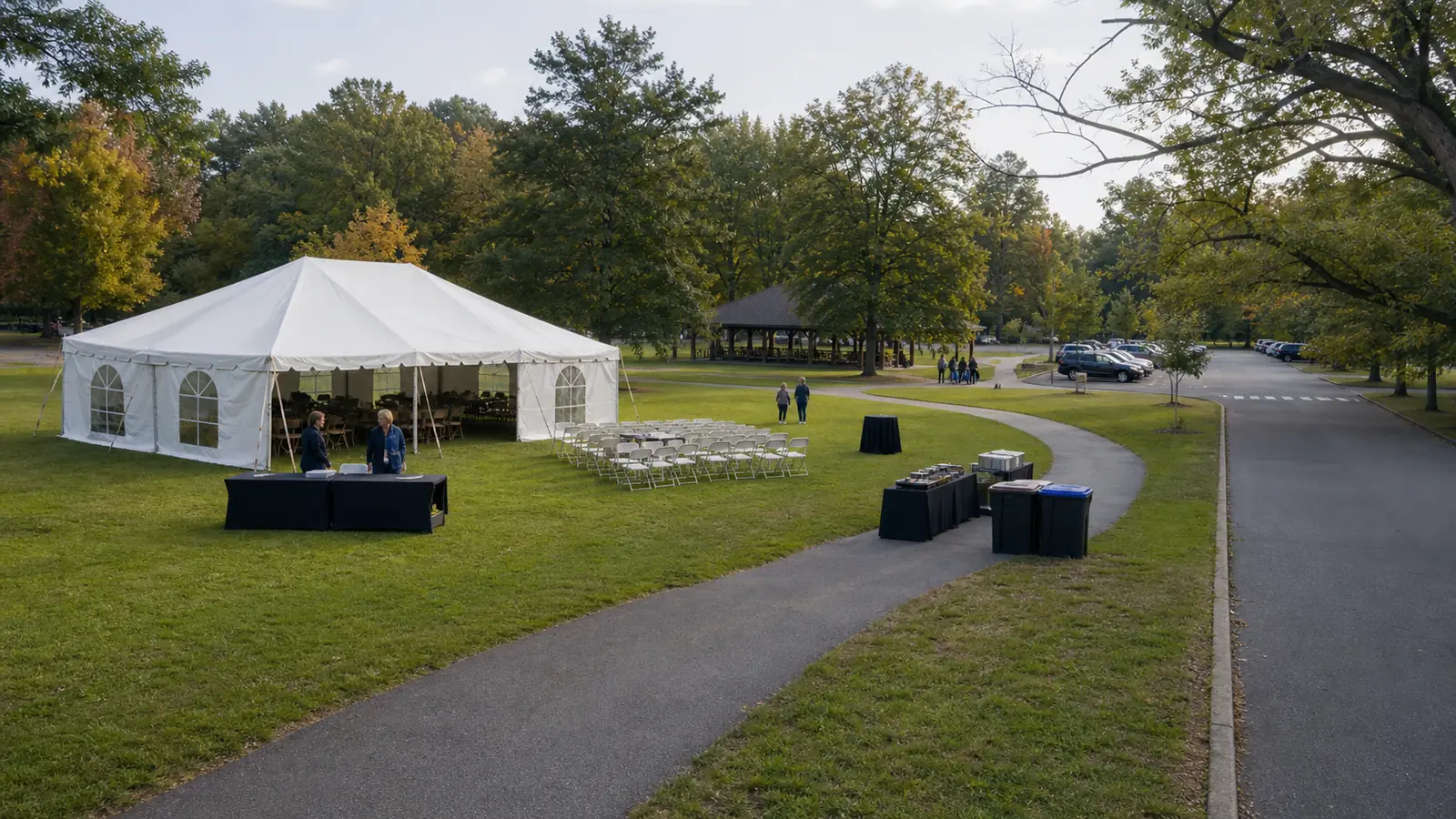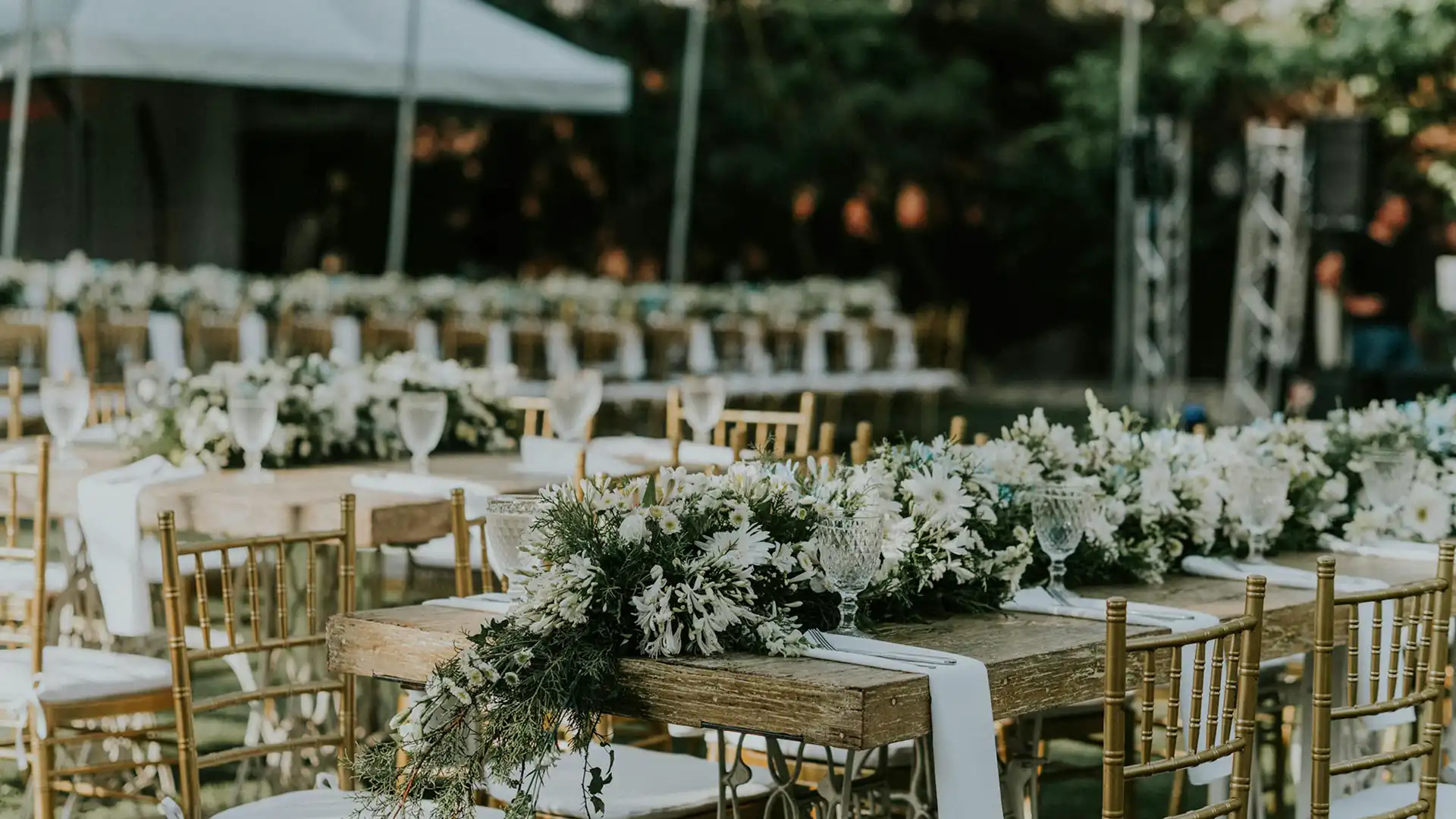

You've got a guest list. You've got a date. You've got a backyard.
Now comes the question that trips up almost every first-time party host: how many tables and chairs do you actually need?
The answer seems simple until you start thinking about it. Where does the food go? How much space do people need to move around? What happens if it rains?
Most people guess. They eyeball their yard, estimate a number, and hope for the best.
That approach works until your guests are eating standing up, bumping into each other near the drink station, or clustering in awkward corners because the layout doesn't flow.
Here's what actually works.
Start With Your Guest Count, Not Your Yard Size
Your yard might fit 100 people standing. That doesn't mean 100 people can sit comfortably, eat a meal, and move around without feeling packed in.
Work backward from attendance:
- Round tables (60-inch diameter): Seat 8 guests comfortably, 10 if you're pushing it
- Rectangular tables (6-foot): Seat 6 guests, 8 if you add the ends
- Rectangular tables (8-foot): Seat 8 guests, 10 with end seating
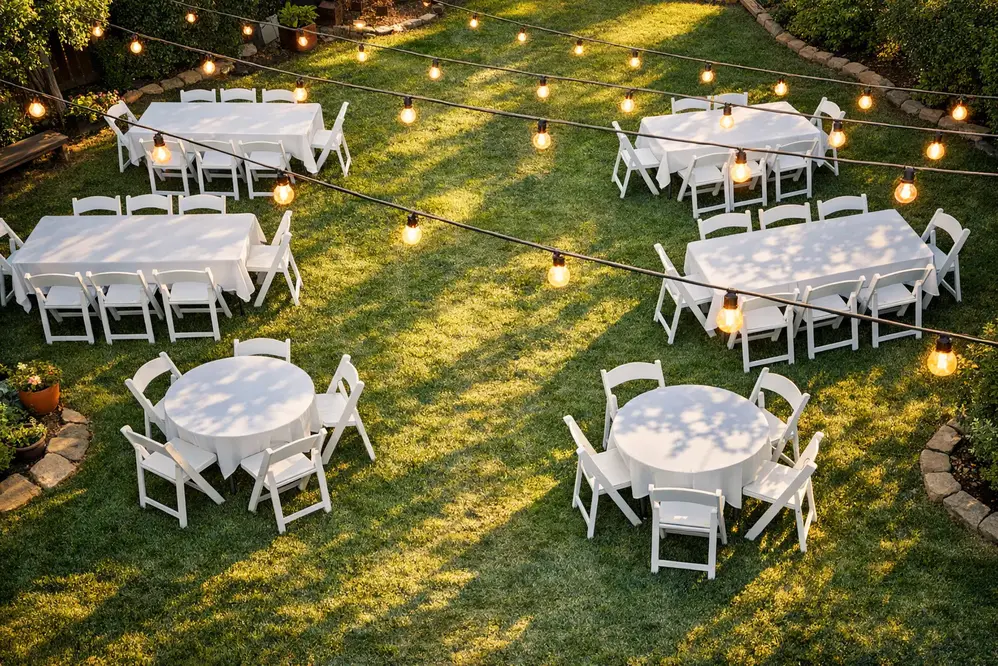
For a party of 50 guests where everyone sits for a meal, you need either seven 60-inch rounds or nine 6-foot rectangles. That's the furniture. Now you need the space to put it.
The Space Math Nobody Tells You
Tables don't just need room to exist. They need room to breathe.
Each round table with chairs requires roughly 12 feet of diameter when you account for seating and movement behind chairs. Rectangular tables need about 10 feet of width for the same reason.
Then add your circulation paths. People need to walk between table groupings without squeezing past seated guests. Plan for 4-foot pathways minimum between clusters.
A practical formula:
- 50 guests with seated dinner: 1,200-1,500 square feet minimum
- 50 guests with cocktail-style (standing, scattered seating): 800-1,000 square feet
- 50 guests with buffet (some seated, some standing): 1,000-1,200 square feet
Measure your yard before you commit to a setup style. A tape measure takes five minutes. Realizing mid-party that you miscalculated takes all night.
Layout Principles That Actually Matter
Furniture placement affects how people experience your party more than decorations do.
Create zones, not rows.
Rows feel institutional. Clustering tables in groups of two or three creates conversation pockets and makes the space feel intentional rather than like a cafeteria.
Anchor your food and drink stations.
Place them against a boundary (fence, house wall, hedge) rather than in the middle of your yard. This prevents traffic bottlenecks where people approach from all directions and creates a natural flow: guests move toward the station, get what they need, then move away.
Put the bar far from the food.
Sounds counterintuitive. Here's why it works: separating drink and food stations distributes traffic across your space. When both are in the same spot, you get a crowd in one area and empty space elsewhere.
Face seating toward activity.
If you have a stage for toasts, a screen for a slideshow, or a dance floor, angle your tables so guests can see without craning their necks. Sounds obvious. Gets overlooked constantly.
The Chair Question
Not all chairs serve the same purpose.
Folding chairs work for casual gatherings, backyard barbecues, and kids' parties. They're functional and affordable.
Chiavari chairs (the ones you see at weddings) signal a more formal event. They photograph well and feel more substantial.
Mix and match strategically. Chiavari at the head table, folding chairs elsewhere. No one notices the difference during the party, but your photos look better and your budget stays reasonable.
One rule: every guest needs a place to sit, even at cocktail-style events. Plan for 60-70% seating capacity at minimum. People get tired. Older relatives need to rest. Provide options.
What Most Hosts Forget
Serving tables. Your food needs a home. Your cake needs a home. Your gifts (if applicable) need a home. These aren't guest seating tables—they're utility surfaces that often get overlooked until setup day.
A clear entrance path. Guests should know immediately where to go when they arrive. If your layout forces people to wander looking for the party, you've created friction before the event even starts.
Weather backup. Even if you're confident about the forecast, have a plan. This might mean a tent with sidewalls, a garage cleared for overflow, or a rain date communicated in advance. The best backyard party is one where the host isn't stressed.
Your Planning Checklist
Before you finalize anything:
- Count confirmed guests (not maybes)
- Measure your yard's usable space in square feet
- Decide on event style (seated dinner, buffet, cocktail)
- Calculate table and chair quantities based on the formulas above
- Sketch a basic layout with zones for seating, food, drinks, and circulation
- Add serving tables and utility surfaces to your rental list
- Confirm delivery and pickup timing with your rental company
Most rental companies will help you think through quantities if you share your guest count and yard dimensions. That's part of the service. Use it.
The Difference Between a Good Party and a Great One
Layout isn't glamorous. Nobody shows up and says, "Wow, incredible traffic flow between the buffet and the seating area."
But they notice when things feel right. When there's always a place to sit. When getting a drink doesn't require navigating a crowd. When conversations happen naturally because the furniture arrangement encourages them.
That's the work that doesn't get credit but makes everything else possible.
Get the basics right, and the rest of your party has room to shine.