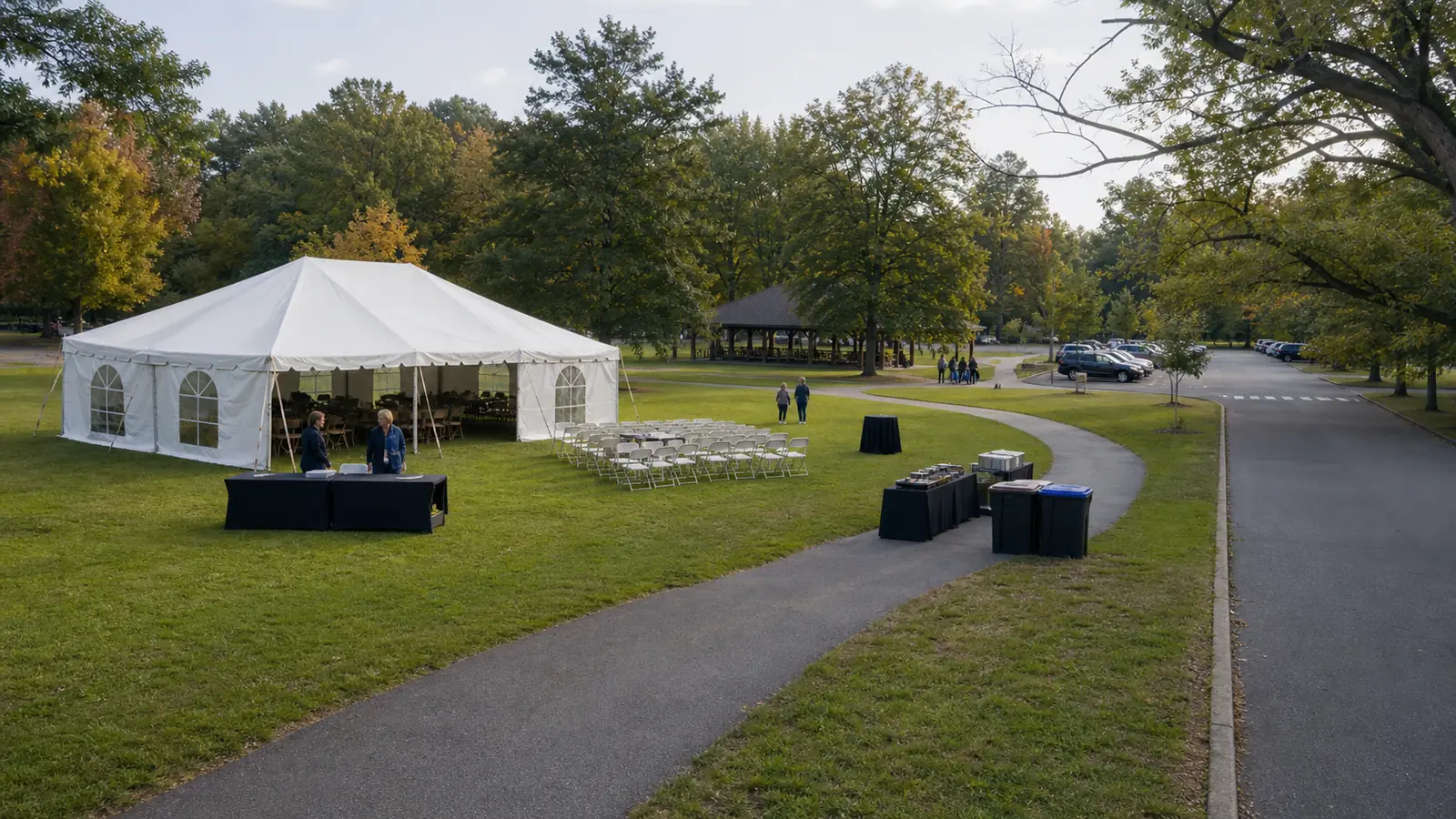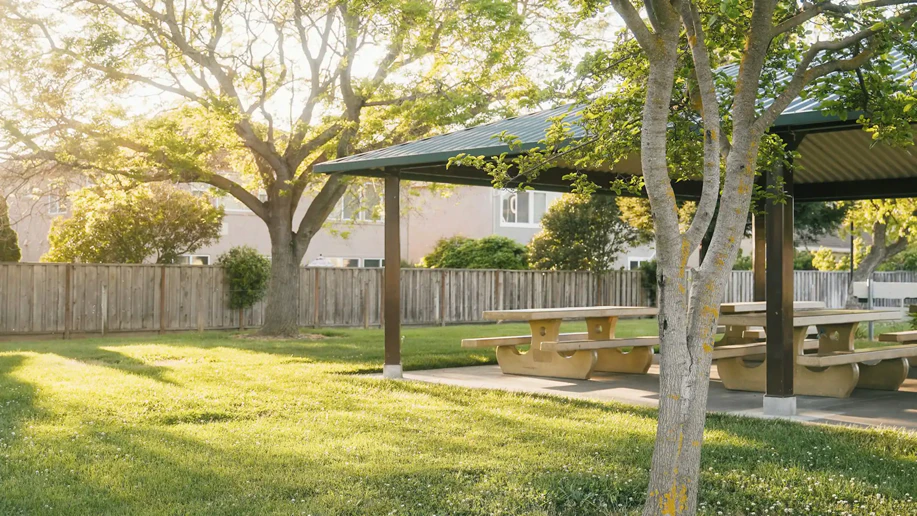

Spring arrives fast in Pennsylvania. One week the ground is frozen, the next your neighbor is firing up the grill. And somewhere in between, you remember that graduation party, anniversary dinner, or backyard wedding you promised to host.
The outdoor event season catches people off guard every year. Not because they forget about it. Because they underestimate what it takes to get a backyard ready for guests.
This is the work that happens before the tent goes up.
Start With the Calendar, Not the Yard
Before you touch a rake or call a landscaper, open your calendar.
Work backward from your event date:
- 8 weeks out: Confirm your rental reservation. Tents, tables, chairs, and linens book quickly once the weather warms.
- 6 weeks out: Schedule any landscaping, seeding, or grading work that needs time to settle.
- 4 weeks out: Walk your property with your rental company to confirm layout and delivery access.
- 2 weeks out: Handle cosmetic touches like mulching, pressure washing patios, or trimming hedges.
- 1 week out: Clear the space completely. No lawn furniture, hoses, or decorations in the setup area.
This timeline gives you buffer room. Weather delays happen. Landscapers get backed up. Rental companies need lead time to pull your order together.
Assess Your Ground Conditions
Tent installations require stable, relatively level ground. Most residential backyards work fine, but a few conditions can complicate things.
Walk the area where you want your tent and check for:
- Slopes or uneven terrain. Minor slopes can be managed. Steep grades may require leveling or a different placement.
- Underground utilities. Before any stakes go into the ground, know where your sprinkler lines, septic systems, and buried cables run. Pennsylvania law requires calling 811 before digging.
- Drainage patterns. Where does water pool after heavy rain? That spot is not where you want your dance floor.
- Tree roots and low branches. Roots limit where stakes can be placed. Overhanging branches can interfere with tent peaks.
If you are unsure about any of these, ask your rental company during the quote process. A good rental partner will help you find solutions or suggest alternative layouts.
Measure Twice, Visualize Once
Guessing at space is how people end up with a tent that swallows their entire yard or a layout where guests bump into each other getting to the buffet.
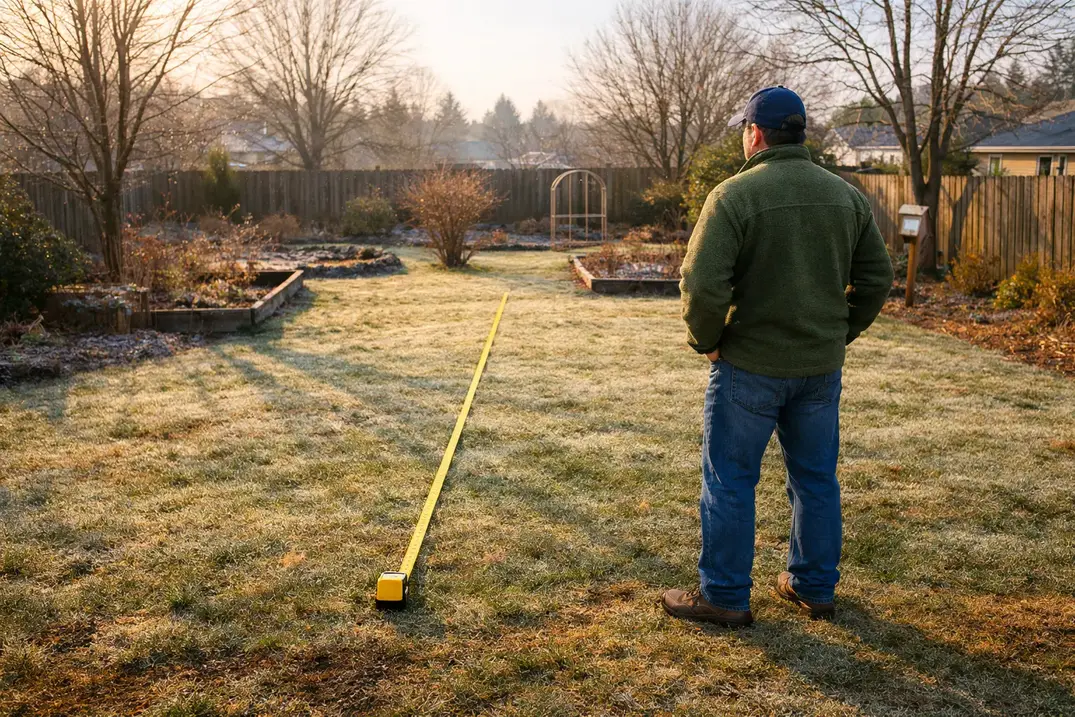
Grab a tape measure and map out:
- The footprint of your tent (your rental company will provide dimensions based on guest count)
- Space for tables and chairs inside the tent
- A buffer zone around the tent perimeter for guy lines and stakes
- The path from your house to the tent for catering, restrooms, and foot traffic
- Parking or drop-off areas if guests will arrive by car
A 20x30 tent fits comfortably in many backyards, but you need at least 5 additional feet on each side for anchoring. That means your actual cleared space needs to be closer to 30x40.
Lay out garden hoses or rope in the shape of your tent footprint. Stand inside it. Walk around. Does it feel right? This ten-minute exercise saves real headaches later.
Coordinate With Your Landscaper
If you are planning any yard work this spring, timing matters.
New sod or seed needs several weeks to establish before heavy foot traffic or tent installation. Fresh mulch looks great but can get displaced during setup. Recently planted beds near the event area may get trampled by delivery trucks or setup crews.
Talk to your landscaper about your event date. A good one will help you sequence the work so everything looks sharp without getting destroyed.
For established lawns, a basic spring routine is usually enough:
- Rake out debris and thatch
- Aerate if the soil is compacted
- Overseed bare patches
- Apply a spring fertilizer
Do this work in early March and your grass will be thick and green by late April.
Think About Access
Delivery trucks need a way in. So do the crews setting up your tent, tables, and equipment.
Check your property for:
- Gate width. Standard backyard gates are often too narrow for equipment. Can your rental company access the yard through a side path, driveway, or open section of fence?
- Ground conditions on the path. Will a heavy dolly sink into soft ground or mulch? Is there a paved route?
- Overhead clearance. Low-hanging wires or tree branches can block box trucks.
Let your rental company know about any access challenges when you request your quote. They deal with this constantly and can suggest workarounds.
Prepare for Weather Variables
Pennsylvania spring weather is unpredictable. You might get a 70-degree Saturday or a cold snap with rain.
Tent rentals are your best defense. Sidewalls block wind and keep rain out. Heaters make chilly evenings comfortable. Flooring protects guests from muddy ground.
Discuss these options with your rental company early. Adding sidewalls or heaters last-minute is sometimes possible, but not always guaranteed during busy weekends.
If you are planning a ceremony or cocktail hour on open lawn, have a backup plan. Know where guests will go if weather turns. Consider a tent large enough to accommodate all activities if needed.
The Week Before Your Event
By now, the hard work should be done. Your final week is about clearing the path for setup.
- Remove all furniture, toys, and decorations from the event area
- Mow the lawn two days before delivery (not the day of)
- Confirm your delivery window with your rental company
- Walk the space one more time to check for any new issues
On delivery day, be available or have someone on-site who can answer questions and approve placement.
Start Now
If your event is in May or June, February and March are your planning months. The work you do now determines whether setup day feels calm or chaotic.
Get your rental quote locked in. Schedule your landscaper. Map out your space.
Spring rewards the prepared.