
The Dance Floor Changes Everything
You can have the perfect tent. The tables can be set beautifully. The food can be incredible. But if there's no place to dance, something feels missing.
A dance floor does more than give guests a place to move. It creates a destination. A focal point. The spot where toasts turn into sing-alongs, where your first dance becomes a memory everyone talks about for years.
But here's the problem: most people have never rented a dance floor before. They don't know what size they need, what surface works best, or how to prepare their space. That uncertainty leads to either renting too small (awkward) or too big (wasted budget and space).
This guide will walk you through the decisions that matter.
How Big Should Your Dance Floor Be?
The short answer: 9 square feet per dancing guest.
The longer answer requires you to think about how many people will actually dance at the same time. Not everyone at your event will be on the floor simultaneously. A good rule of thumb is to plan for 40-50% of your guest count to be dancing at peak moments.
Here's what that looks like:
- 50 guests: Plan for 20-25 dancers → 12x12 or 12x15 floor
- 100 guests: Plan for 40-50 dancers → 15x15 or 15x18 floor
- 150 guests: Plan for 60-75 dancers → 18x18 or 18x21 floor
- 200+ guests: Plan for 80-100 dancers → 21x21 or larger
These numbers assume a mix of ages and energy levels. If you're hosting a wedding where you know the crowd loves to dance, size up. If it's a more formal corporate event, you can often size down.
One thing people forget: the band or DJ needs space too. If they're set up adjacent to the dance floor, account for that when planning your layout.
Surface Options: What Works Where
Not all dance floors are created equal. The surface you choose depends on three factors:
- Where the floor will be installed
- What kind of dancing you expect
- Your budget
Oak or Wood-Look Panels
The classic choice. These panels interlock to create a seamless surface that looks elegant under any lighting. They work well for weddings, galas, and formal events.
Best for: Flat, level ground. Indoor spaces or tents with solid flooring underneath.
Watch out for: Uneven terrain. Wood panels need a stable base to stay flush and safe.
Vinyl or Laminate Surfaces
More forgiving than hardwood. These surfaces can handle slight imperfections in the ground below and clean up easily. They're a practical choice for outdoor events where conditions aren't perfect.
Best for: Outdoor events, backyard parties, and spaces where spills are likely.
Watch out for: Extreme heat. Direct sun can make some vinyl surfaces uncomfortable underfoot.
Subflooring Systems
For events on grass, gravel, or uneven terrain, a subfloor creates the level base your dance floor needs. Think of it as the foundation. The subfloor goes down first, then your dance surface installs on top.
Best for: Tented outdoor weddings, backyard celebrations on uneven lawns, any surface that isn't already flat.
Watch out for: Added cost and setup time. But without it, you risk a wobbly, unsafe surface.
Preparing Your Space
A rental company can deliver and install your dance floor, but there's prep work that falls on you.
For Indoor Spaces
- Clear the area completely. Furniture, rugs, anything that could interfere.
- Check for low-hanging fixtures. Chandeliers, ceiling fans, and light fixtures need clearance.
- Confirm the floor beneath can handle the weight of panels plus dancers.
For Outdoor Spaces
- Mow the lawn if installing on grass. Short, even grass makes a difference.
- Mark any irrigation heads, tree roots, or buried cables.
- Have a backup plan for weather. Tents protect dance floors from rain, but mud underneath is still a problem.
For Tent Installations
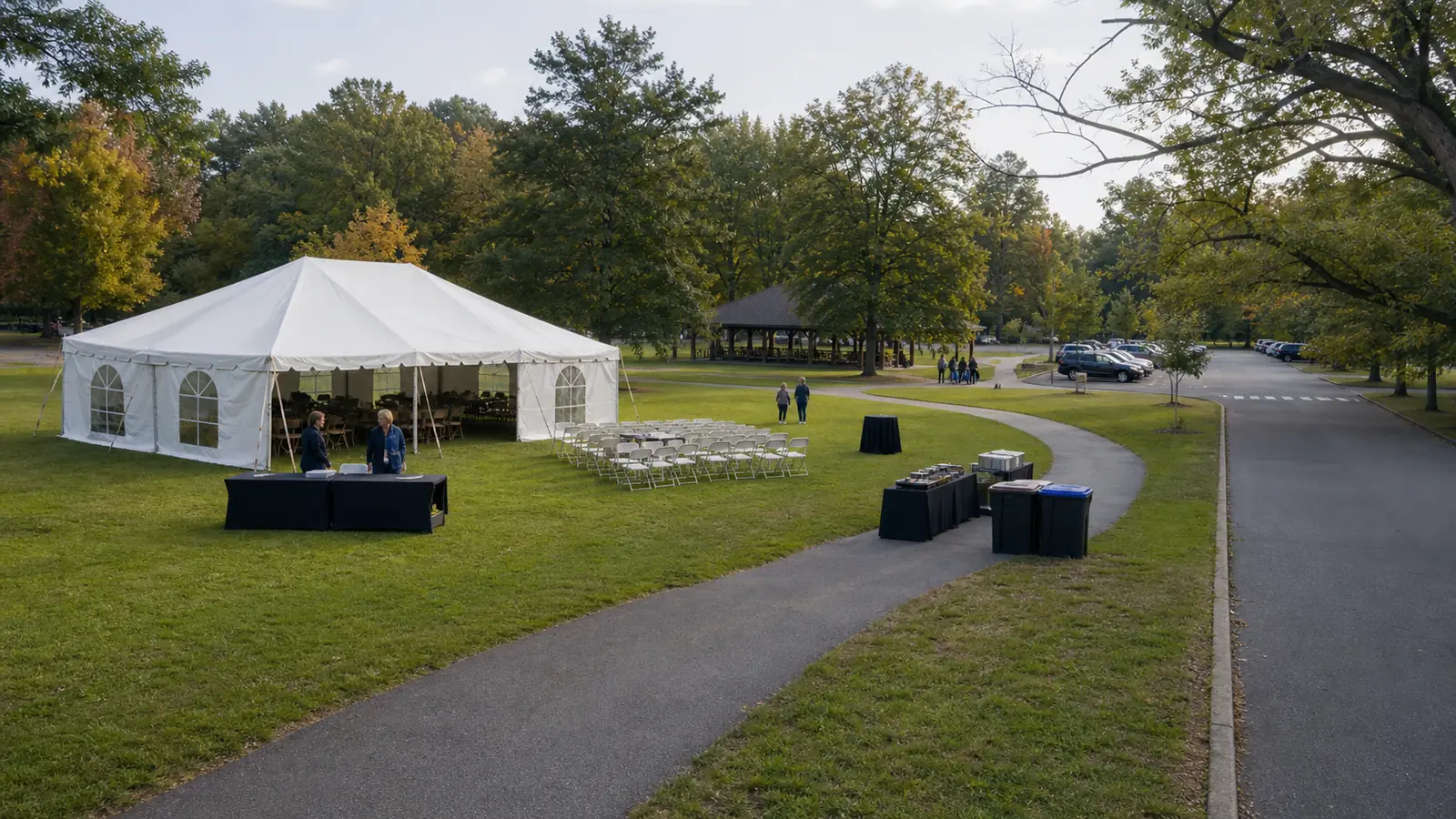
- Coordinate timing with your tent rental. The tent goes up first. The floor goes in after.
- Discuss lighting placement early. Overhead string lights or chandeliers look best when planned alongside the floor layout.
Common Questions We Hear
"Can we put the dance floor directly on grass?"
Technically, yes. Practically, it depends. If the grass is dry, level, and firm, some lightweight floors can work without subflooring. But for most events, a subfloor gives you a safer, more stable result.
"What if it rains before our event?"
If you're under a tent with proper subflooring, rain beforehand isn't a disaster. The subfloor elevates the dance surface above wet ground. That said, standing water is a problem. Good drainage planning matters.
"How long does installation take?"
For a standard 15x15 floor, expect 1-2 hours depending on conditions. Larger floors or those requiring subflooring take longer. Your rental company should arrive well before your event start time.
"Do we need to do anything after the event?"
Clear the floor of debris, but leave the breakdown to the rental team. That's part of what you're paying for.
What Makes the Difference
The dance floor itself is just panels and hardware. What makes it memorable is how it fits into your event.
Placement matters. A dance floor tucked in a corner feels like an afterthought. A dance floor positioned centrally, visible from the dinner tables, invites participation.
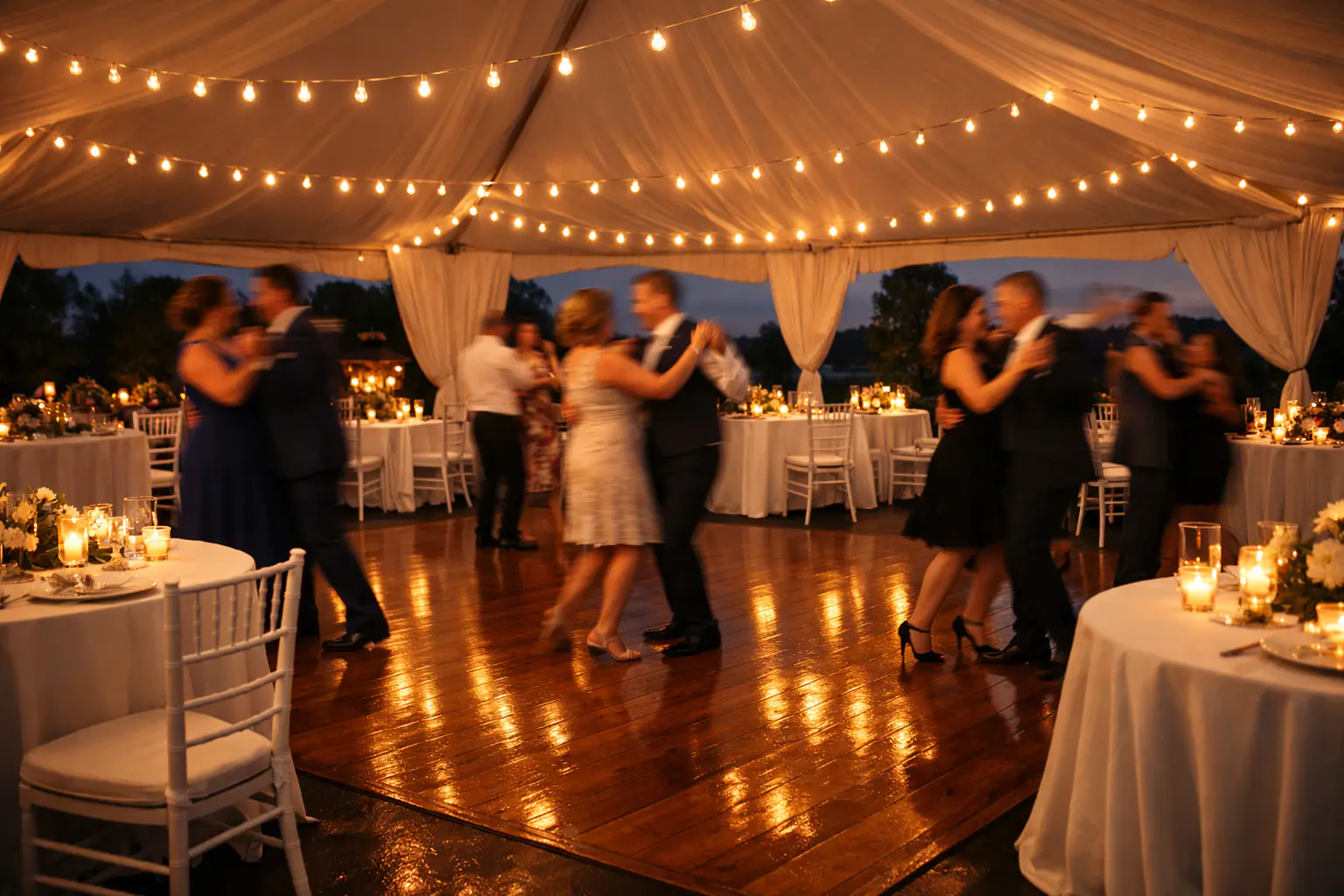
Lighting matters. Even a basic floor looks stunning with the right overhead lights. String lights, lanterns, or a simple spotlight on the couple's first dance can transform the space.
Size matters. Too small and guests bump into each other. Too large and the floor feels empty, which discourages people from being the first ones out there.
Get these three things right, and the dance floor becomes the heart of your event.
Getting Started
If you're planning an event with a dance floor, the best time to book is now. Popular dates fill up fast, and waiting until the last minute limits your options for size and surface.
When you reach out for a quote, have these details ready:
- Your guest count
- The event location (indoor, outdoor, tent)
- The date and approximate setup time
- Any ground conditions we should know about
From there, we can recommend the right size, surface, and any additional equipment you'll need.
The goal is simple: give your guests a place to celebrate. We'll handle the logistics so you can enjoy the moment.