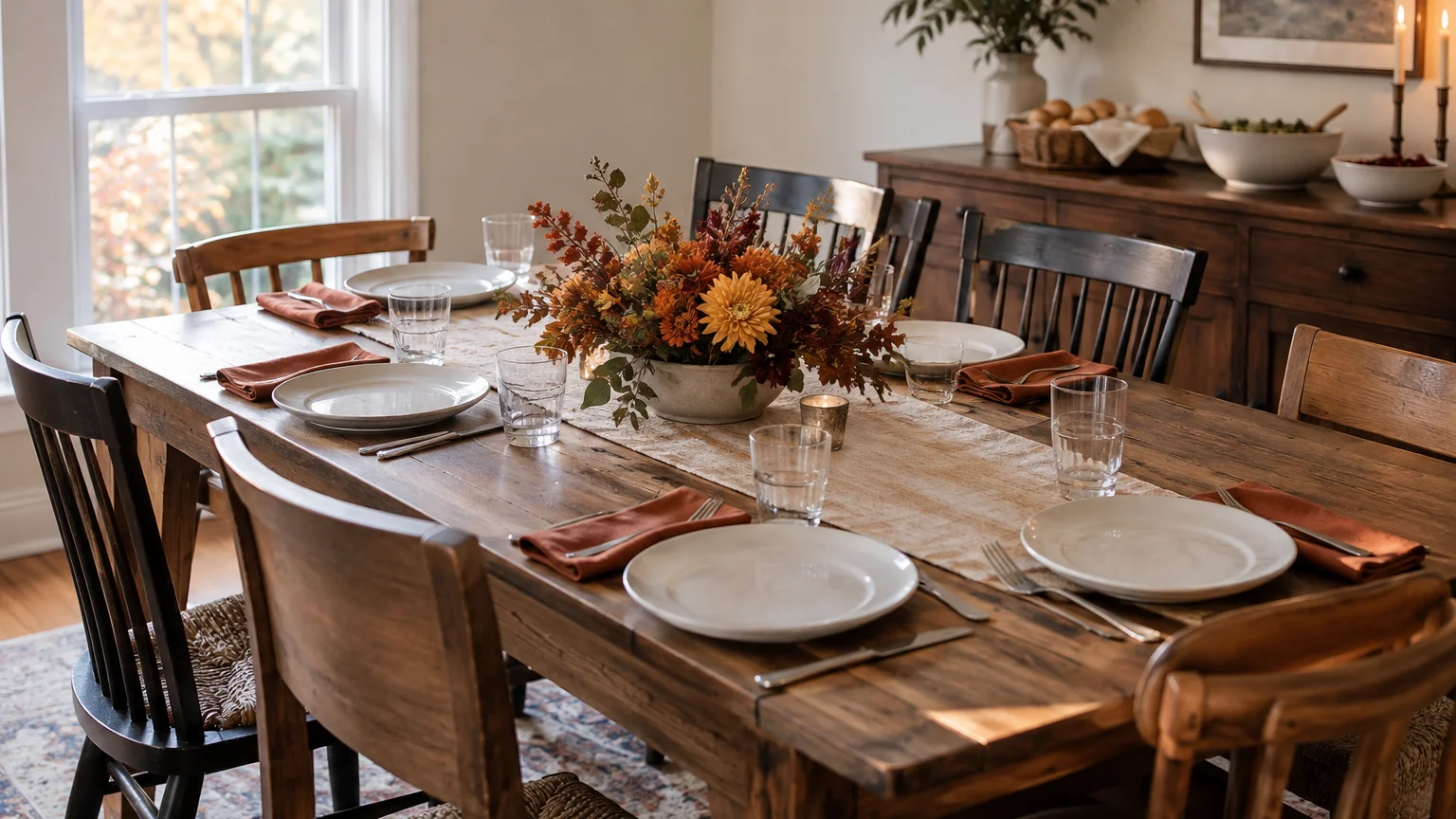
A Friendsgiving potluck lets everyone bring a little of themselves to the table. It can also bring six casserole dishes, three pies, an unexpected salad, and no serving spoon for any of them. The menu may be shared, but the host still needs a way to receive it.
The most useful Friendsgiving ideas for adults are often small planning choices: a sign-up sheet that asks the right questions, a clear place for arriving food, and a dining table that does not double as a storage counter. Start there, and the gathering can feel generous without filling every available surface. This guide focuses on the potluck handoff, from the group message to the last serving dish going home.
Ask for a dish and a plan, not just a name
A sign-up sheet needs more than 'side dish' beside a guest's name. Ask what the dish is, when it will arrive, what it will arrive in, and what the guest needs at your home. A dish that is ready to serve has a different footprint from one that still needs oven space, assembly, or a serving platter.
- Dish name and the guest responsible for it.
- Expected arrival time and whether the dish arrives ready to serve.
- Approximate container footprint and any serving-piece request.
- Serving utensil: who brings it and which one is needed.
- Any kitchen, refrigeration, or food-holding needs to discuss in advance.
- Ingredient information and dietary questions to resolve directly with guests.
Keep one shared list instead of trying to remember answers from several messages. Read it for gaps as well as repeats. If three people bring dessert, that may be welcome, but someone still needs to own plates, drinks, and the main meal. A contribution can be supplies, setup, or cleanup rather than another dish.
Ask guests about ingredient and dietary needs privately when appropriate. Labels can help people identify a dish, but they are not a guarantee against allergens or cross-contact. Let guests make informed choices with the person who prepared the food.
Create a landing place for food arriving at the door
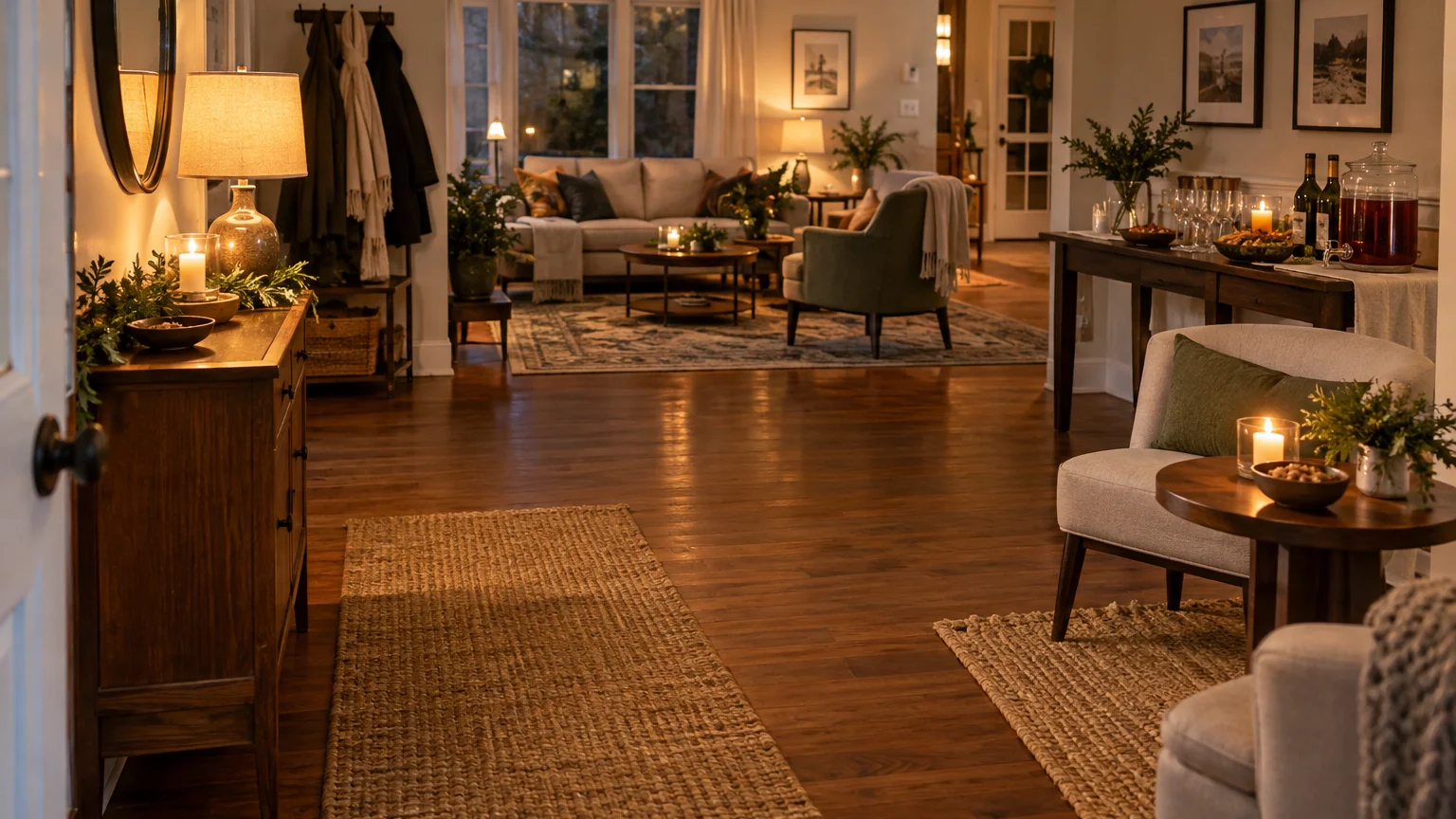
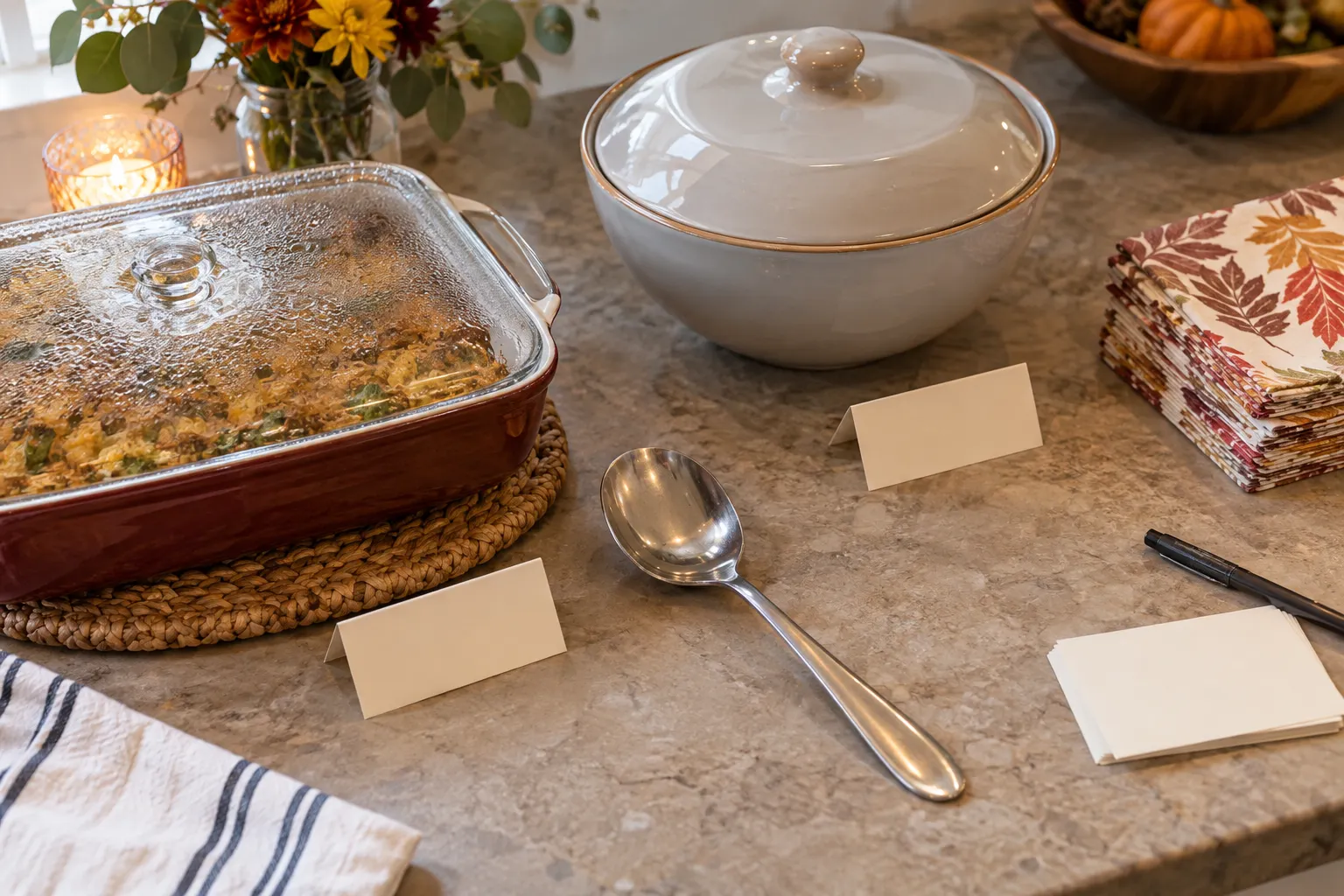
Choose a receiving spot before setting the dining table. A clear counter or small side table gives an arriving guest somewhere to put a contribution while coats come off and the host confirms the next step. It should not be the only kitchen work surface or the path everyone needs to enter.
Nominate a food-arrival helper if the host will be busy cooking. That person's job is to consult the sheet, find the correct serving position, and ask the contributor about the dish. They do not have to improvise food-handling decisions or promise oven space that has not been agreed.
Mark containers and lids with the owner's name using a method suitable for the item. Keep lids, carriers, and bags together in a designated place. A quick phone photo of the grouped containers can be a useful reminder at the end of the evening.
Choose the setup that fits your gathering
You do not need the same arrangement for every Friendsgiving. Choose one of these approaches, then adjust it to the actual room and food plan. The aim is to give each dish a destination without sacrificing the place where people will eat.
A small dining room
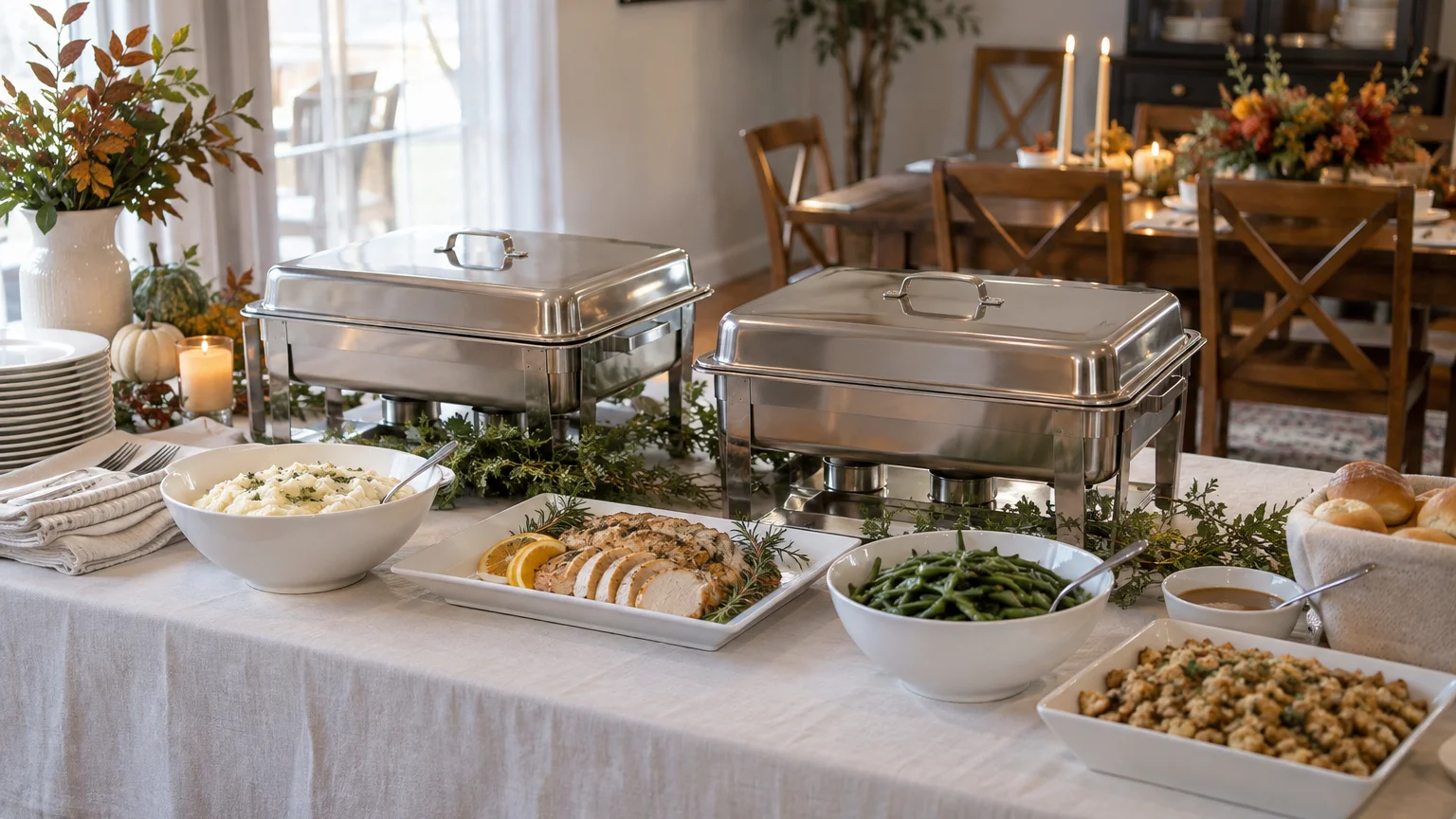
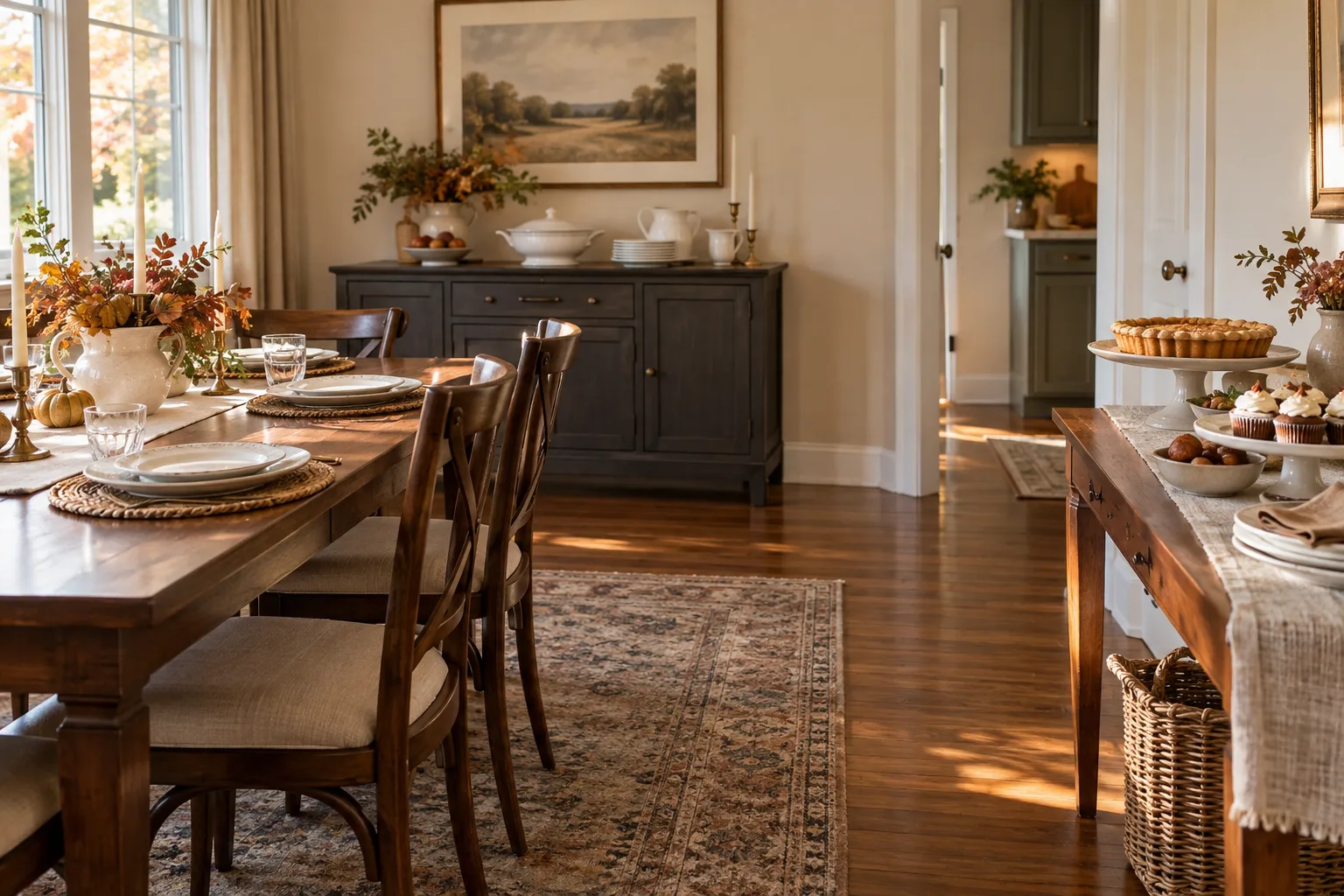
Keep the dining table for place settings and a low centerpiece. Use an existing counter or a separate serving surface for the main dishes. Put desserts aside until they are needed, following the food-handling plan. A simpler menu is often easier than trying to add another table to an already tight route.
A shared-space gathering
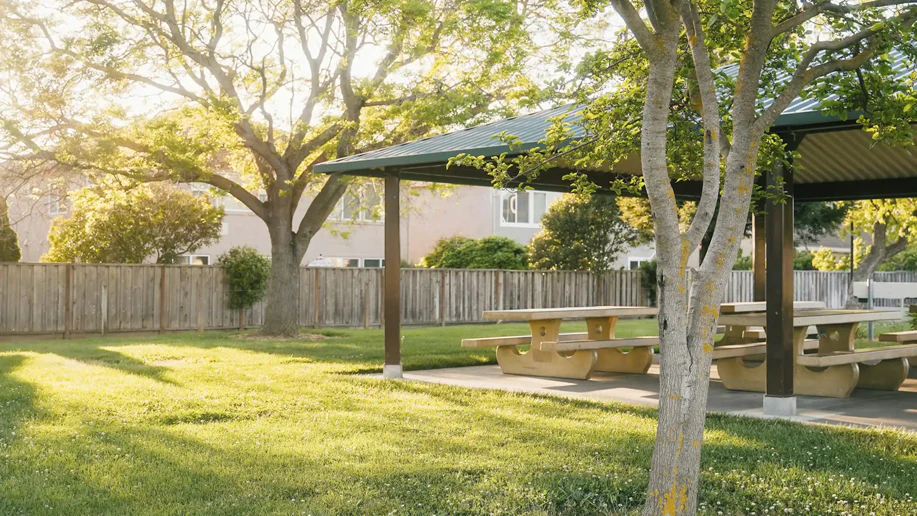
In a community room or another larger space, separate food arrivals from guest service. Place the receiving surface near the approved kitchen or preparation area, then build the buffet where the queue will not run through seated diners. Assign a specific person to each station rather than assuming every guest knows the room.
A relaxed two-part evening
If friends arrive at different times, agree when the main meal begins and how later contributions will be handled. After dinner, a separate dessert or conversation area can give the table time to be cleared. Avoid promising continuous food service unless someone has planned and taken responsibility for it.
For the dining layout itself, use the Thanksgiving Seating Guide. This potluck plan adds the coordination layer: whose dish goes where, with what utensil, and who takes care of it.
Assign every serving piece a job
Lay out the menu on paper before arranging décor. Give each dish a serving position, a suitable utensil, and a responsible guest. Check whether the arriving container is also the serving dish. If not, include the transfer and the spare container in the plan.
Count serving utensils independently from dishes. A platter may need tongs, a bowl may need a serving spoon, and a dessert may need a server. The right choice depends on the food and the selected pieces, so ask for guidance rather than expecting one utensil to work for everything.
- Place plates where the meal begins and napkins where guests can collect them easily.
- Move beverages out of the food queue when the room allows it.
- Reserve space beside each dish for its utensil and label.
- Keep a separate place for clean spares and another for used items.
- Leave a practical route for the person managing replacements and clearing.
Review the HPR rental catalog for dishware, flatware, food-service pieces, and additional surfaces after making that list. Confirm each selected item's dimensions, suitability, availability, and return instructions rather than building the menu around an assumed product.
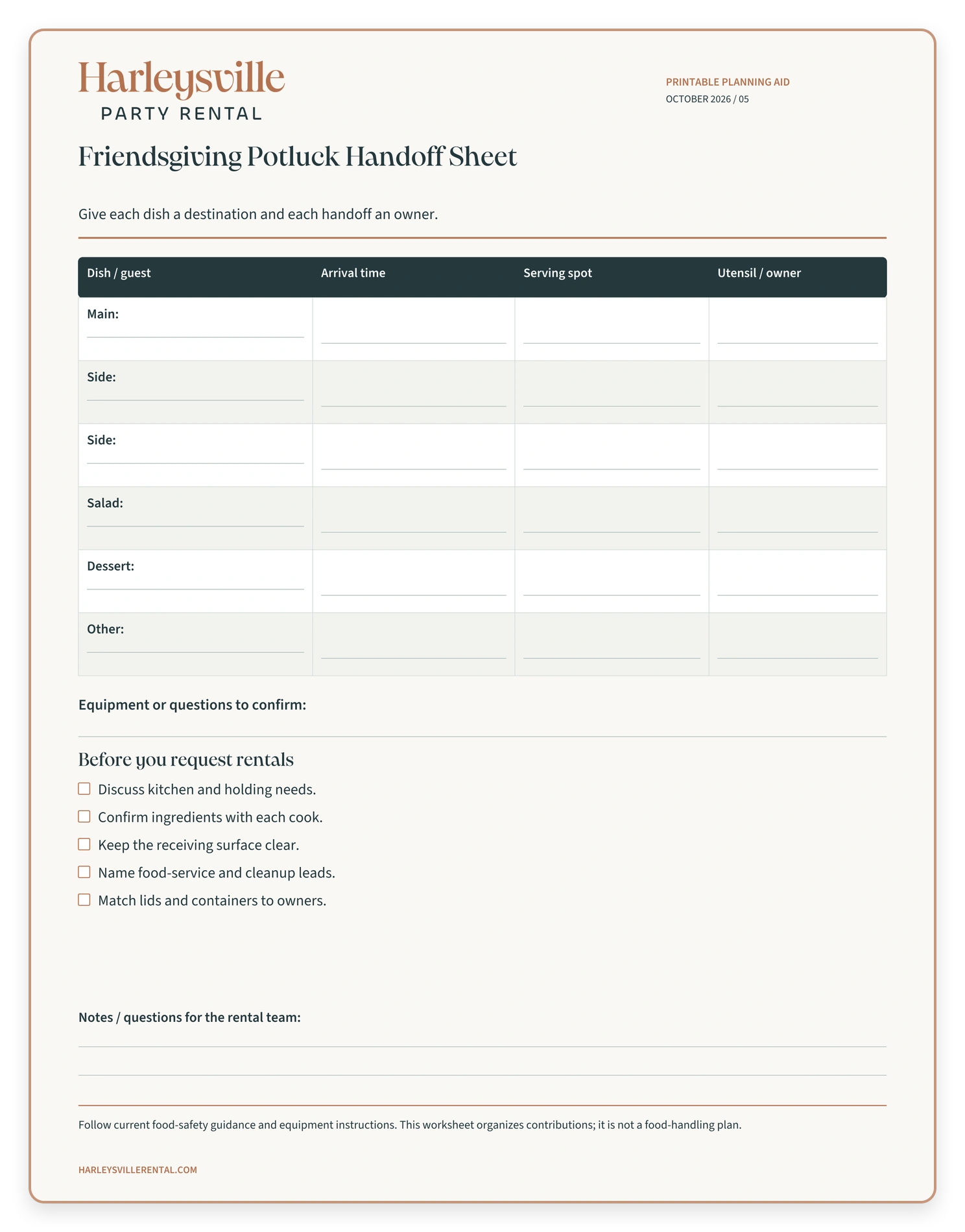
Open the full-resolution planning worksheet to print or save.
Give food service and cleanup named owners
A potluck shares the cooking, but it should not leave food handling to chance. Before guests arrive, decide who will oversee receiving, holding, serving, and leftovers. Review the FDA's guidance for safe buffets, and ask a qualified food-service provider for help when the event needs it. Follow the instructions for any equipment you use.
Do not make the host's oven, refrigerator, or outlets a surprise part of another person's recipe. Confirm requests in advance, and change the menu if the available facilities do not support the plan. Attractive serving pieces do not replace a safe food-handling arrangement.
Cleanup is easier when it has a few defined jobs. One person can collect used tableware, another can match empty containers with owners, and another can clear the serving surfaces. Agree how rented pieces should be handled by checking the provider's instructions. Do not assume they need the same treatment as dishes from your own kitchen.
Frequently asked questions
What should guests bring besides food?
Useful contributions include drinks, agreed serving utensils, setup help, or a cleanup role. Assign them through the shared list so supplies are not duplicated and essential jobs are covered.
Can the dining table hold all the potluck dishes?
For a small meal it may work, but test it with full place settings and the real serving pieces. If guests have nowhere to put a plate or glass, move some dishes to a separate surface or simplify the menu.
How do I stop everyone needing the oven at once?
Ask about preparation and holding needs on the sign-up sheet. Agree what your kitchen can support before the menu is final. Guests should not arrive relying on unconfirmed oven or refrigerator space.
Should guests bring their own serving utensils?
They can, as long as the plan names the utensil and its owner. If the host will provide or rent serving pieces instead, mark that clearly. Counting the dish without its utensil leaves an avoidable gap.
Fill the gaps in your Friendsgiving plan
Start with the potluck sheet, then compare the menu with the plates, flatware, serving pieces, and surfaces you already have. If a few missing pieces would make the plan work better, request a quote from Harleysville Party Rental. Share the date, location, guest count, serving format, and item list so the team can review current options. The goal is a table with room for dinner and a plan that lets the host enjoy it too.