

January in Pennsylvania means bare trees, gray skies, and temperatures that make most people default to indoor venues. But here's something worth considering: outdoor winter events are not only possible, they can be surprisingly comfortable.
The right equipment changes everything.
The Case for Winter Outdoor Events
Indoor venues fill up fast during the colder months. Everyone assumes outdoor is off the table, so they compete for the same banquet halls, restaurants, and community centers. Meanwhile, your own backyard or a private property sits empty.
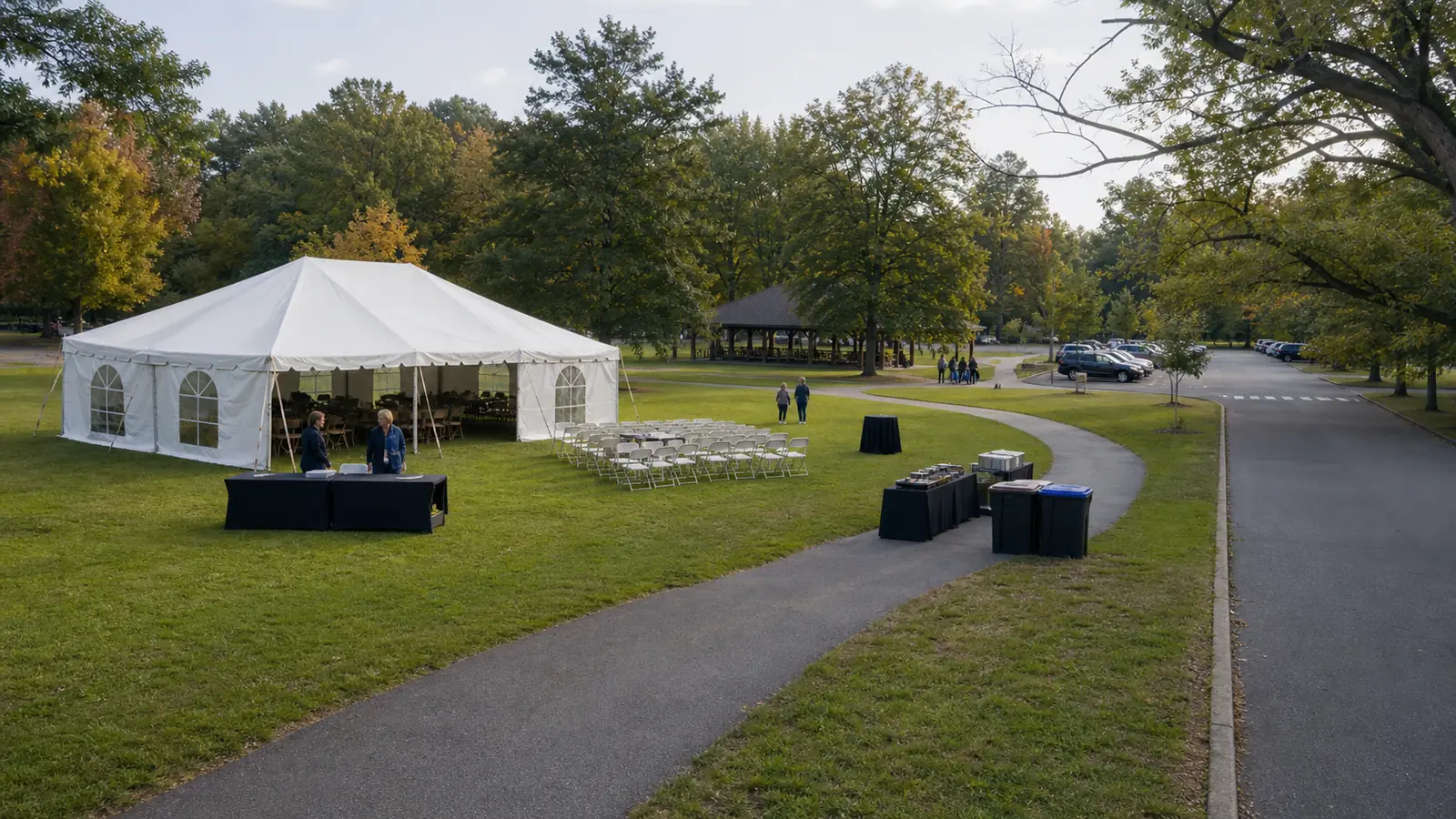
Winter tents offer something indoor venues cannot: flexibility. You control the layout. You control the timeline. You control the guest list without paying per-head minimums or working around another party's schedule.
There's also something memorable about a well-executed winter gathering. Guests walk into a warm, glowing tent surrounded by cold air. The contrast feels intentional, like you planned something special rather than settling for whatever was available.
Tent Heating Options
Cold air is the obvious concern, and it's the easiest one to solve.
Propane heaters designed for tent use can maintain comfortable temperatures even when it's below freezing outside. These are commercial-grade units, not the portable space heaters you'd use in a garage. They're sized for the tent's square footage and placed strategically to distribute heat evenly.
A few things to know:
- Heating capacity depends on tent size, sidewall coverage, and outside temperature
- Heaters typically run on propane tanks that last several hours
- Placement matters. Heat rises, so proper positioning keeps the floor-level seating area warm
Most rental companies will help calculate heating requirements based on your specific setup. The goal is consistent warmth throughout the event, not a hot spot near the heater and cold corners everywhere else.
Sidewalls Make the Difference
An open-sided tent in January is just a roof. Sidewalls turn that roof into an enclosed space.
Solid sidewalls block wind and trap heat. They're the standard choice for winter events because they create a barrier against the elements.
Clear sidewalls let in natural light while still providing protection. If your event is during daylight hours or you want guests to see the surrounding property, clear panels keep the view open without sacrificing warmth.
Window sidewalls combine both. Solid panels with clear inserts give you privacy at eye level with light coming through above.
For winter events, full sidewall coverage is standard. Every opening where cold air can enter is a spot where your heater has to work harder. Complete enclosure keeps the environment stable.
Flooring Considerations
Ground conditions in winter present challenges that don't exist in summer. Frozen soil is uneven. Melting snow creates mud. Grass under a tent can turn slick.
Flooring solves all of this.
Subflooring creates a raised, level surface above the ground. It keeps guests off cold, wet, or uneven terrain and provides stability for tables and chairs.
Carpet or turf covering adds comfort and visual polish. Walking on carpet feels warmer than walking on bare flooring, and it looks more finished.
Interlocking floor tiles offer a durable, easy-to-clean surface that handles foot traffic without showing wear.
The right flooring also affects heating efficiency. A raised floor separates guests from the cold ground, which means less heat escapes downward.
Planning Around Weather
Pennsylvania winter weather is unpredictable. One week might bring mild temperatures in the 40s. The next week drops below 20. Snow, ice, and rain are all possibilities.
This unpredictability is exactly why renting makes sense. A rental company handles delivery, setup, and breakdown regardless of conditions. If snow falls the morning of your event, that's not your problem to solve. Equipment arrives, gets installed, and functions as intended.
Timing matters, though. Booking early gives you access to the equipment you need. Winter inventory moves faster than you might expect because fewer people realize outdoor winter events are feasible until they start looking into it.
"We help clients choose the right items for the size, layout, and purpose of each event, ensuring everything fits together practically and visually."
That guidance becomes especially valuable in winter when the margin for error is smaller. The difference between a comfortable event and a cold one often comes down to equipment selection.
What Works Well in Winter
Certain event types translate particularly well to winter tent setups:
- Holiday gatherings that outgrow your living room
- Milestone celebrations like anniversaries or retirements
- Corporate events when you want to impress clients with something unexpected
- Outdoor-loving families who don't let cold weather stop them
The setup process is the same as any other tent rental. You provide the location and guest count. The rental company recommends tent size, heating, sidewalls, and flooring. Equipment arrives, gets installed, and you host your event in a space that feels purpose-built for the occasion.
A Note on Expectations
Winter events require more equipment than summer events. That's the reality. Heating, full sidewalls, and flooring add to the rental cost and setup complexity.
But compare that to indoor venue fees, catering minimums, and the limitations that come with renting someone else's space. Many hosts find that a fully equipped winter tent costs less than a comparable indoor option while offering more control over every detail.
The question isn't whether winter outdoor events are possible. They are. The question is whether it's the right fit for your gathering, your property, and your vision for the day.
If the answer is yes, the equipment exists to make it happen.