

You picked an outdoor wedding for a reason. The open sky, the natural light, the photographs that look like they belong in a magazine. But somewhere between choosing your venue and finalizing your guest list, a thought crept in.
What if it rains?
That question keeps more couples up at night than seating charts or catering menus. And honestly, it should be on your radar. Pennsylvania weather in spring and summer can shift fast. Morning sunshine turns into afternoon thunderstorms. A cool breeze becomes a cold front.
But here's what most couples don't realize: weather anxiety is a planning problem, not a wedding problem. With the right backup strategy in place, you stop worrying about the forecast and start focusing on the day itself.
Why Tents Change Everything
A tent isn't a compromise. It's a decision that gives you options no matter what happens.
Think about it this way. An indoor venue locks you into one experience. A tent on your chosen property or outdoor location lets you design the space exactly how you want it, while still protecting your guests from sun, rain, wind, or unexpected temperature drops.
The couples who feel most relaxed on their wedding day aren't the ones who got lucky with weather. They're the ones who planned for every scenario.
Choosing the Right Tent Setup
Not all tents serve the same purpose. Your choice depends on your guest count, the layout you want, and how much weather protection you need.
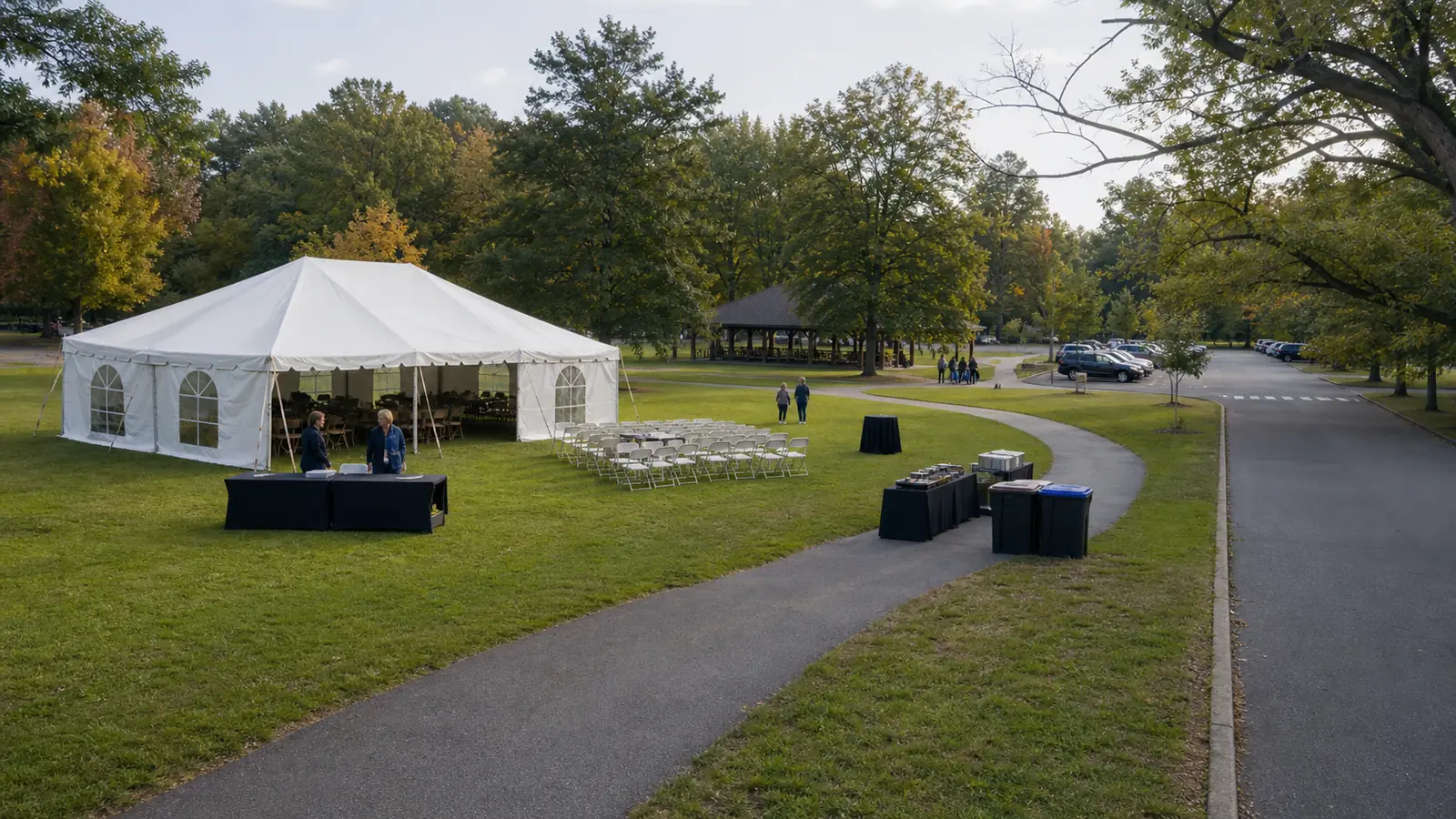
Frame tents work well on patios, driveways, or uneven ground where staking isn't possible. They have no center poles, which means unobstructed sightlines for ceremonies and receptions.
Pole tents create dramatic peaks and flowing lines. They require soft ground for staking but offer a classic, elegant silhouette that photographs beautifully.
Clear-top tents let natural light pour in during the day and showcase string lights or stars at night. They work best in mild weather since they can heat up quickly in direct summer sun.
Sidewalls are where the real flexibility lives. You can leave them off entirely for an open-air feel, roll them halfway for airflow, or close them completely if rain moves in. Some couples rent sidewalls "just in case" and decide day-of whether to install them.
Sizing Your Tent Correctly
Underestimating tent size is one of the most common mistakes couples make. You're not just fitting guests. You're fitting tables, chairs, a dance floor, a DJ or band setup, possibly a bar, and space for people to move without bumping into each other.
A general starting point: plan for approximately 10-12 square feet per seated guest at round tables. If you're adding a dance floor, that's additional square footage on top of your seating calculation.
For 100 guests with a dance floor and small bar area, you're likely looking at a 40x60 or 40x80 tent. For 150 guests with the same setup, consider 60x90 or larger.
When in doubt, go bigger. A slightly larger tent feels spacious and comfortable. A too-small tent feels cramped and hot.
The Timing Question
When should you book your tent? Earlier than you think.
Spring and summer weekends fill up fast. If you're planning a May, June, or September wedding, rental companies start receiving inquiries six to twelve months in advance. Waiting until two months before your date might leave you with limited options or no availability at all.
Here's a rough timeline that works for most couples:
- 8-12 months out: Contact rental companies, discuss tent sizes and options, get quotes
- 6-8 months out: Confirm your reservation and put down a deposit
- 4-6 weeks out: Finalize details like sidewall preferences, lighting, flooring, and layout
- 1-2 weeks out: Confirm delivery time and site access with your rental company
- Day before or morning of: Tent installation (most companies handle this entirely)
What Your Rental Company Handles
A good rental company doesn't just drop off equipment and leave. They assess your site, recommend the right tent style and size, and install everything properly.
At Harleysville Party Rental, our process includes a site evaluation when needed, especially for larger tents or uneven ground. We confirm measurements, check for overhead obstructions like tree branches or power lines, and make sure the tent will be anchored safely and securely.
On installation day, our crew handles setup from start to finish. After your event, we return to break everything down and haul it away. You don't have to lift a finger.
Building Your Weather Backup Plan
Having a tent is step one. Having a plan for using it is step two.
Talk through these scenarios with your partner and your wedding coordinator:
If light rain starts during the ceremony: Can guests move under the tent quickly? Are there enough seats, or do you need a few extra chairs staged nearby?
If heavy rain is forecasted all day: Are sidewalls installed? Is there a clear path from parking to the tent entrance that won't turn into a mud pit?
If it's unseasonably hot: Do you have fans? Is there shade? Are sidewalls open for airflow?
If temperatures drop: Are heaters available? Do guests know to bring a layer?
The goal isn't to prevent weather from happening. It's to make sure weather doesn't derail your celebration.
Flooring and Ground Preparation
Grass looks beautiful in photographs. It's less beautiful when heels sink into it or when morning dew soaks through dress shoes.
Tent flooring solves this problem. Options range from simple subflooring that creates a stable, level surface to finished flooring that looks like hardwood. For ceremonies and dining areas, flooring keeps guests comfortable and protects dresses and shoes from ground conditions.
If your venue has uneven terrain, flooring also helps level the tent interior so tables don't wobble and guests don't feel like they're standing on a slope.
Questions to Ask Your Rental Company
Before you sign a contract, get clear answers on these points:
- What's included in delivery and setup?
- How far in advance will the tent be installed?
- What happens if weather conditions change last-minute? Can sidewalls be added day-of?
- What's the cancellation or postponement policy?
- Do you provide heaters, fans, or lighting as add-ons?
- Who do we contact if something needs adjustment during the event?
A company that answers these questions clearly, without hesitation, is one you can trust with your wedding day.
The Real Backup Plan
Here's something couples often forget: your guests are there for you, not the weather. A wedding where everyone crowds under a tent while rain patters on the roof creates memories. Stories. Moments that feel real and unpredictable in the best way.
The couples who stress least about weather are the ones who've made decisions in advance. They have a tent reserved. They know where guests will go if conditions change. They've communicated with their vendors about timing and logistics.
That's the backup plan. Not hoping for perfect weather, but knowing you're covered either way.