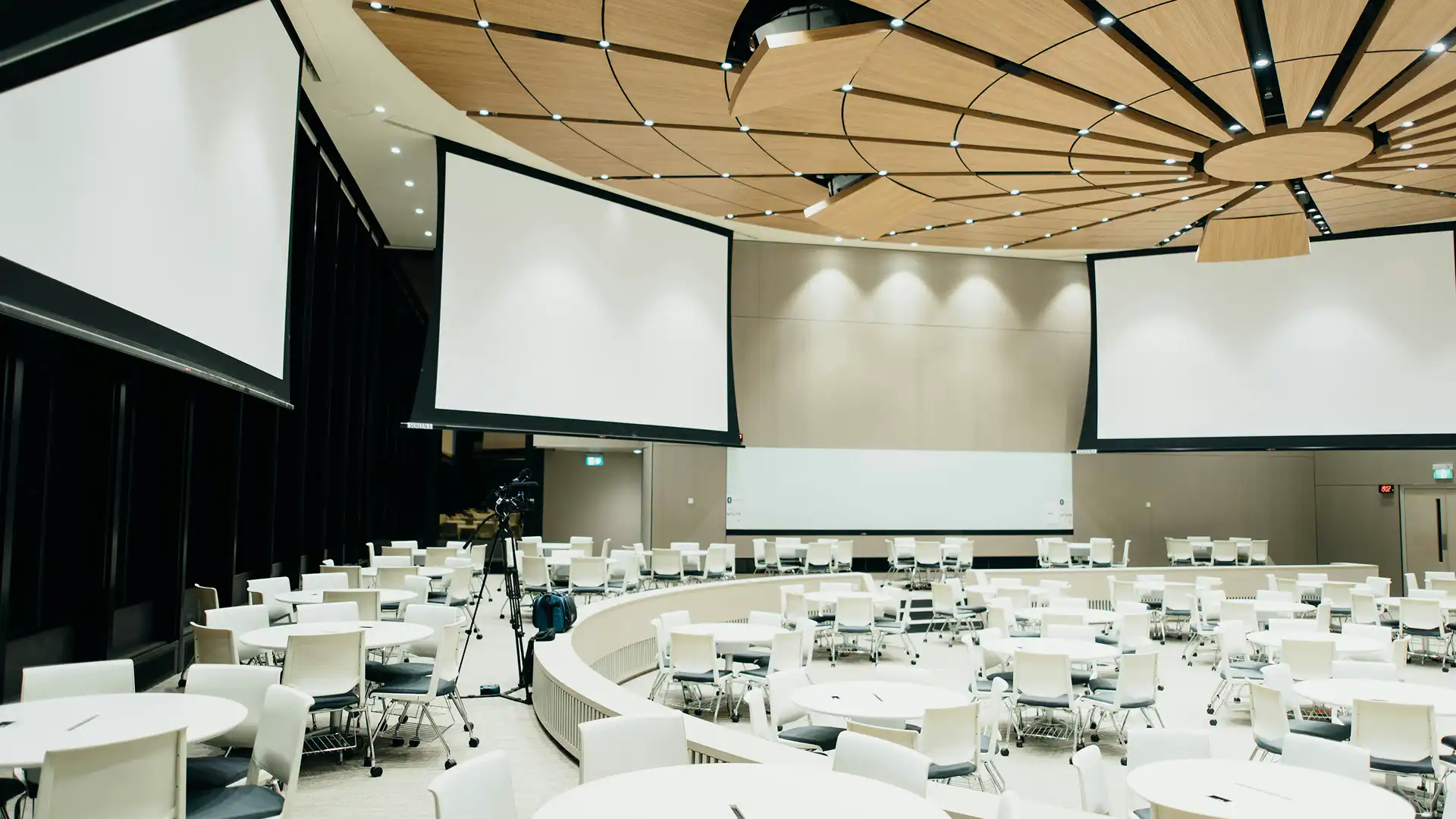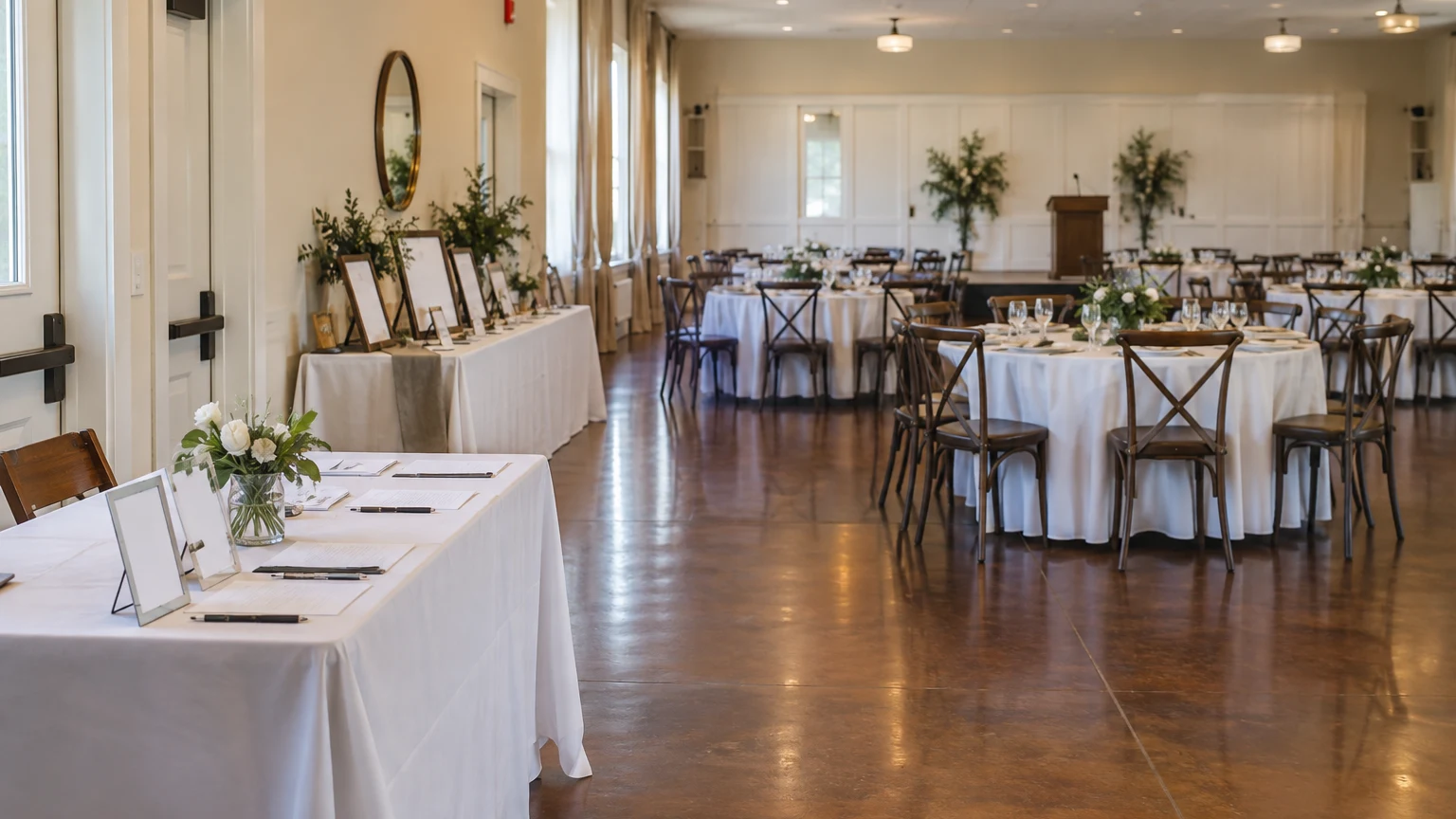
A fundraising dinner asks one room to do several jobs. Guests arrive, check in, look at displays, find their table, eat, listen to a program, and leave with belongings or auction items. A room can look beautiful before doors open and still become difficult to use when those jobs compete for the same doorway or table.
If you are comparing fundraising dinner ideas for nonprofit organizations, begin with the guest journey. Give each station a location, an owner, and a ready-by time before choosing decorations. This guide is about dinner operations and rental planning, not fundraising strategy or a promise of increased donations. It can help a school, faith community, or nonprofit team in Montgomery County build a clearer brief for its venue, caterer, volunteers, and rental provider.
Walk the evening from the guest's point of view
Sketch the room with entrances, kitchen access, restrooms, fixed furniture, and required routes before drawing tables. Then trace one guest's evening: entering, checking in, browsing, sitting down, returning for a coat, and leaving. Add the routes used by servers and volunteers. A line that works for arrivals may be in the way once food service begins.
Have the venue review the drawing. Ask about approved occupancy, accessible arrangements, exits, service access, and any conditions that apply to displays, sound, power, or equipment. Those decisions belong to the responsible venue staff and relevant authorities, not an online layout example.
- Where can arriving guests wait without blocking a door?
- Can someone reach a seat without walking through a food-service queue?
- Where will a volunteer answer a longer question?
- How will people reach restrooms during the program?
- Can caterers and helpers do their jobs without crossing the speaker area?
Keep the drawing simple enough for a volunteer to read at a glance. Label stations by their job, not by a supplier's product name. The equipment list can follow once the jobs and routes are agreed.
Make check-in welcoming and easy to resolve
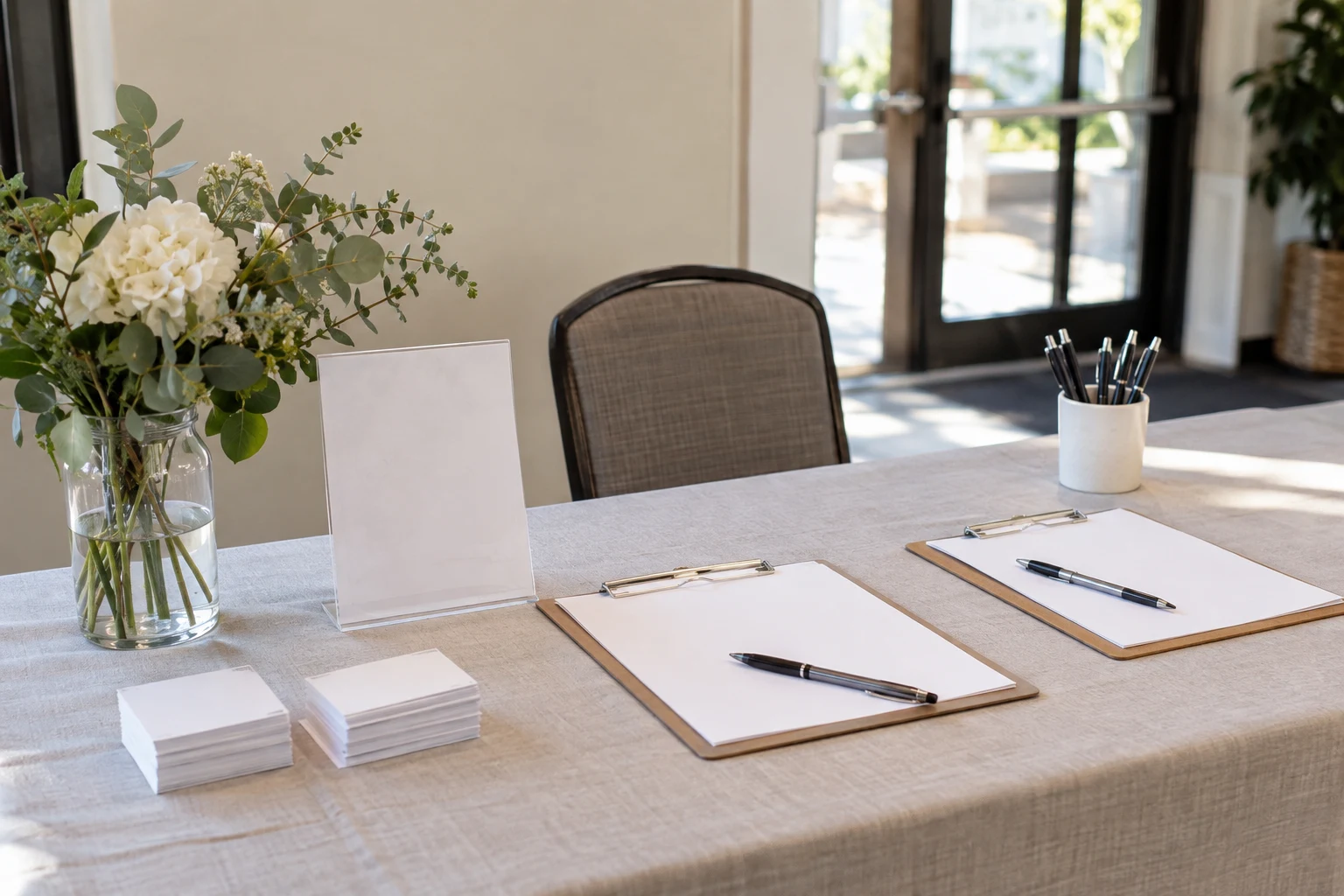
Place check-in where it is visible on arrival, with space for the expected queue and the volunteers working behind it. Include chairs for the people staffing it and somewhere for their supplies. If guests need name badges, table assignments, or a printed program, arrange them in the order the volunteer will use them.
Give exceptions a separate place to land. A missing reservation, changed name, or ticket question can take longer than an ordinary greeting. A nearby help position lets one volunteer resolve it without holding every other guest at the main station. Keep guest records and payment equipment within the organizers' agreed privacy and handling procedures.
Before doors open, run a short rehearsal using a few sample names. Can a volunteer find the record, explain the table assignment, and point toward the next stop? Correct unclear labels or missing supplies while the room is still quiet.
Let auction and information displays breathe
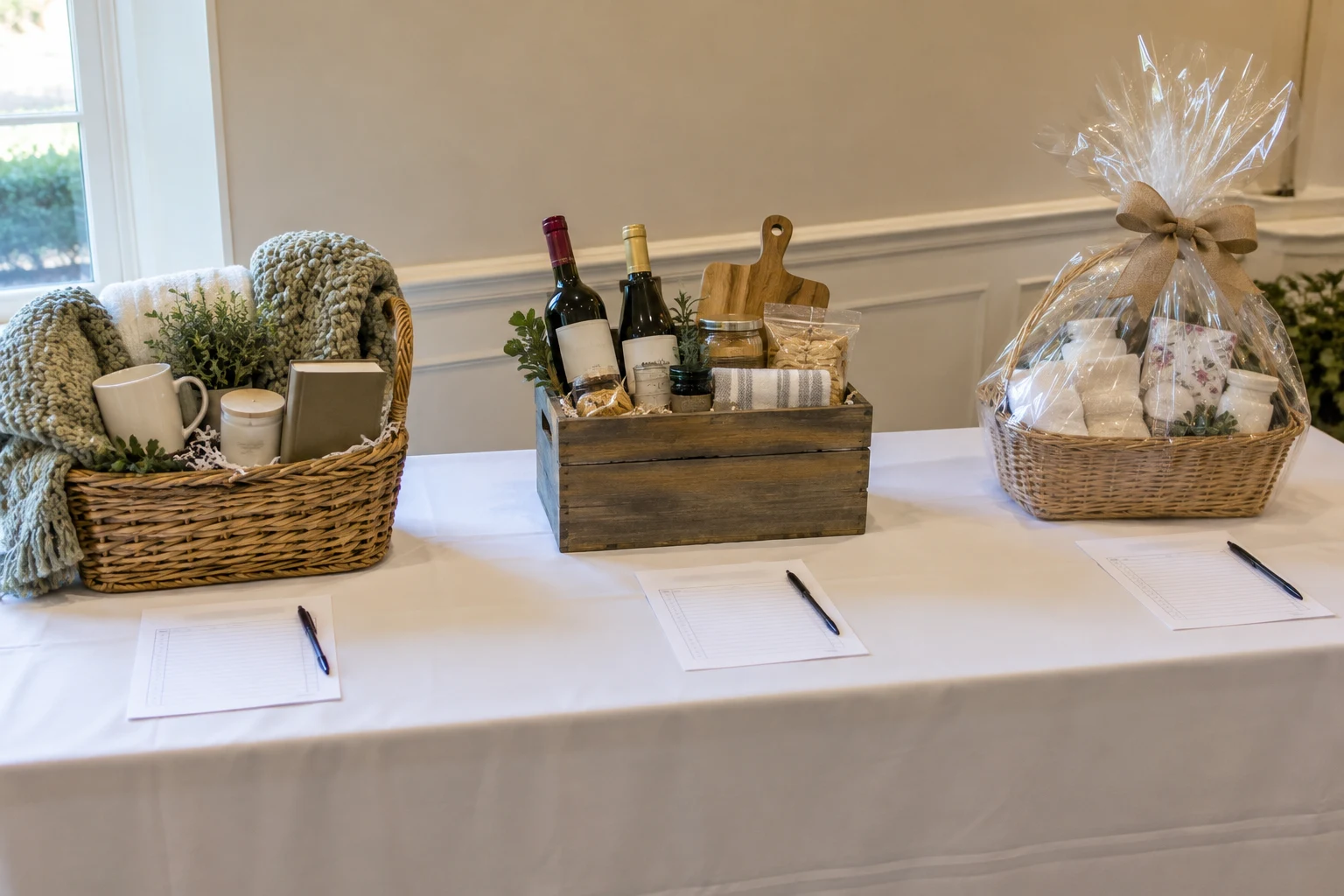
An auction or project display needs more than enough tabletop for the objects. Guests need somewhere to stand, read, ask a question, and move on. Leave required routes clear and avoid placing the most detailed display directly beside the entrance or the first dining table.
Group displays in a way people can understand without a long explanation. Keep item numbers consistent with the organizers' approved bid or checkout system. Put the rules and contact person where guests can find them, and have the fundraising lead approve all wording and procedures.
For display furniture, record the footprint and weight of the actual objects. Confirm the selected table's suitability and loading limits with the provider. Do not assume a table used for lightweight printed information is suitable for a heavy donated item. Plan who will watch the area and who will move or release objects at the end.
If there is no auction, use the same approach for student work, project photographs, sponsor information, or a community display. Give the browsing activity a defined area so it complements dinner rather than occupying the dining route.
Agree the meal and program sequence together
A caterer needs to know when guests will sit, how the meal is served, and when announcements require the room's attention. A speaker needs to know when service and clearing will happen. Put both conversations on the same schedule instead of producing separate plans that conflict on event night.
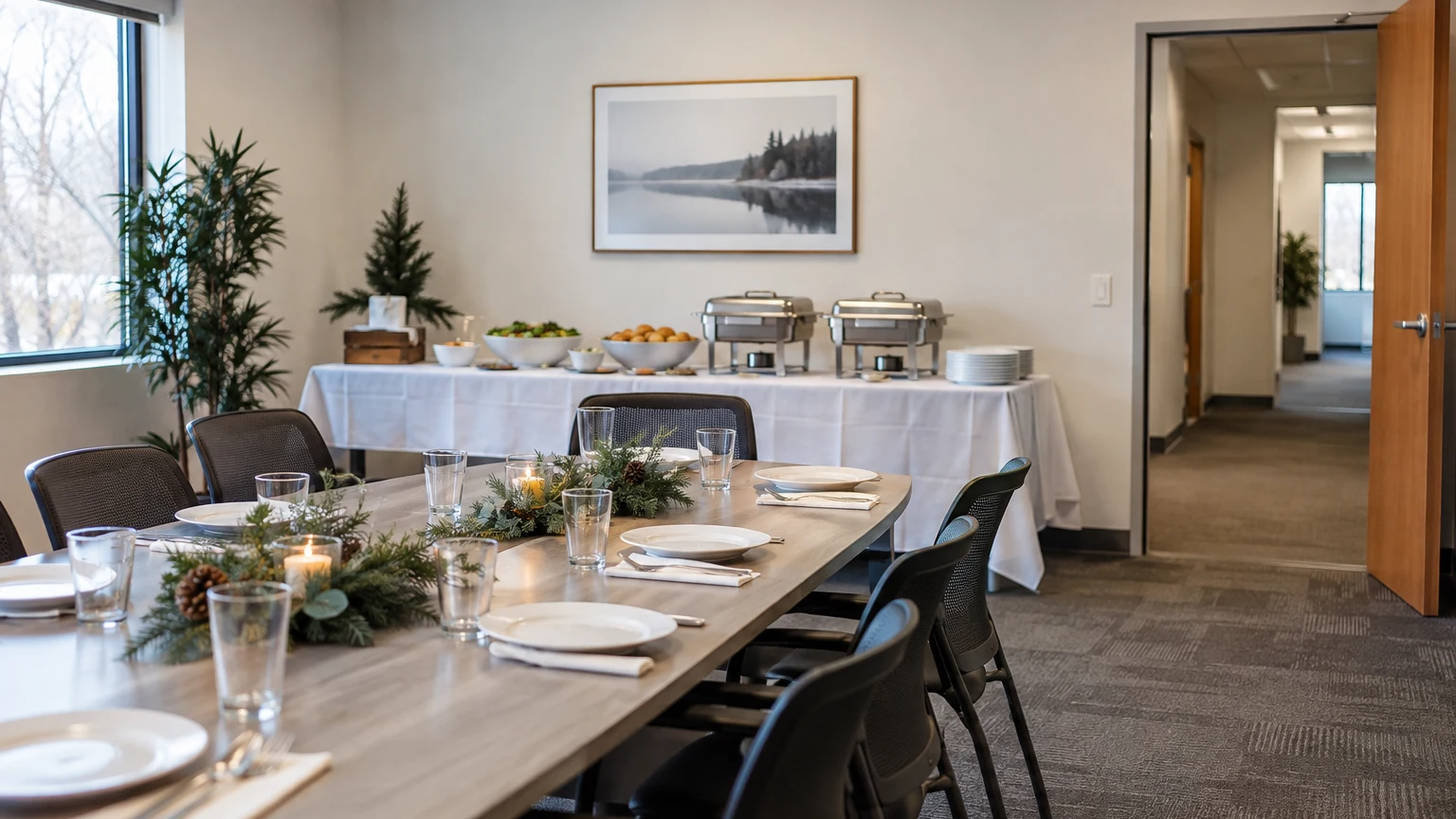
For a buffet, agree how tables are invited to the food and where the line forms. For a plated meal, reserve the service access the caterer needs. Discuss dietary requests, food handling, equipment, power, and clearing directly with the food-service lead. This room-planning guide does not replace the caterer's operating plan.
An illustrative run of show
The following is a sample sequence only. Adjust it with the venue, caterer, and program lead; it is not a recommended service duration for every dinner.
- 5:00 p.m.: Station owners check supplies and the venue reviews the ready room.
- 5:30 p.m.: Doors open, with check-in and displays staffed.
- 6:00 p.m.: The host welcomes guests and explains the meal plan.
- 6:10 p.m.: Dinner begins according to the caterer's agreed sequence.
- 7:00 p.m.: Program begins after the food-service lead confirms the transition.
- 7:30 p.m.: Announced checkout or item collection begins, if part of the event.
- 8:00 p.m.: Guest departure is followed by the approved breakdown plan.
Name one person who can authorize timing changes and tell every station. If dinner runs later than expected, volunteers should not have to guess whether checkout, speeches, or clearing should begin.
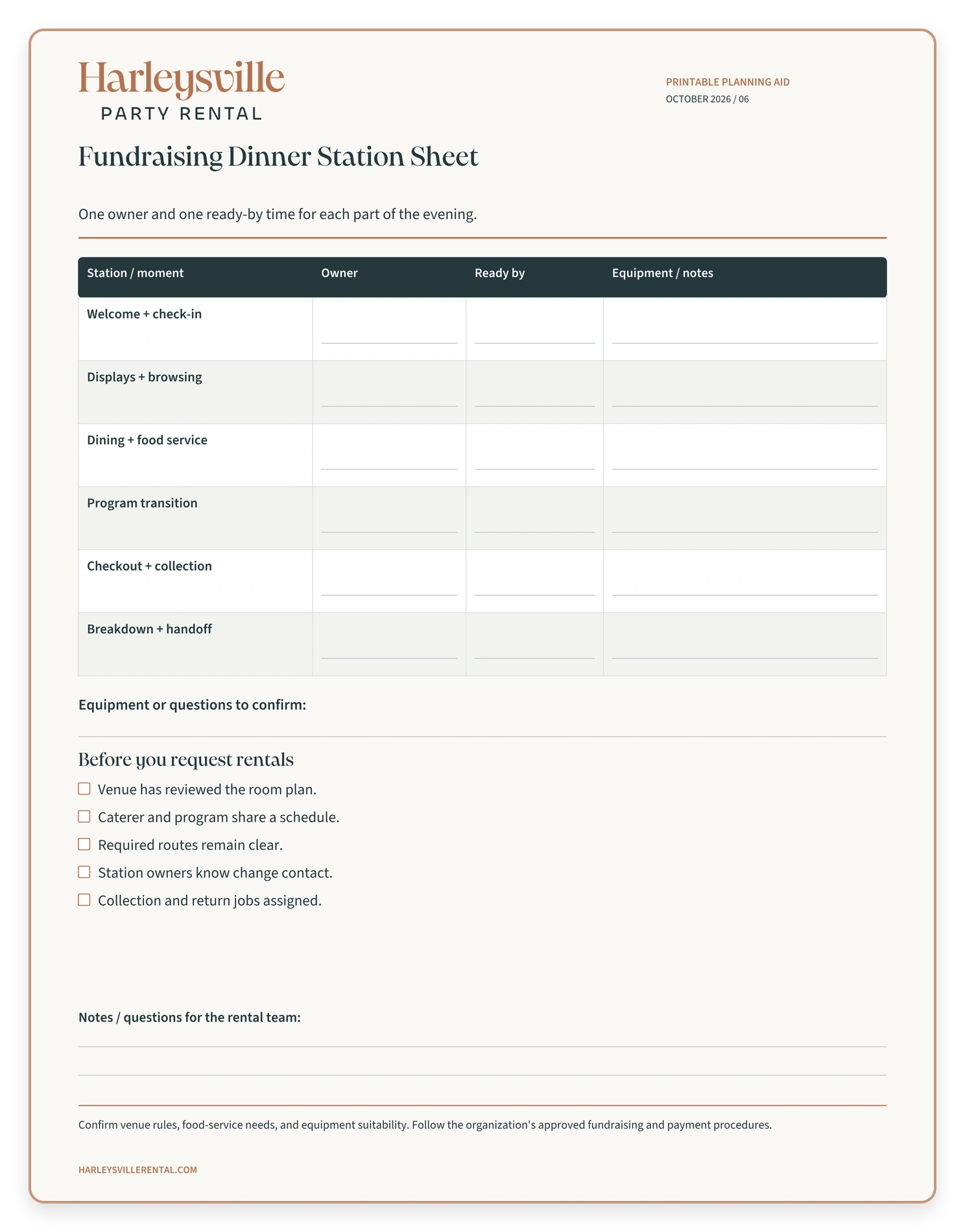
Open the full-resolution planning worksheet to print or save.
Plan checkout, collection, and the rental handoff
An event can have a smooth arrival and a crowded finish if payment, coat collection, and auction pickup all happen in the same corner. Decide where each final task belongs. Keep payment and checkout procedures under the organization's designated lead, and tell guests the agreed process before a queue forms.
If items will be collected, assign a volunteer to verify the approved release process and another to help with packing where needed. Leave a clear route back to the exit. Heavy or awkward objects may need a separate collection arrangement approved by the venue rather than being carried through a crowded room.
Build the rental request by station: check-in, help desk, displays, dining, food service, and checkout. Add the chairs used by volunteers and the surfaces needed out of guest view. Compare that list with the HPR rental catalog, then confirm dimensions, suitability, and current availability.
- Event date, location, guest count, and meal format.
- Venue-approved room sketch and station list.
- Setup, guest, breakdown, and collection windows.
- Delivery access, stairs, elevators, parking, and on-site contacts.
- Responsibility for setting, clearing, packing, and returning rented pieces.
Keep a final handoff sheet with the approved list and contact names. Have each station owner check their area at the start and finish rather than making the event lead account for every small item alone.
Frequently asked questions
Should check-in and checkout use the same table?
They can if the timing, location, and organizer's process allow it. Confirm when the station changes jobs, who moves the supplies, and whether the new queue will affect departures. Do not assume an arrival layout also works at the end.
How many tables should an auction display use?
Start with the actual objects, their footprints and weights, and the space guests need to browse. Confirm the selected tables' suitability and the venue-approved layout. Item count alone does not establish a safe or comfortable display.
Who should control the dinner schedule?
Name an event lead who coordinates with the venue, caterer, and program lead. Give volunteers one agreed schedule and a clear way to receive changes, particularly at the transition from dinner to announcements.
Can this layout guarantee better fundraising results?
No. This guide organizes the room and its operations. Fundraising results depend on many factors, and the organization's approved fundraising, legal, and financial procedures remain separate from the furniture plan.
Request rentals from an agreed station plan
Once the venue and food-service team have reviewed the plan, request a quote from Harleysville Party Rental with the date, room sketch, guest count, station list, and access details. A clear brief makes it easier to discuss the equipment each part of the evening needs, from the first welcome to the last volunteer packing up.