
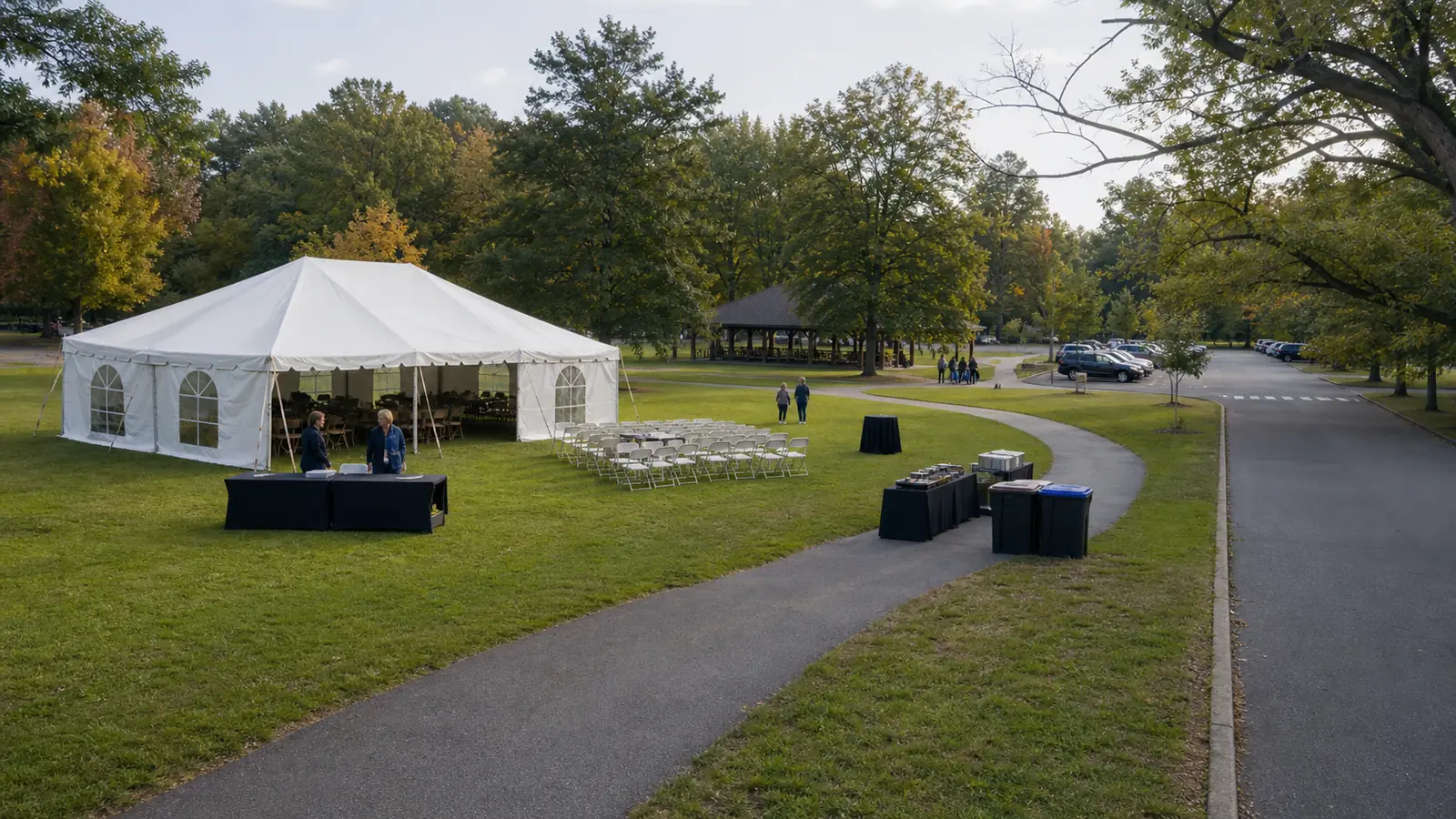
A public park can be a lovely event setting, but it is not an empty backyard. A pavilion reservation, trail-side gathering, field event, and borough park program can each have different rules and limits. Start with permission from the property owner, then build the rental plan around what that owner approves.
This is planning guidance, not legal advice. Rules can change, and each property owner decides what is allowed at its site. Confirm every requirement directly with the County, borough, township, school, or other property owner before signing contracts, ordering equipment, advertising an event, or promising a layout to guests.
Identify the property owner before choosing equipment
“Montgomery County park” can describe a County park, a township field, a borough pavilion, or a privately managed open space in Montgomery County. The name of the place is not enough. Find the owner, the exact reservable area, and the staff contact responsible for that date.
For County parks, trails, and historic sites, Montgomery County directs organizers to the current reservation or permit route for the site they want to use. Its published pages show that the route, conditions, and allowed equipment can differ by property. Read the current permit or reservation terms in full before committing to an event plan.
That is a County example, not a rule for every public park. Lower Salford Township has its own reservation process for certain pavilions. Lansdale Borough has separate facility-rental and special-event materials. The safe first move is always a direct question to the owner: “What permission is required for this exact event, at this exact location, on this date?”
Ask about the event itself, not only the pavilion
A picnic-table reservation may allow use of a pavilion but not a tent, sound system, generator, inflatable, vendor, or road closure. A public-facing festival may involve a different application than a private family picnic. Put the full plan in writing for the property contact.
Share these details when asking for permission:
- Event date, setup time, guest arrival time, and breakdown time.
- Estimated attendance, including volunteers, vendors, performers, and staff.
- Exact park area, pavilion, field, trail segment, or parking area requested.
- Whether the event is private, public, ticketed, open to walk-ins, or tied to a fundraiser.
- Proposed tents, canopies, tables, chairs, stages, games, sound, lighting, food service, or power.
- Vehicle access needs for delivery, loading, waste collection, and accessible drop-off.
- A simple site map showing guest flow and all planned equipment.
Lansdale’s current special-event application is a helpful local example of the level of detail an owner may request. It calls for a site map that can show tent, booth, and stage placement, parking, electric-drop requests, trash and recycling, portable-restroom locations, and walking or running routes where relevant. Your owner may ask for more, less, or different information.

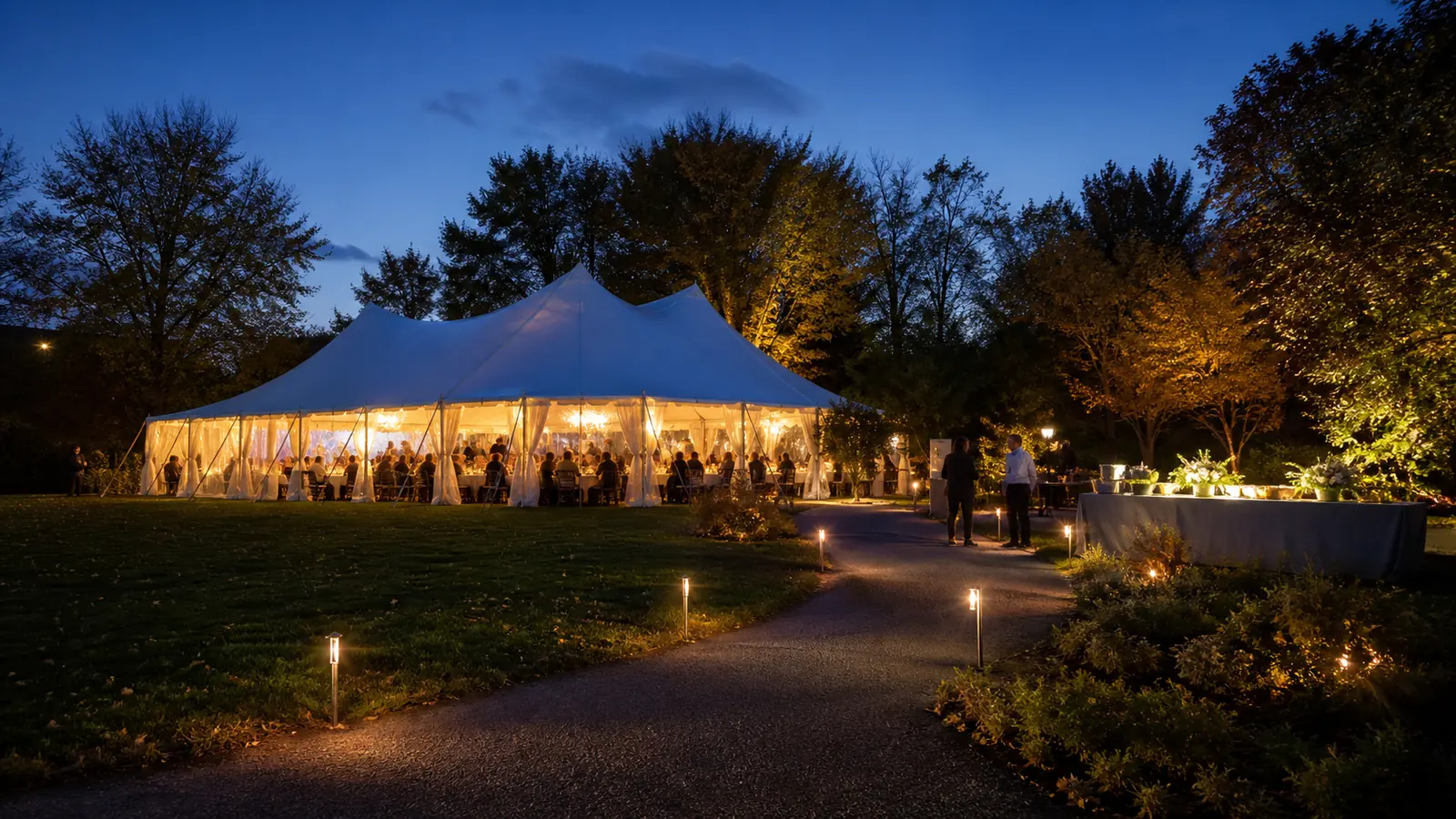
Tents and canopies need site-specific approval
Do not assume that a tent is permitted because a pavilion or field is reservable. County pages for Central Perkiomen Valley Park state that tents, canopies, moon bounces, climbing walls, pony rides, and other large play items are not permitted at its pavilion. Green Lane Park publishes site-specific forms and a park contact for special-use requests. Those examples show why the site contact must approve the exact equipment and location.
When a tent is possible, ask the owner these questions before selecting a size:
- Is a tent or canopy allowed at the requested park area?
- Is staking allowed, or must the tent use another approved anchoring plan?
- Are there marked utilities, irrigation, tree roots, drainage areas, or protected ground where equipment cannot go?
- What clearance is required from trees, buildings, paths, utility lines, roads, and fire lanes?
- Does the owner need a drawing, manufacturer information, proof of insurance, or an inspection before use?
- Is a tent allowed for the full setup and removal window, not only guest hours?
Do not mark a location for stakes until the property owner has approved it and the installer has reviewed the site. The owner’s written permission and site conditions decide the usable plan.
After the owner confirms that a tent is permitted, review Tents & Structures rentals with the approved site dimensions.
Plan access as carefully as the guest area
Rental equipment needs a route from the delivery point to its final location. Public park rules often limit vehicles to designated parking or service areas. Lansdale’s facility guidance says vehicles must stay in designated parking areas rather than on park grounds.
Ask where a delivery vehicle may stop, which entrance it may use, and whether a staff member must be present. Measure gates, paths, slopes, steps, and tight turns between the unloading point and the event site. A map pin alone does not answer those questions.
Make a day-of access sheet
Prepare one page for the organizer, property contact, and rental team. Include:
- Property name, street address, and the specific park entrance.
- Event lead’s mobile number and a second on-site contact.
- Approved arrival, setup, pickup, and breakdown times.
- Delivery route, unloading point, and approved parking location.
- Gate codes or check-in instructions, if the owner provides them.
- The site map with tents, tables, chairs, service areas, accessible routes, and emergency access left visible.
Keep the owner’s approval, permit, or reservation confirmation available on site in the format the owner requests.
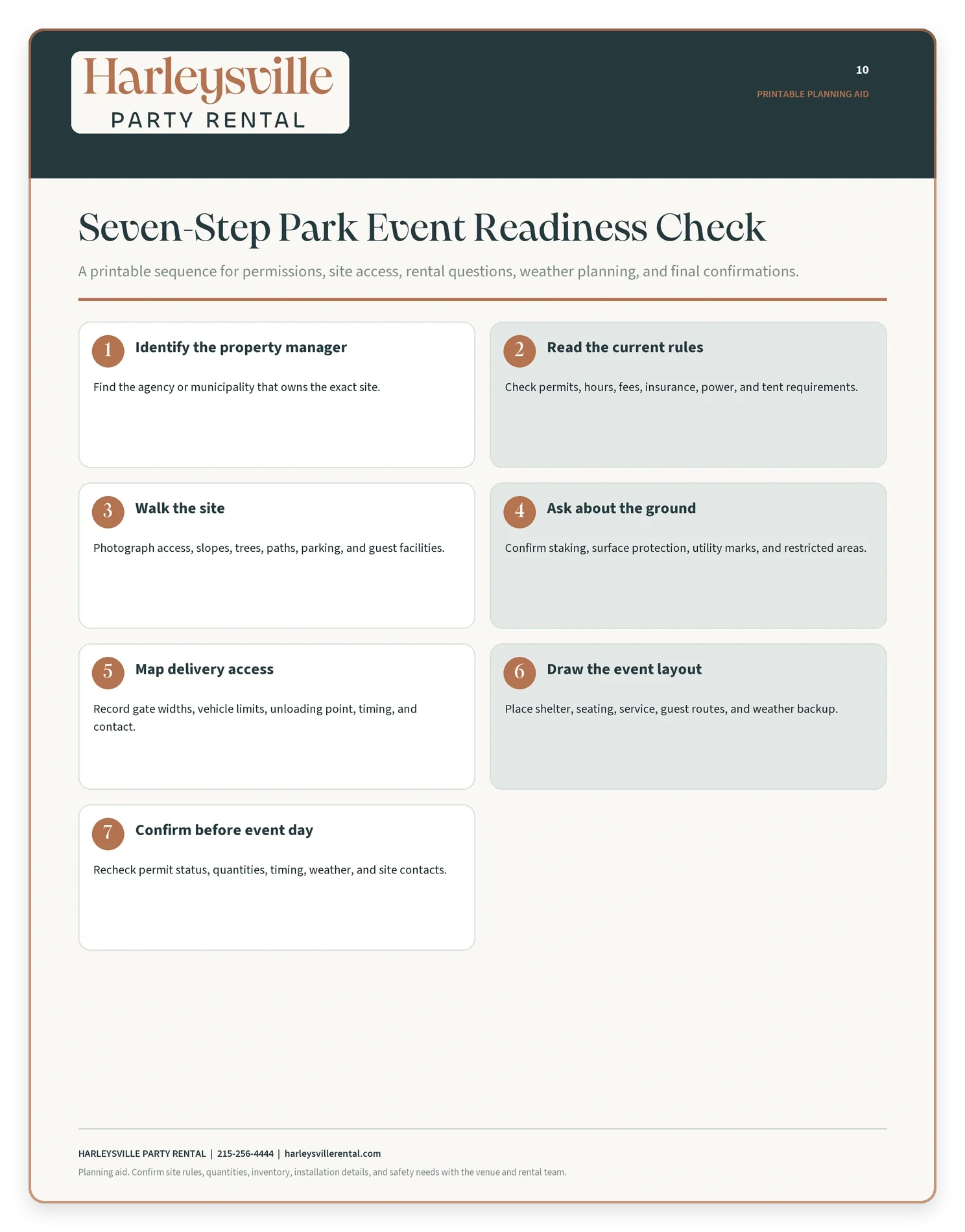
Open the full-resolution planning guide to print or save.
Power, sound, waste, and weather are permission questions
Park amenities vary. A pavilion may have outlets, yet an outlet may not support an event’s full electrical plan. A property may prohibit generators or sound systems. Central Perkiomen Valley Park pavilion rules state that sound equipment and generators are not permitted. Do not plan an extension-cord run, outdoor lighting, food service equipment, or sound program until the owner has confirmed the permitted approach.
Ask where power is available, who controls access to it, and what equipment the owner permits. Keep power routes out of pedestrian paths or protect them using the owner’s accepted method. Ask whether the owner requires a sound plan or a quiet-hour limit.
Waste needs an equally clear answer. Lower Salford’s pavilion form says the applicant agrees to remove accumulated trash and return moved picnic tables to their original locations. Lansdale’s outdoor facility guidance says the renter is responsible for event trash removal. Confirm the site’s waste rules, recycling plan, grease or food-disposal limits, and portable-restroom rules before finalizing the event plan.
Weather planning should include a decision time, a notification plan, and a safe stop-work approach. County special-use guidance says rain dates are not given and organizers must apply again for a new date if an event is canceled. Ask the owner about the weather policy before deposits or announcements are made.

A seven-step public-park event checklist
- Find the property owner and exact reservable area. Obtain the current permit, reservation, and rule pages directly from that owner.
- Describe the full event. Include guest count, activity type, public access, vendors, food, entertainment, parking, and setup hours.
- Ask what needs approval. Confirm permits, fees, maps, insurance documents, tents, anchoring, power, sound, waste, and traffic needs in writing.
- Make a site map. Draw equipment placement, pedestrian routes, accessible travel, emergency access, queues, vendor areas, waste, and delivery movement.
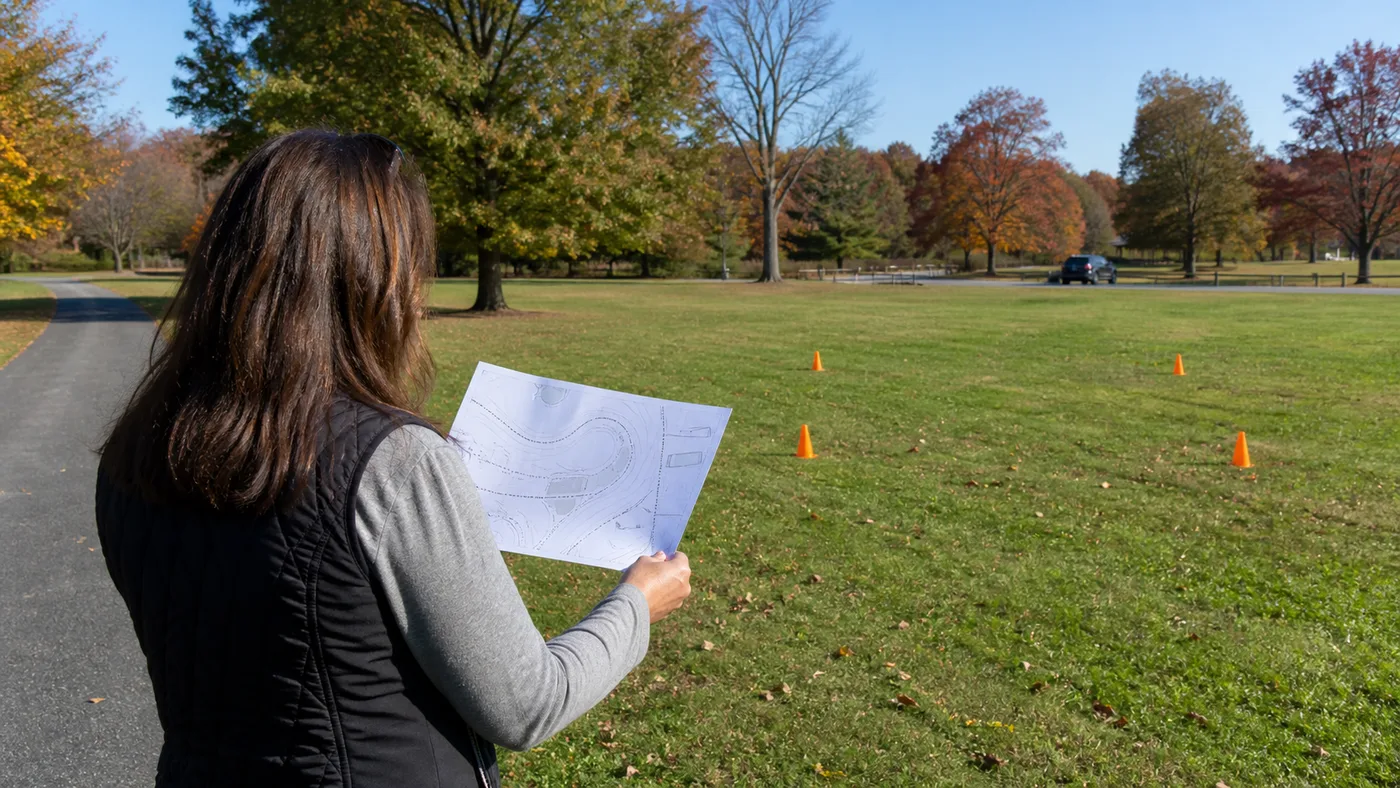
- Review the site in person. Check slopes, gates, surface conditions, trees, utility markers, restrooms, parking, and the route from unloading to setup.
- Build the rental request from approved details. Share the date, location, measurements, access plan, guest count, approved equipment, and event hours. Ask about current availability.
- Reconfirm before event week. Verify the permit status, forecast plan, contacts, delivery route, gate instructions, and any owner conditions that changed.
Compare the approved equipment list with the HPR rental catalog before requesting current options and availability.
Keep the rental request useful and specific
An early rental request does not replace property approval. It helps an equipment provider understand the event once the owner’s answers are known. Include the site map, not just a park name. State whether the setup is on grass, pavement, a pavilion pad, or another surface. Note the usable dimensions, any ground restrictions, the closest vehicle point, and the time window for setup and removal.
No supplier can decide whether a municipal permit, insurance certificate, fire review, food approval, or public-safety plan is required. The property owner and applicable authorities make those calls. Get their written direction before treating any equipment plan as final.
For an overview of the next steps, read What to Expect When You Rent From a Local Party Rental Company.
Frequently asked questions
Do I need a permit for a park event in Montgomery County?
It depends on the owner, park area, event type, attendance, and equipment. Montgomery County requires a Special Use Permit or other appropriate permit for use of County-owned or leased property. Contact the owner of your chosen property directly for the current answer.
Can I put a tent in a County park?
Only after direct approval for the precise location and setup. Some County park pages prohibit tents at certain pavilions, and Green Lane Park routes special-use requests through its current forms and park staff. Do not order or advertise a tent plan until the property owner confirms it.
Can a delivery vehicle drive onto the grass?
Do not assume it can. Published Lansdale guidance directs vehicles to designated parking areas and away from park grounds. Ask the owner for the approved route, unloading point, and timing.
What should I send with a rental request?
Provide the date, property address, exact setup area, guest-count range, site dimensions, surface type, event hours, equipment list, approved delivery route, and any written owner conditions. Ask about current availability after those details are shared.
Request a park-event rental review
After the property owner has confirmed what is allowed, request a quote from Harleysville Party Rental with the approved site map, event date, setup window, guest count, measurements, surface, and access details. The team can review current equipment availability and discuss a rental plan that matches the approved site information.