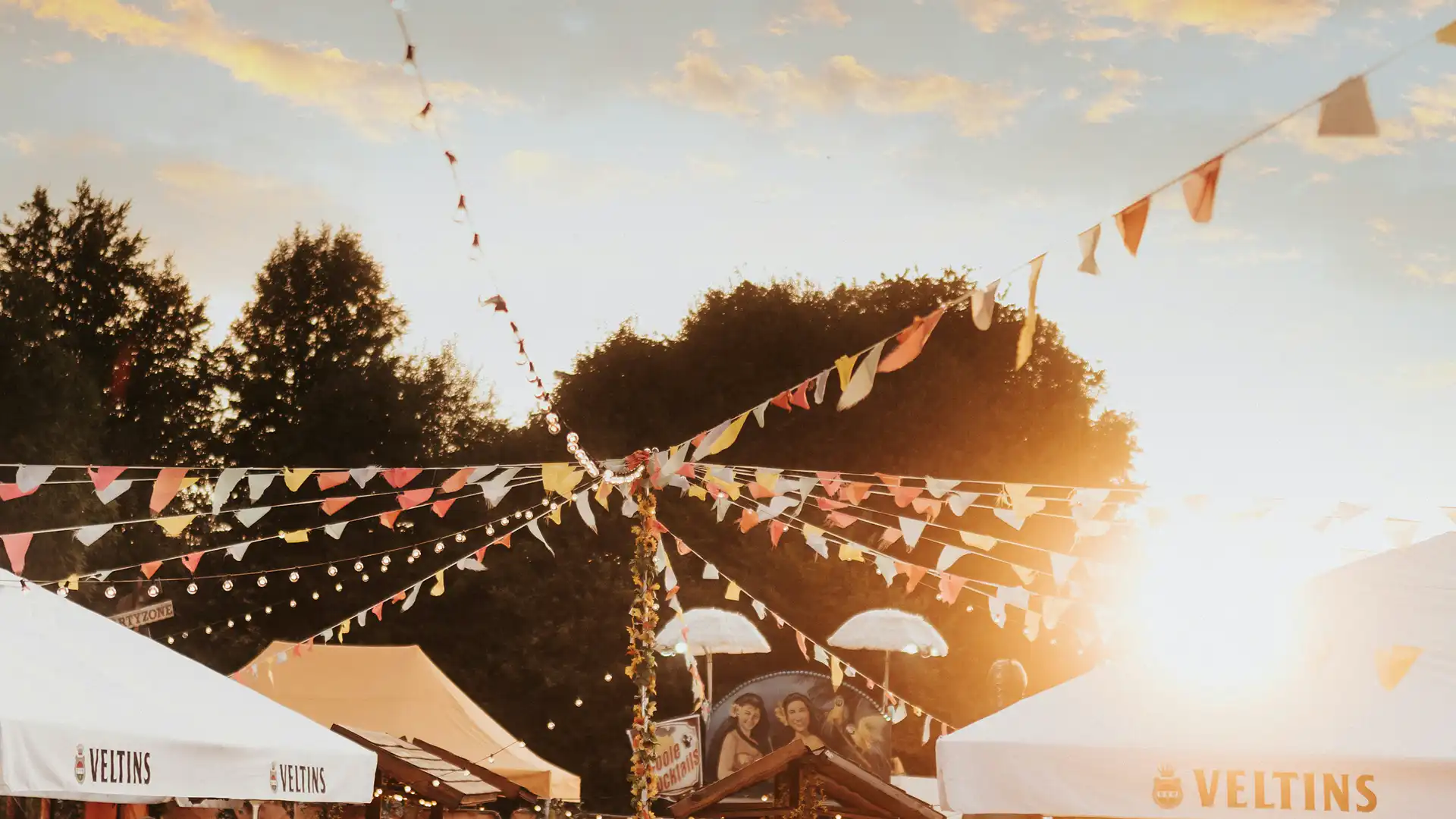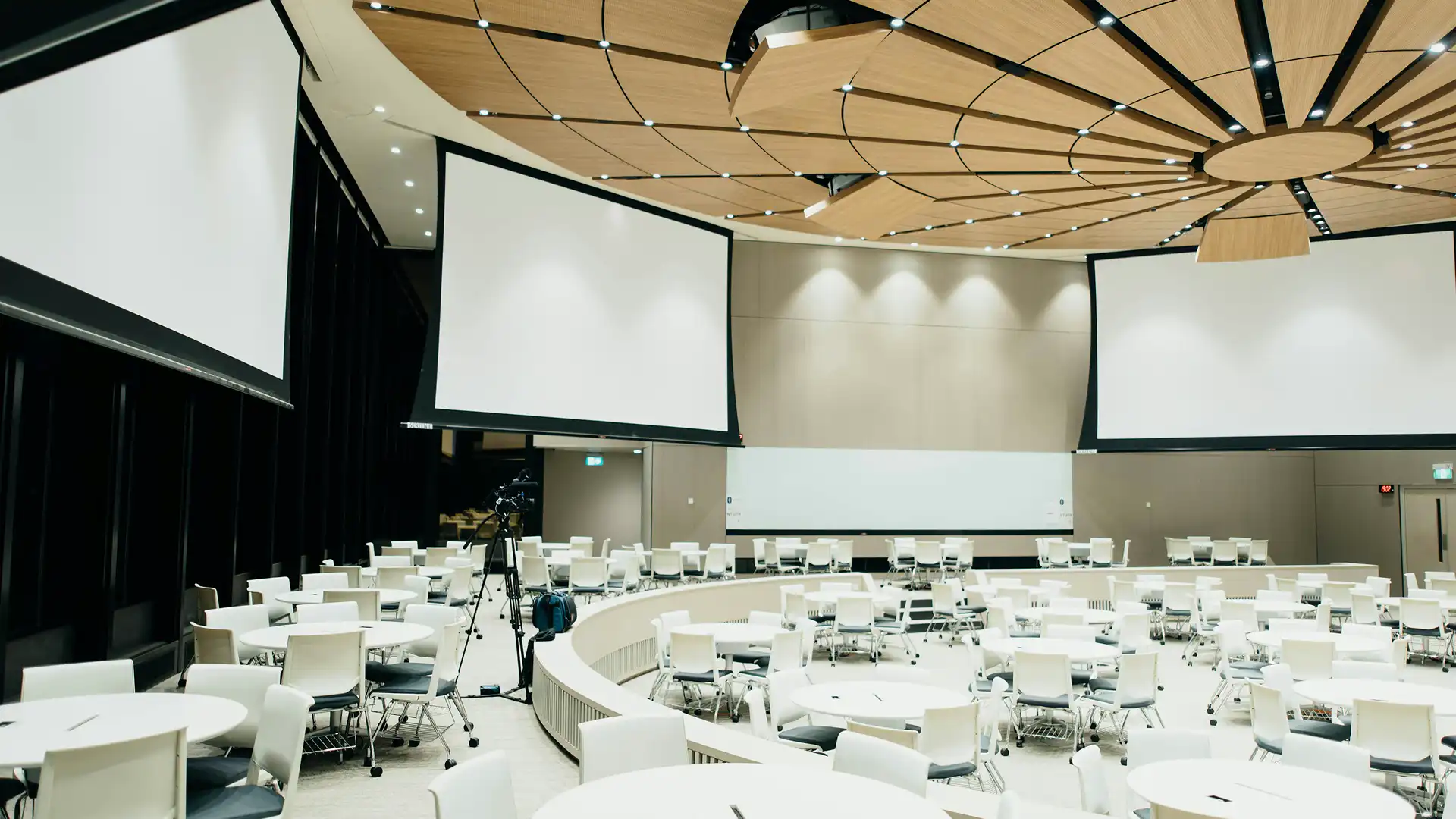

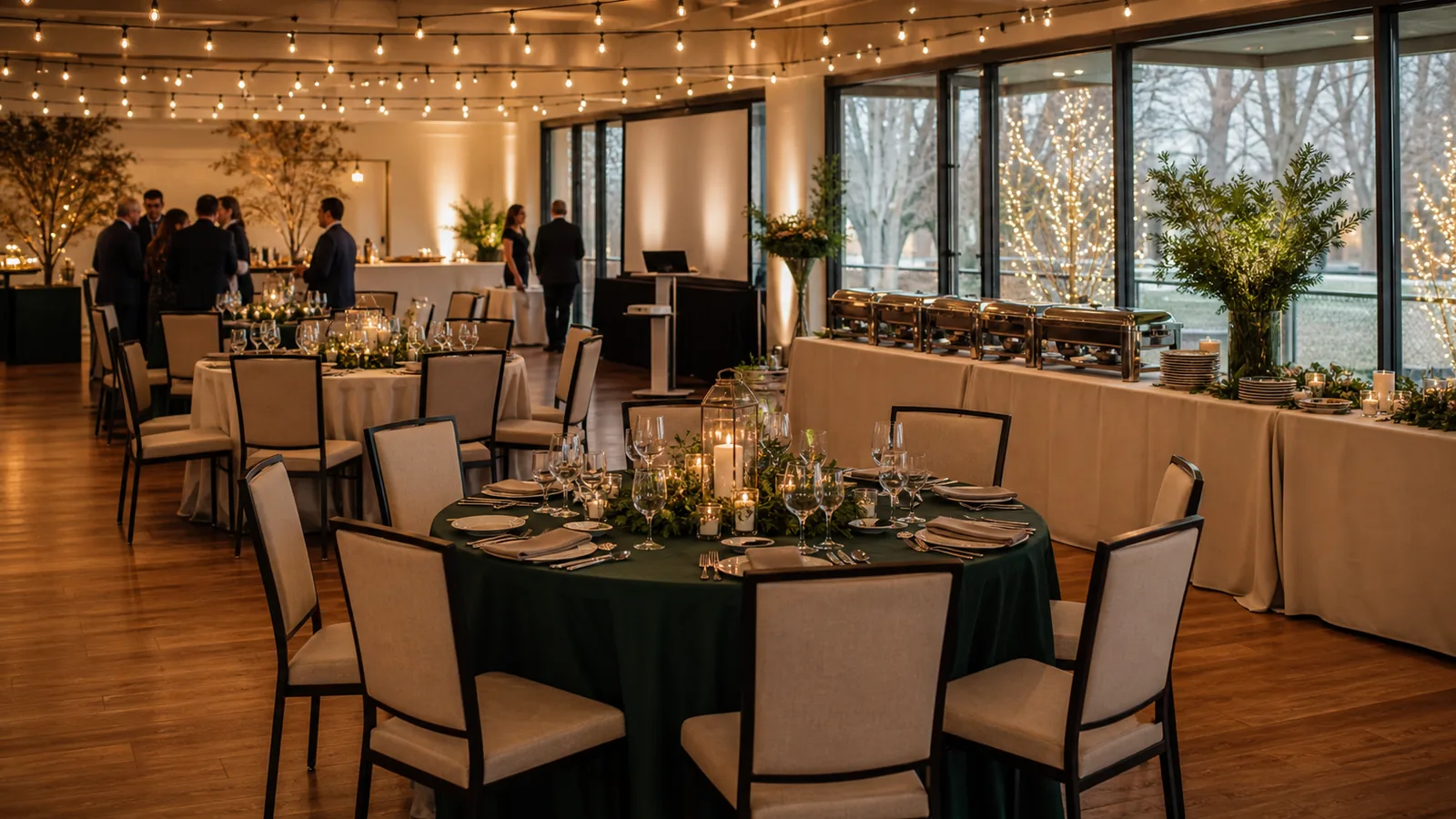
Early fall is when a company holiday party starts becoming real. The date may be months away, yet venues are setting access rules, teams are comparing formats, and the equipment list can affect food service, guest flow, program timing, and budget approval. Waiting for every detail to become final can make the planning work harder than it needs to be.
The useful early-planning goal is not a finished seating chart. It is a well-defined event brief and a first rental request that identifies the decisions with long lead times. For many November and December gatherings, that means the event format, guest range, venue or site, event hours, seating approach, food-service plan, weather option, power needs, and delivery access.
Harleysville Party Rental’s booking guidance recommends beginning corporate event planning three to six months ahead. That is a planning window, not a promise of availability. Use it to begin early conversations, then confirm the current equipment options, setup timing, site fit, and quote for your specific date.
Choose the event format before choosing furniture
“Holiday party” can mean a seated dinner, an open-house mixer, a daytime employee appreciation lunch, a client reception, an awards program, or a family-friendly gathering. Those formats need different room layouts and different rental lists. Start with the experience you want guests to have during the first thirty minutes and the busiest part of the event.
Ask these questions during the first planning meeting:
- Will guests arrive all at once or in waves?
- Is the main activity dining, networking, a presentation, a celebration, or several of these?
- Does every guest need a seat at the same time?
- Will food service be plated, buffet-style, stations, passed, or hosted by a venue provider?
- Are there speakers, awards, video, music, or a toast?
- Is the event indoors, outdoors, under a tent, or split between spaces?
- Which details need employer approval, venue approval, or a final headcount?
Write the answers in a one-page brief. Include the date, public event hours, guest estimate and maximum, address, venue contact, day-of contact, budget range, loading rules, and decision deadlines. That document helps every supplier work from the same information and gives the internal planning team a record of what still needs approval.
Reserve the parts that shape the room
Seating and tables
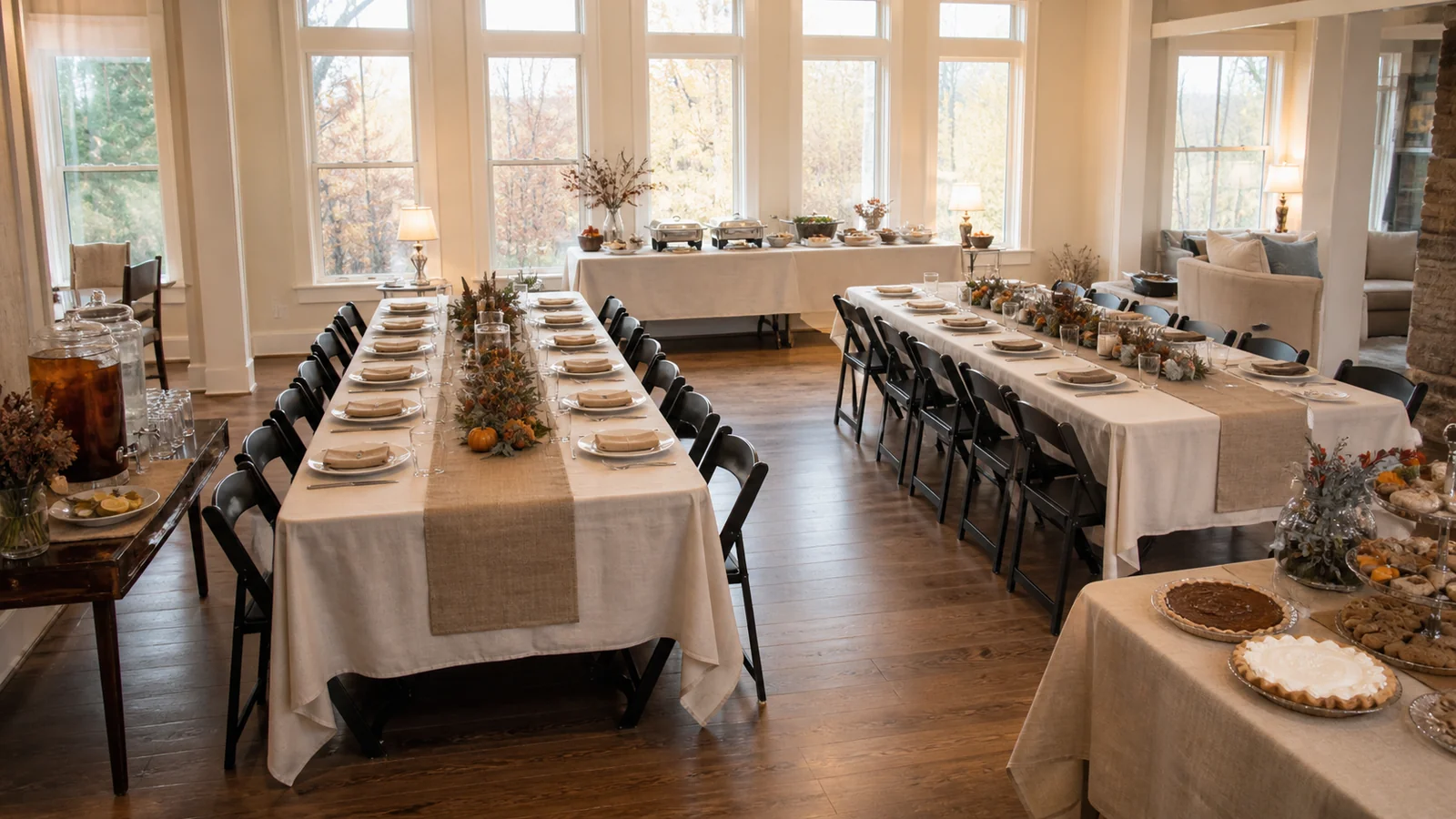
The first equipment decision is usually not a chair style. It is the seating model. A banquet needs enough seated places for the peak dining moment. A cocktail event needs high-top tables and enough scattered seating for guests who prefer not to stand for the full program. A lunch-and-awards event may need dining tables plus a view toward a speaking area.
On the first rental request, state the expected guest range and how you plan to use the room. Describe whether tables are for dining, food service, registration, awards, gifts, beverages, displays, or staff support. Then ask the venue to confirm room dimensions, existing furniture, doorway widths, service access, and any items that cannot be moved.
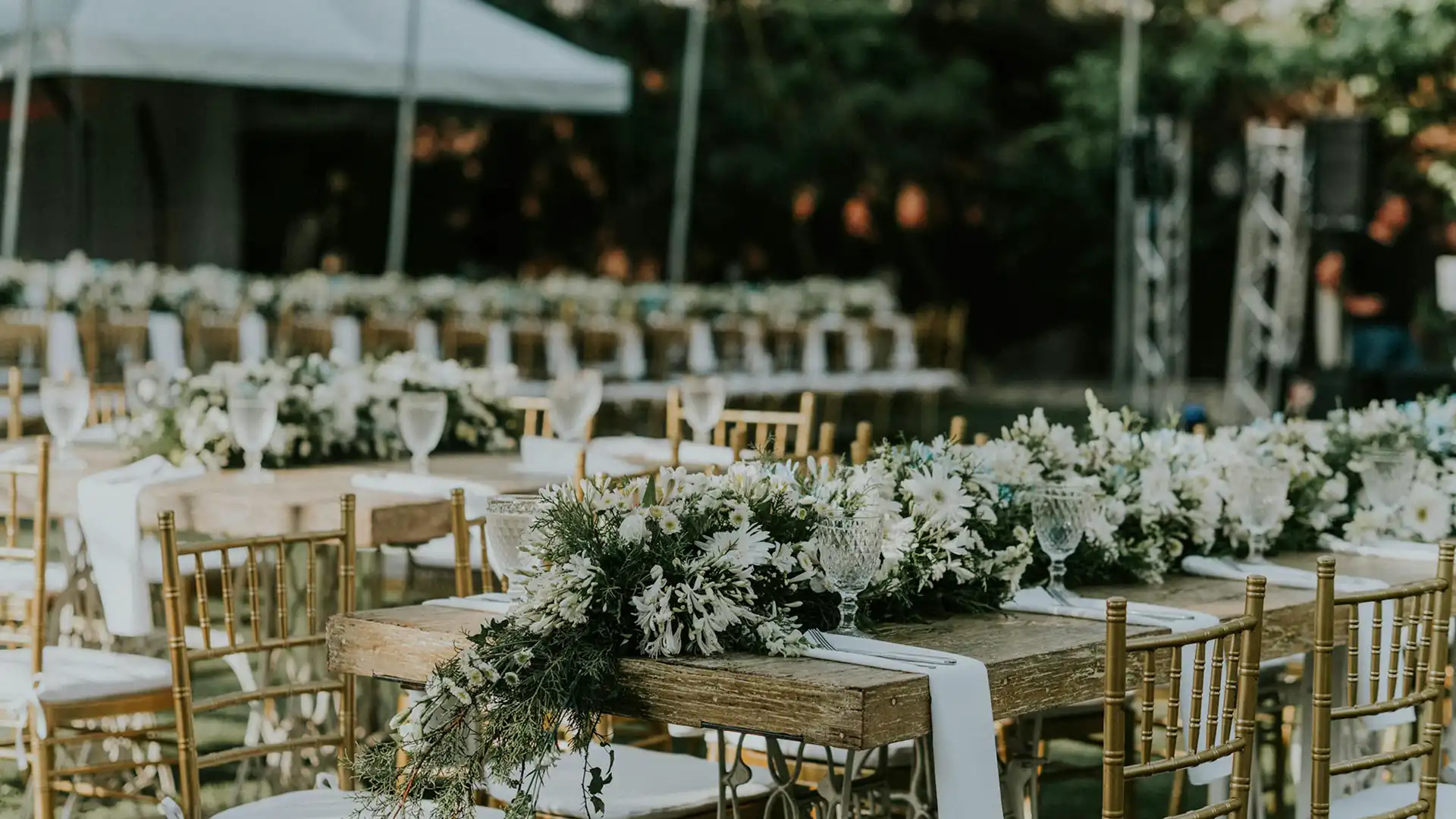
HPR’s current corporate page lists folding chairs, banquet tables, cocktail tables, linen options, registration tables, and check-in stations as items it can discuss for business events. The page also shows sample event formats with tented seating and cocktail-style layouts. Use those examples to start a conversation, rather than assuming a package or quantity applies to your event.
Use HPR’s Corporate & Business Events page as a starting point for the room and equipment discussion.
Food service and beverage stations
Treat food service as a route, not just a set of tables. Guests need to find the order or serving point, collect a drink, move toward seating or conversation, and return without crossing a presentation area. A buffet line needs room at both ends, including a place where guests can join the line without blocking entry doors. A beverage station should not force people to walk across the food line.
Map the functions separately: staff prep, service, beverage, desserts, used-dish return if relevant, waste, and guest seating. Ask the food provider how much working space it needs and what it brings. Then ask the venue what is permitted. A rental plan should support those answers rather than make them up.
Lighting, sound, and presentation support
Lighting can help guests find an entrance, read a program, identify food service, and move safely after sunset. Sound support starts with the program, not the equipment name. Write down whether a host needs a microphone, whether music plays during arrival, whether a speaker needs a table, and whether screens or presentation equipment are supplied by the venue or another provider.
HPR’s live corporate page includes lighting, AV tables, power solutions, sound system, stage, podium, and presentation setup among options to discuss. Verify current availability and compatibility with the venue before putting any item into a final schedule. If the setup uses lights, sound, or other powered equipment, identify the power source, outlet location, cable route, and who approves the plan.
Outdoor shelter and weather options
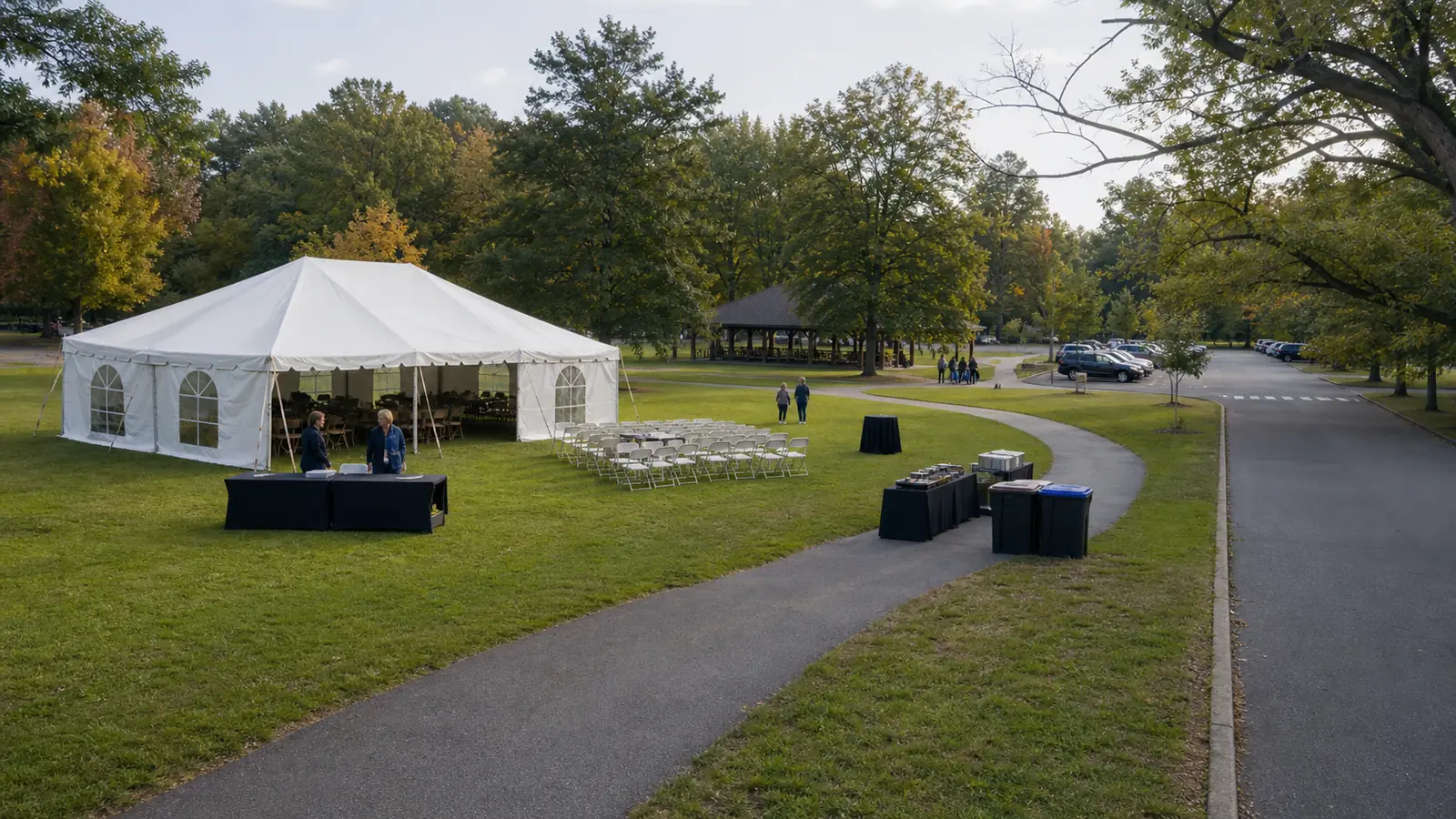
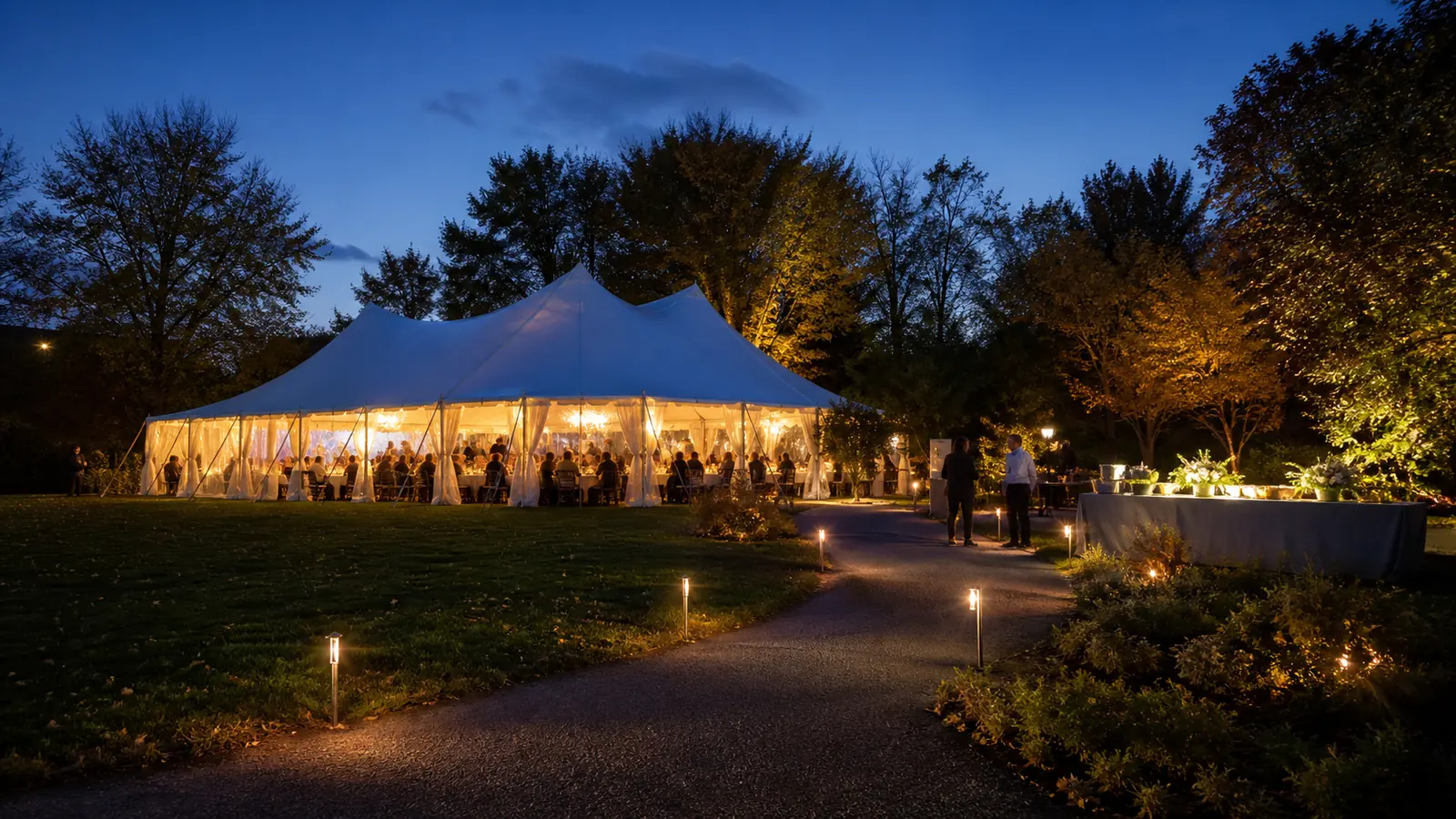
An outdoor arrival, tented reception, or covered food station can be useful during the holiday season, yet it adds site questions. Review the surface, dimensions, delivery route, guest comfort, lighting, sidewalls, heating needs, and the venue’s restrictions. A tent cannot be selected only by the guest count. It also needs a suitable location, clear access, and an approved setup method.
HPR’s corporate page says tents require flat, open ground and that staking or weighted options may be used depending on the surface. Its seasonal page lists frame or pole tents with optional sidewalls, along with heaters, fans, lighting, and power distribution as possible planning topics. Your venue or property owner must confirm what is allowed, and the rental provider must confirm a suitable current setup.

Plan delivery access before event week
Holiday events often take place at offices, restaurants, event venues, warehouses, private clubs, or public-facing business sites with rules about deliveries. A complete rental request should include the setup date and time, event hours, breakdown window, loading entrance, elevator or stair information, parking or dock instructions, ceiling or doorway limits, and the name and phone number of the person who can admit the crew.
This is also the time to ask about after-hours access. The corporate page says HPR can work with early, late, or weekend delivery windows to match a venue’s access requirements. Treat each timing request as something to confirm in writing for the event date. Do not assume a building will allow a truck, a loading area, or a setup crew simply because it did last year.
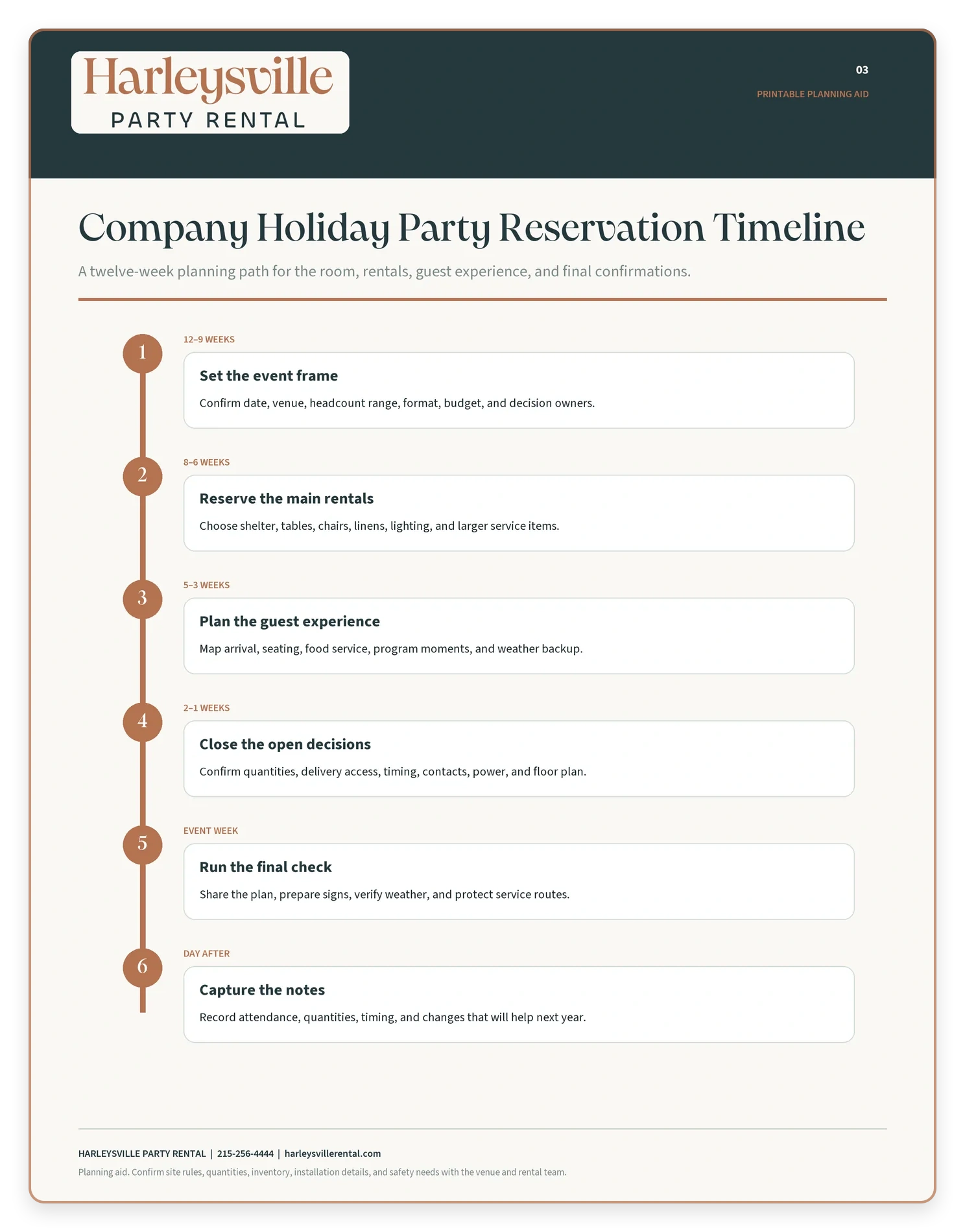
Open the full-resolution planning guide to print or save.
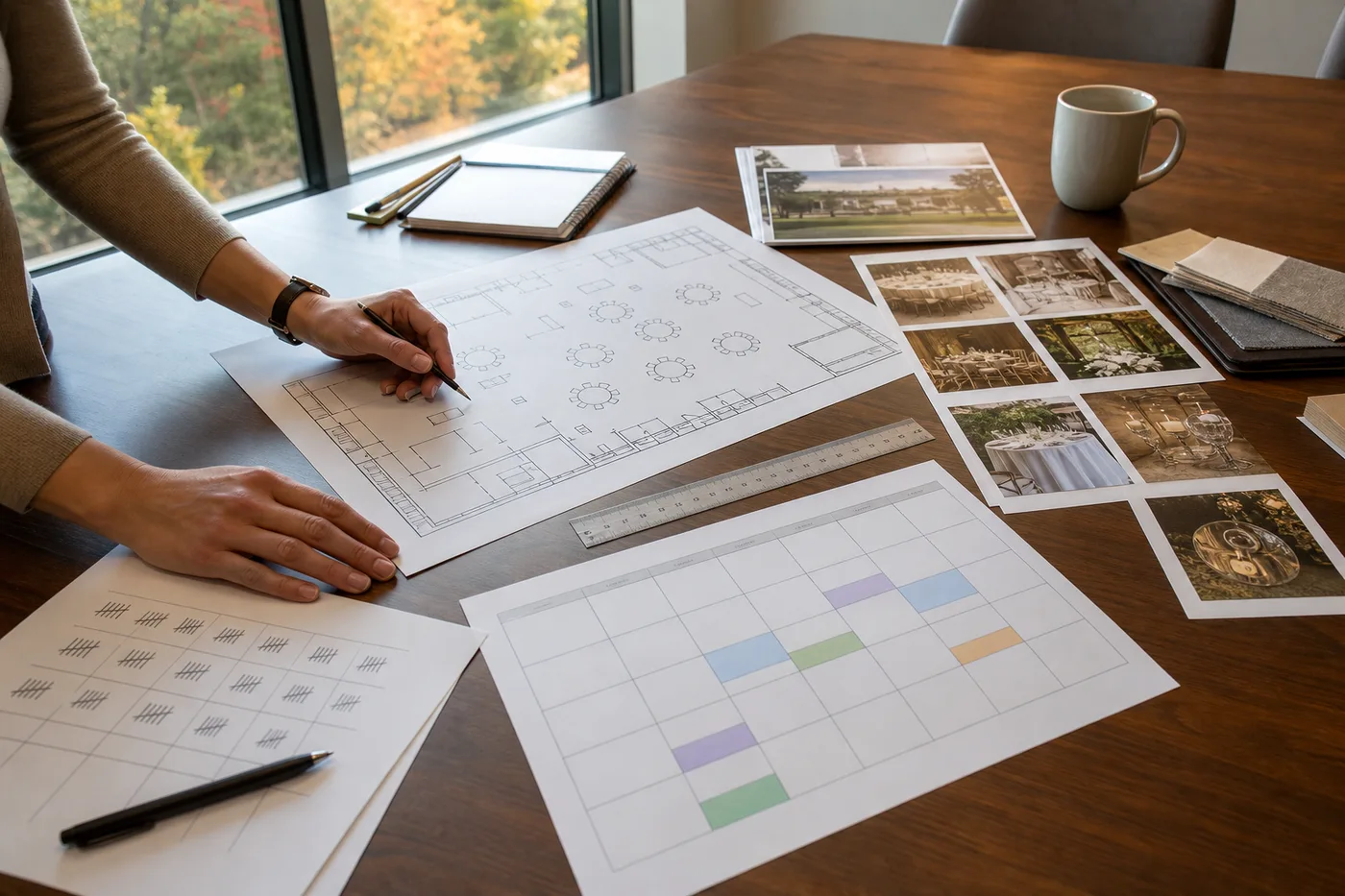
Use a twelve-week view to guide the work
A twelve-week view gives the team room to decide, communicate, and adjust. If the party is closer, work through the same decisions now, ask what remains available, and combine steps where practical. The dates will differ by event, yet the order of decisions is useful.
- Weeks 12 to 10, set the brief. Confirm the event purpose, date range, guest estimate, venue, budget owner, and approval process. Request a venue walk-through if the layout is uncertain.
- Weeks 10 to 8, draft the layout. Place arrival, check-in, food service, seating, program, beverage, support, and any outdoor areas. Request rental options based on this first map.
- Weeks 8 to 6, reserve decision-driving items. Confirm the equipment that defines the format, such as tables, chairs, tented areas, lighting, sound or presentation support, and service surfaces. Availability must be confirmed at booking.
- Weeks 6 to 4, align providers. Share the latest layout with the venue, food-service provider, AV team, building contact, and rental partner. Confirm access, power, setup timing, and any venue paperwork.
- Weeks 4 to 2, refine the guest plan. Update headcount range, seating model, signage, table uses, accessibility needs, and weather path. Ask what changes are still possible, subject to availability.
- Final two weeks, confirm day-of details. Send the final contacts, delivery instructions, loading rules, timeline, room diagram, and weather decision process to everyone responsible.
Make the first request specific enough to quote
A request does not need every napkin color or award name. It does need the facts that determine equipment and labor. Supply the date, location, event type, guest range, setup and event hours, indoor or outdoor status, site photos or plan, surface type, delivery details, table and seating needs, food-service layout, program needs, lighting or power needs, and the weather alternative.
If you do not know an answer, say so. “Venue has not confirmed the outlet locations” is more useful than leaving power off the request. It lets the rental team identify the question before it becomes a setup-day issue.

Browse the rental catalog alongside the room plan, then ask the team to confirm the suitable options for the date.
Keep one owner for each decision
Company events become harder when everyone believes someone else has approved the layout. Give one person ownership of the event brief, one person venue communication, one person the food-service plan, one person program and AV, and one person the final rental approval. Those roles can be held by a small team, yet the owner should be clear.
Keep a shared list with the decision, owner, due date, status, and source of confirmation. Examples include “venue confirms loading entrance,” “food provider confirms service footprint,” and “rental provider confirms selected equipment.” This record helps the team distinguish a good idea from an approved detail.
FAQs
Why should a company holiday party start rental planning early?
HPR recommends starting corporate event planning three to six months ahead. Early planning gives you time to define the format, venue, guest range, and equipment needs for late-fall or winter dates. It gives the team time to obtain approvals and confirm current availability.
What rentals should be considered first for an office holiday party?
Start with the elements that determine how guests use the space: seating, dining or cocktail tables, food-service surfaces, check-in, lighting, sound or presentation support, and any tent or weather option. The exact list depends on the venue, program, guest count, and current availability.
Can a rental provider help with a company-event layout?
HPR states that it can help plan layouts for speakers, food lines, check-in, and breakout areas. Bring a venue plan, photos, guest range, schedule, and access details to that conversation. The venue still controls its room rules and setup restrictions.
What should we confirm with the venue before equipment is reserved?
Confirm dimensions, existing furniture, loading entrance, setup and pickup windows, elevator or stair access, power locations, ceiling limits, outdoor rules, emergency routes, insurance paperwork, and the person authorized to approve the layout.
Ready to set the holiday party planning brief?
Share your company holiday party date, venue details, guest range, layout goals, and access window with Harleysville Party Rental, then request a quote based on the items you need to confirm first.