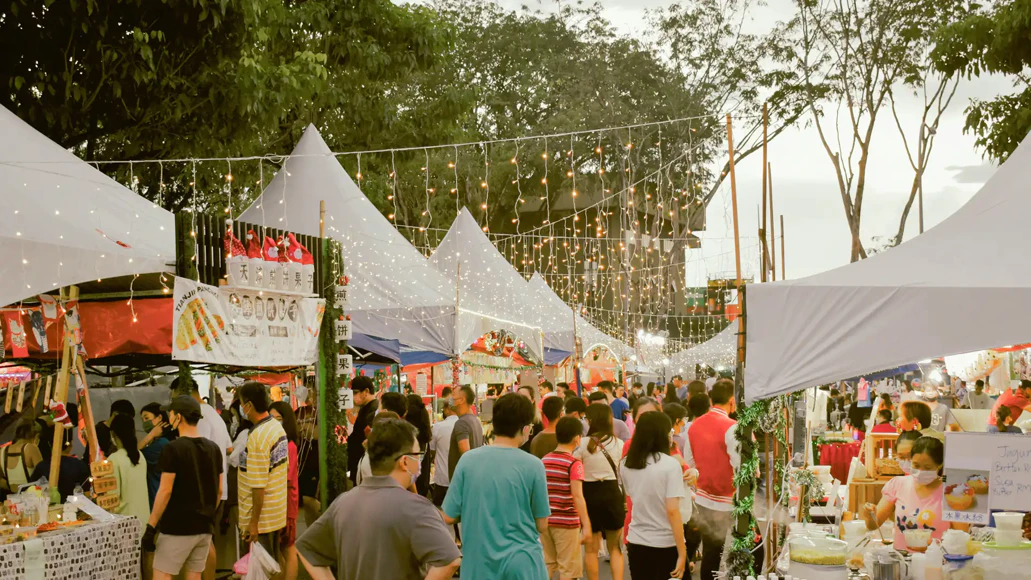

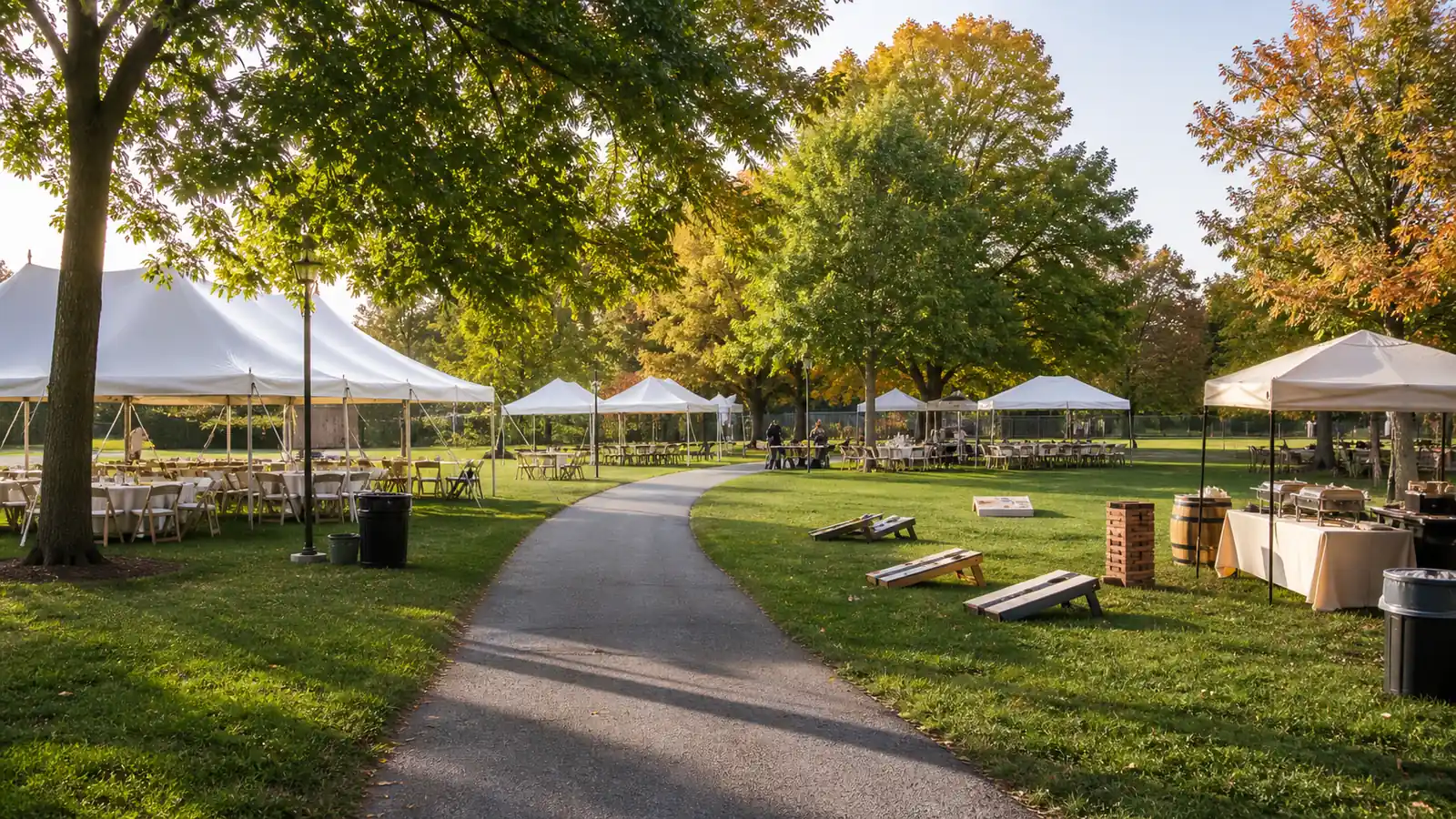
Fall festivals work best when guests can tell where to go without asking. That sounds simple, yet it is the planning decision that shapes nearly every rental request. A tent is not simply shelter. A table is not simply a surface. Each item has a job in the guest journey, from the first welcome sign to the final cleanup bag.
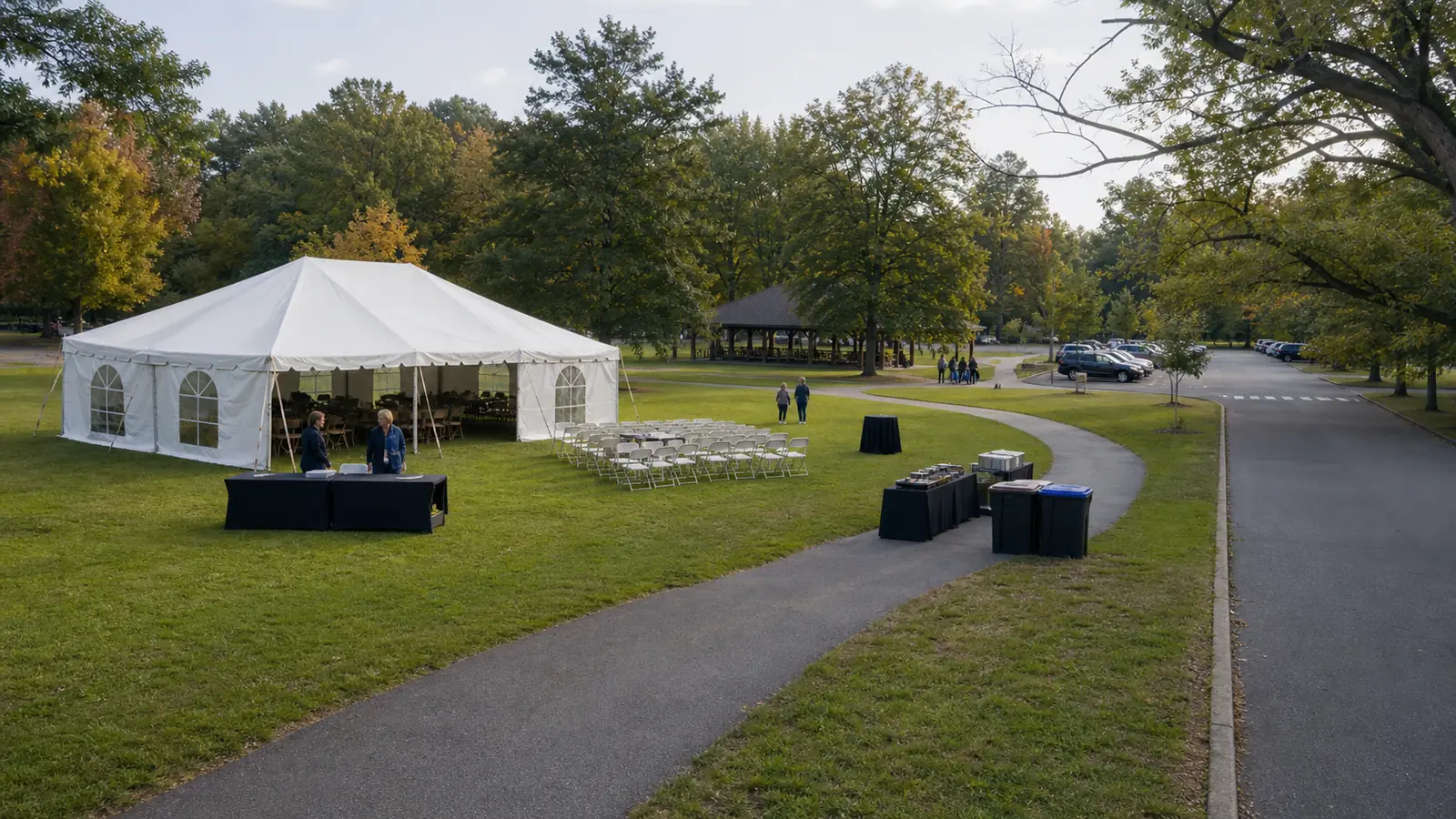
For a Montgomery County school, nonprofit, faith group, neighborhood association, or town committee, start with a site plan before choosing equipment. Mark entrances, vehicle access, existing restrooms, electrical locations, slopes, trees, fire lanes, and any areas the property owner has ruled out. Then arrange the festival in working zones. This approach helps volunteers direct guests, helps vendors understand their footprint, and gives a rental team a useful picture of what to quote.
Use this checklist as a planning tool, then confirm site rules, equipment availability, delivery access, and setup details directly with every venue and supplier.
Start with the event brief, not the rental list
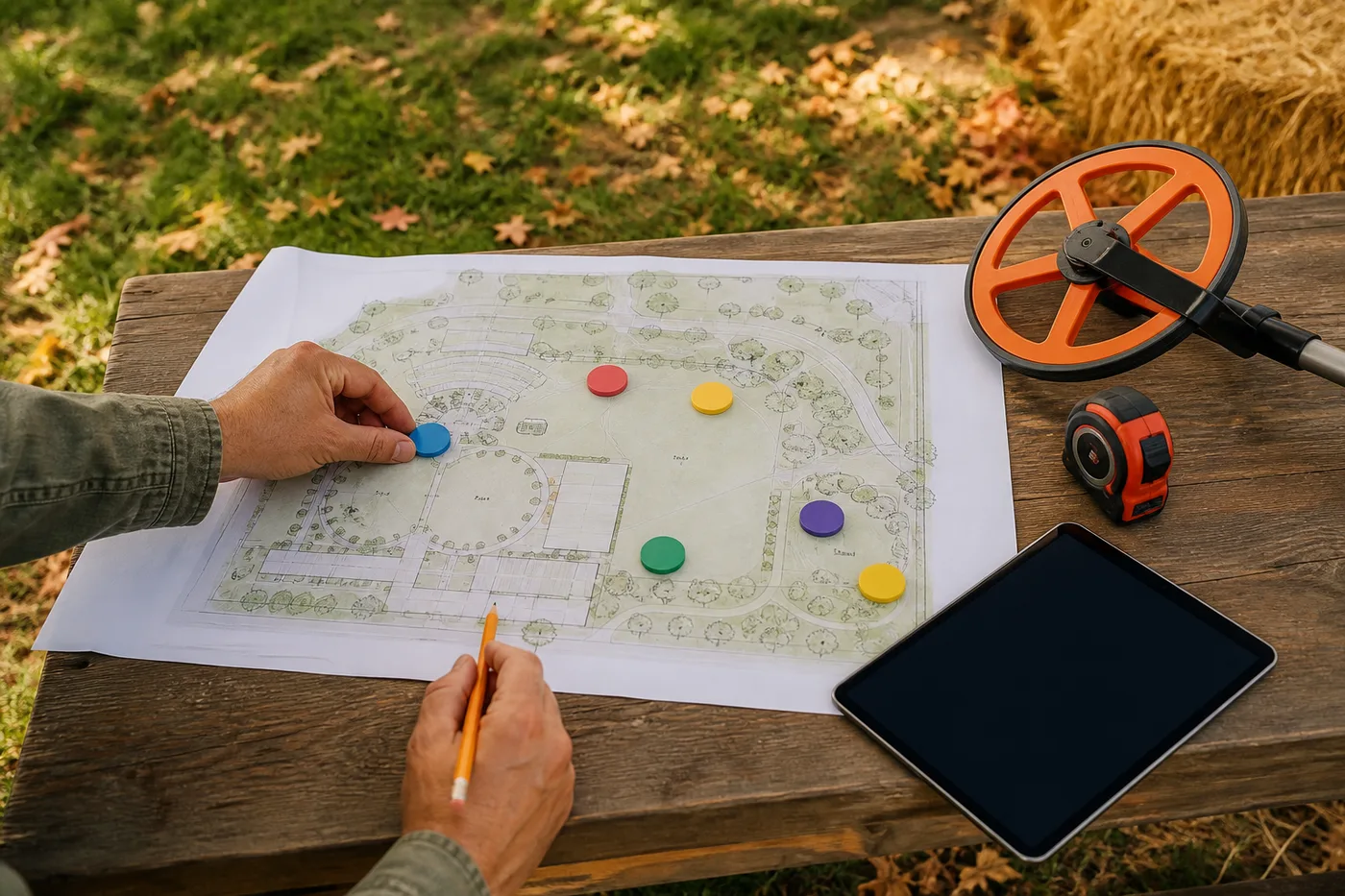
Before counting tables or looking at games, write a one-page brief that every organizer can use. It should state the date, public hours, setup window, location, estimated attendance, age range, food plan, rain decision deadline, and the person authorized to approve changes. Add a simple map, even if it begins as a marked-up aerial image.
Your first attendance number is a planning estimate, not a promise. Think about how many people may arrive at the same time, not only total registrations. A two-hour after-school event can have a much sharper arrival wave than an all-day harvest market. The high point drives check-in capacity, walkway width, seating, and the number of activity stations that need volunteer supervision.
For each zone, answer four practical questions:
- What activity happens here?
- Who uses it, guests, volunteers, vendors, or staff?
- What furniture, shelter, power, lighting, or signs does it need?
- What changes if rain or high wind affects the plan?
That exercise prevents a common problem, ordering attractive equipment before deciding where guests will queue, eat, rest, or find help.

Build six festival zones
1. Arrival and welcome
The entrance should help people orient themselves within the first few steps. Place check-in, ticket sales, wristbands, programs, and an information point near the arrival route, with room for two lines if attendance may peak. Use tables for registration materials and a covered spot if paper forms, payment devices, or volunteers need weather protection. Keep the route from parking or drop-off to the welcome table clear of game traffic and food lines.
Plan for a visible sign that tells guests where the next decision is. A short message such as “Check in, activities to the left, food to the right” can reduce congestion better than several small signs. If a raffle, auction, or donation table is part of the event, give it a separate surface and volunteer so it does not slow check-in.
2. Activity and game area
Put active attractions where sound, movement, and waiting families will not block quieter areas. Give each attraction a defined queue, a staff post, and a clear exit path. Grouping age-appropriate lawn games or inflatables can help families choose where to go, yet leave enough open space between activities for adult supervision and for children who are not participating.
For this zone, the equipment discussion may include lawn games, inflatables, cones or crowd-control items, tables for prizes, and a tent for volunteer shade. The exact mix should follow the activity rules and the staffing plan. Do not let an attraction become a self-managed island. Every game needs an operator assignment, an opening check, and a plan for stopping play when weather or staffing changes.
3. Food and drink
Food service creates queues, waste, spills, and repeat trips. Put it close enough to seating that guests can carry food safely, but far enough from high-motion activities that a line does not cross the game area. Include an order point, a pickup point, a beverage area, a trash location, and an accessible handwashing or sanitizer point where appropriate to the service plan.
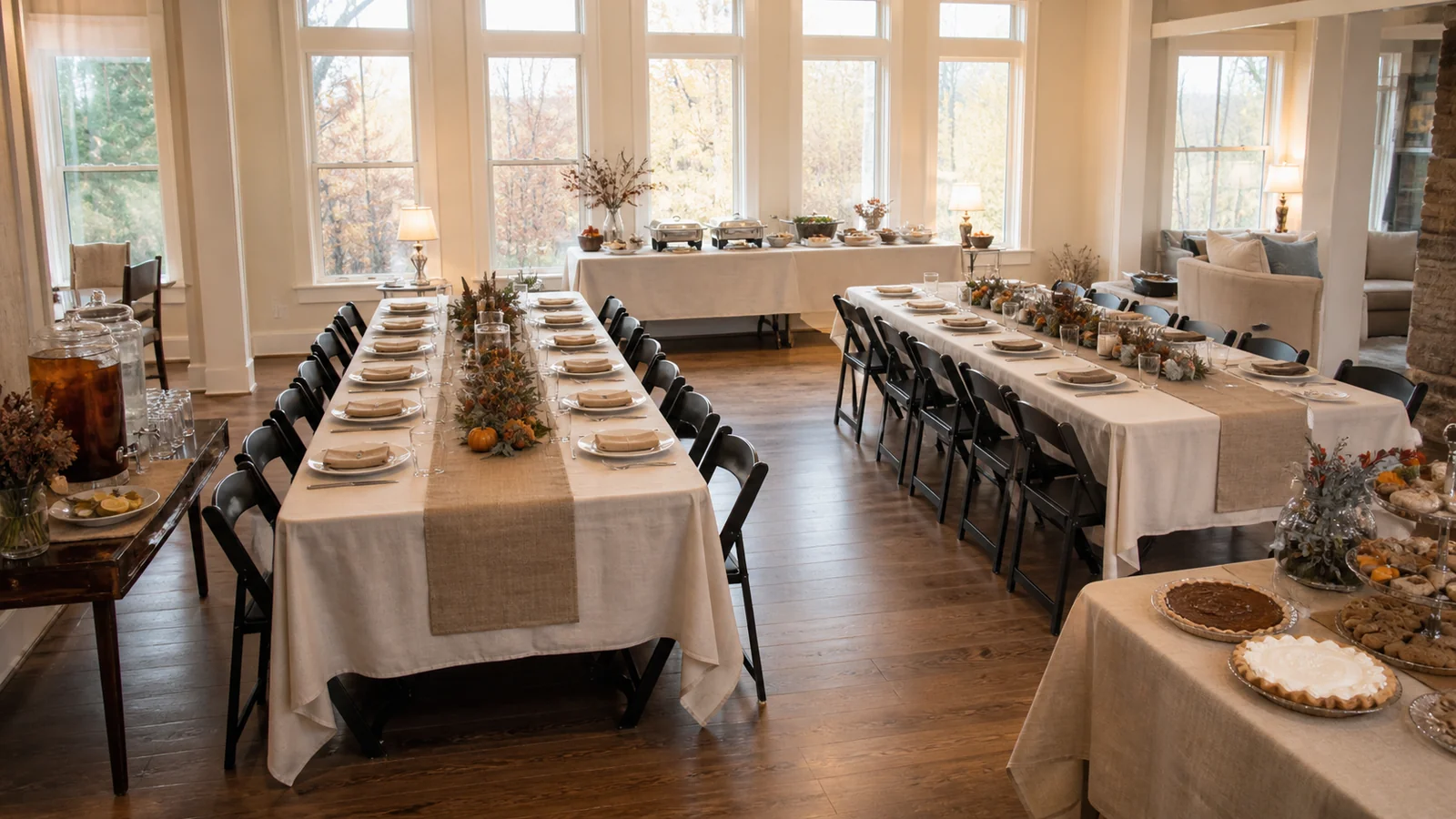
Tables can separate payment, pickup, condiments, desserts, and volunteer supplies. A tent can protect staff and serving surfaces from sun or light rain, subject to the food provider’s requirements and the property owner’s rules. If food trucks or vendors need electricity, discuss load needs, cord routes, and generator placement early. Keep generators and any cables away from guest paths unless the setup has been planned and protected by qualified event personnel.
4. Seating and gathering
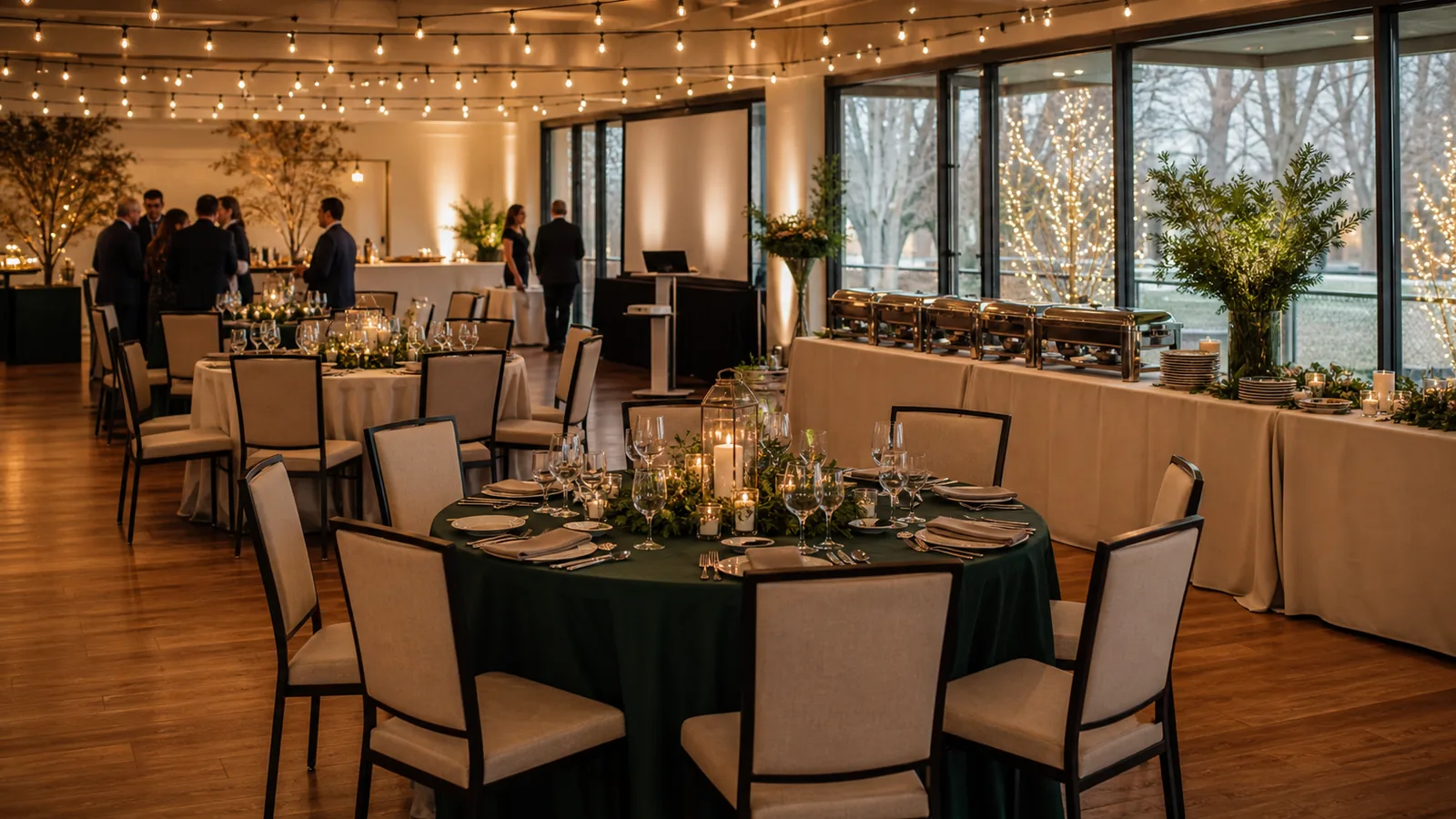
Many festivals plan activities carefully and treat seating as an afterthought. Seating is where caregivers reset, older guests rest, volunteers eat, and families stay longer. Place tables and chairs near food, yet protect a portion of the area from the busiest foot traffic. If the program includes announcements, music, or recognition, identify whether the audience needs rows of chairs, dining tables, standing room, or a mix.
Leave walking lanes between seating groups. Do not use chairs to create a barrier that forces guests through table edges. A tent can create a dining or resting area, but its size and placement need to follow ground conditions, access, staking or weighting options, and site approval.
5. Service, volunteer, and safety support
This is the zone guests may not notice, which is the point. Put volunteer check-in, supply storage, staff meals, lost-and-found, first-aid coordination, and the day-of command point in a location that is easy for staff to reach without crossing public lines. A basic table under cover can give volunteers a dry surface for radios, schedules, spare wristbands, and incident notes.
Keep emergency access open at all times. Confirm that fire lanes, gates, hydrants, school bus loops, and accessible routes remain clear. The organizer, property owner, and public-safety contacts determine the rules for the site. A rental layout supports those rules, it does not replace them.
6. Weather and recovery
A rain plan is a second layout, not a sentence in an email. Decide whether the event continues outdoors under tents, moves indoors, shifts to a shorter schedule, or postpones. Mark exactly which activities can move, which can pause, what equipment must stay dry, and who tells guests the decision.
For a fall event, ask about sidewalls, lighting, generators, handwashing stations, trash cans, and ground conditions as part of a full setup conversation. HPR’s current seasonal page lists frame or pole tents with optional sidewalls, banquet tables, folding chairs, power distribution, lighting, trash cans, handwashing stations, and walkways among its suggested items. Those listings are starting points only. Availability, sizing, site fit, and weather choices need confirmation for your date.
Review the Seasonal & Holiday Gatherings planning options with the team when deciding what needs cover, light, or power.
Turn the map into an equipment checklist
Once the zones exist, turn each one into a request list. Separate “must have” items from “nice to have” items. That keeps the budget conversation practical when attendance, weather, or volunteer coverage changes.
Guest-facing basics
- Check-in and ticket tables
- Chairs for volunteers, dining, or program seating
- Tents for welcome, food service, dining, or activity cover
- Games or inflatables matched to ages and supervision
- Signage locations and tables for maps, schedules, or prizes
Operations and comfort
- Trash cans and a plan for bag changes
- Handwashing or sanitizer locations appropriate to the event
- Lighting for dusk, tent interiors, pathways, and service areas
- Power distribution and a documented cable route
- Generators only when load, location, fuel, sound, and safety needs have been reviewed
- Sidewalls or other weather options that fit the site and forecast
Site questions to answer before requesting a quote
- Is the ground grass, pavement, gravel, or another surface?
- Where can delivery vehicles enter, turn, and unload?
- Are there height limits, gates, overhead branches, or narrow paths?
- What are the property owner’s rules for tents, weights, stakes, power, vendors, and end times?
- Who is the on-site contact during delivery, setup, event hours, and pickup?
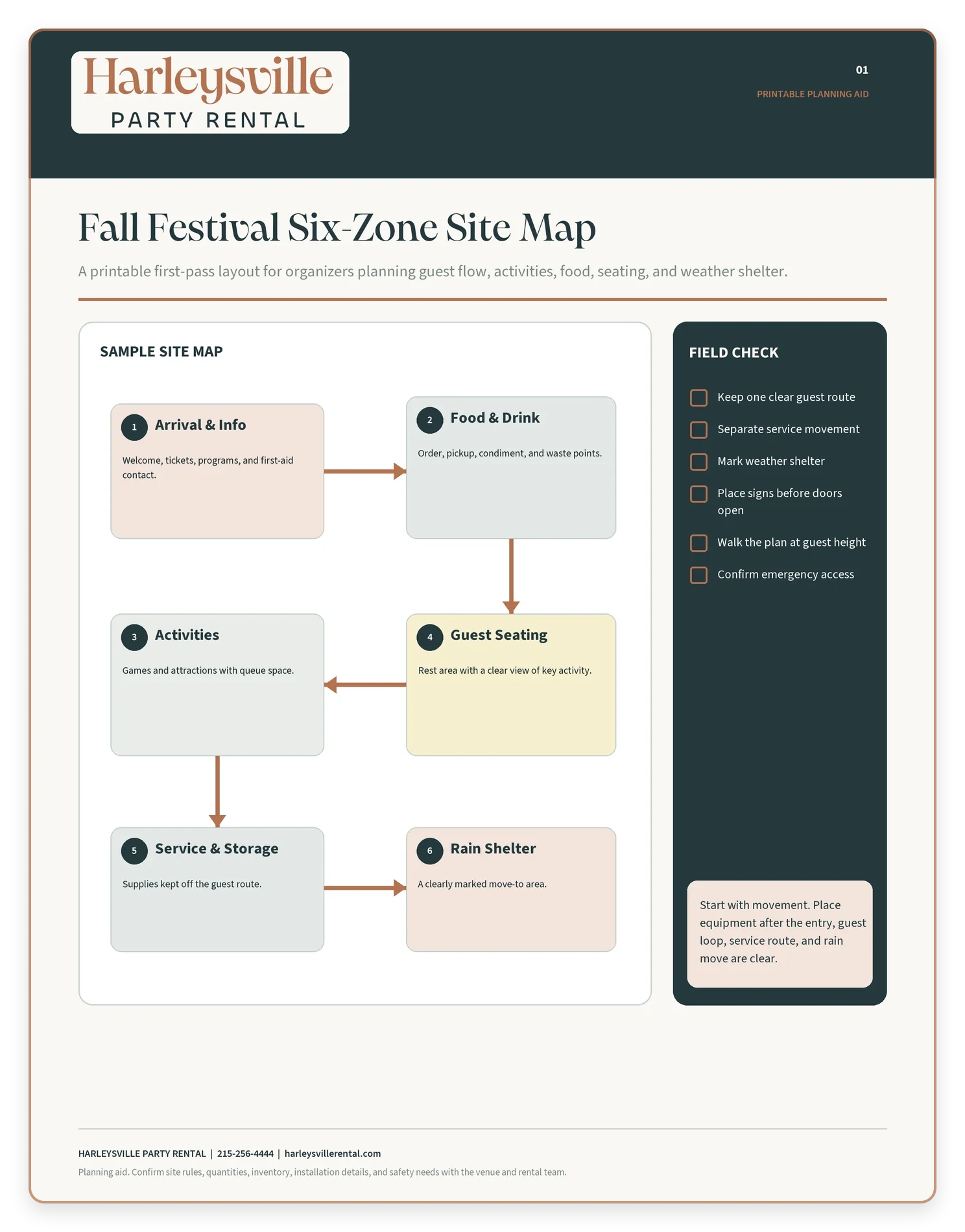
Open the full-resolution planning guide to print or save.
Use the HPR rental catalog to compare equipment options, then confirm quantities and current availability for each zone.
Use a simple six-step planning sequence
- Walk the site. Photograph entrances, service access, surface changes, and existing utilities. Confirm what the property owner permits.
- Draw the zones. Place arrival, activities, food, seating, service support, and the rain version of the layout.
- Assign capacities. Estimate peak arrivals, food line demand, seated guests, volunteers, and each activity’s operating limit.
- List equipment by purpose. Request tables, chairs, tents, games, lighting, power, and service items because of their job in the layout.
- Test the routes. Trace a guest arrival, a stroller or mobility-device route, a food delivery, a volunteer supply run, and emergency access.
- Confirm the day-of plan. Share the latest map, contacts, setup windows, and weather decision process with the property owner, vendors, volunteers, and rental team.

A note on local planning
Montgomery County events can span a school field, church lot, park, or neighborhood street. Site rules vary, and public-event permission is not automatic. Speak with the property owner or municipality about any permits, insurance, food-service requirements, parking plan, tents, electrical work, sound limits, and weather procedures. Make those answers part of the final site map. That is more useful than assuming a setup from another event will apply to yours.
FAQs
How early should a fall festival organizer reserve rentals?
HPR’s seasonal guidance recommends reserving tents, heaters, and weather-specific equipment six to ten weeks before a fall or winter event. Begin the site and vendor conversations earlier if your event needs committee approval, a property review, or a large equipment order. Confirm actual availability for your date.
What rentals should be on a basic fall festival quote request?
Include the event date and hours, location, guest estimate, site surface, delivery access, zones that need cover, tables and chairs, games or activity equipment, lighting, power needs, waste and handwashing needs, and the rain plan. A map or photos make the request far easier to assess.
Do we need a tent for a fall festival?
That depends on the program, guest count, weather plan, and site rules. A tent can support welcome, food service, dining, volunteer, or activity areas. Ask the property owner about surface and placement, then discuss fit and availability with the rental provider.
Who is responsible for permits and event safety?
The event organizer is responsible for working with the property owner and the appropriate authorities. Rental providers can share site and equipment information, yet they do not replace permits, event supervision, food-service rules, or public-safety planning.
Ready to turn your map into a rental request?
Share your event date, site map, guest estimate, and rain version with Harleysville Party Rental, then request a quote tailored to the equipment and setup details you have confirmed.