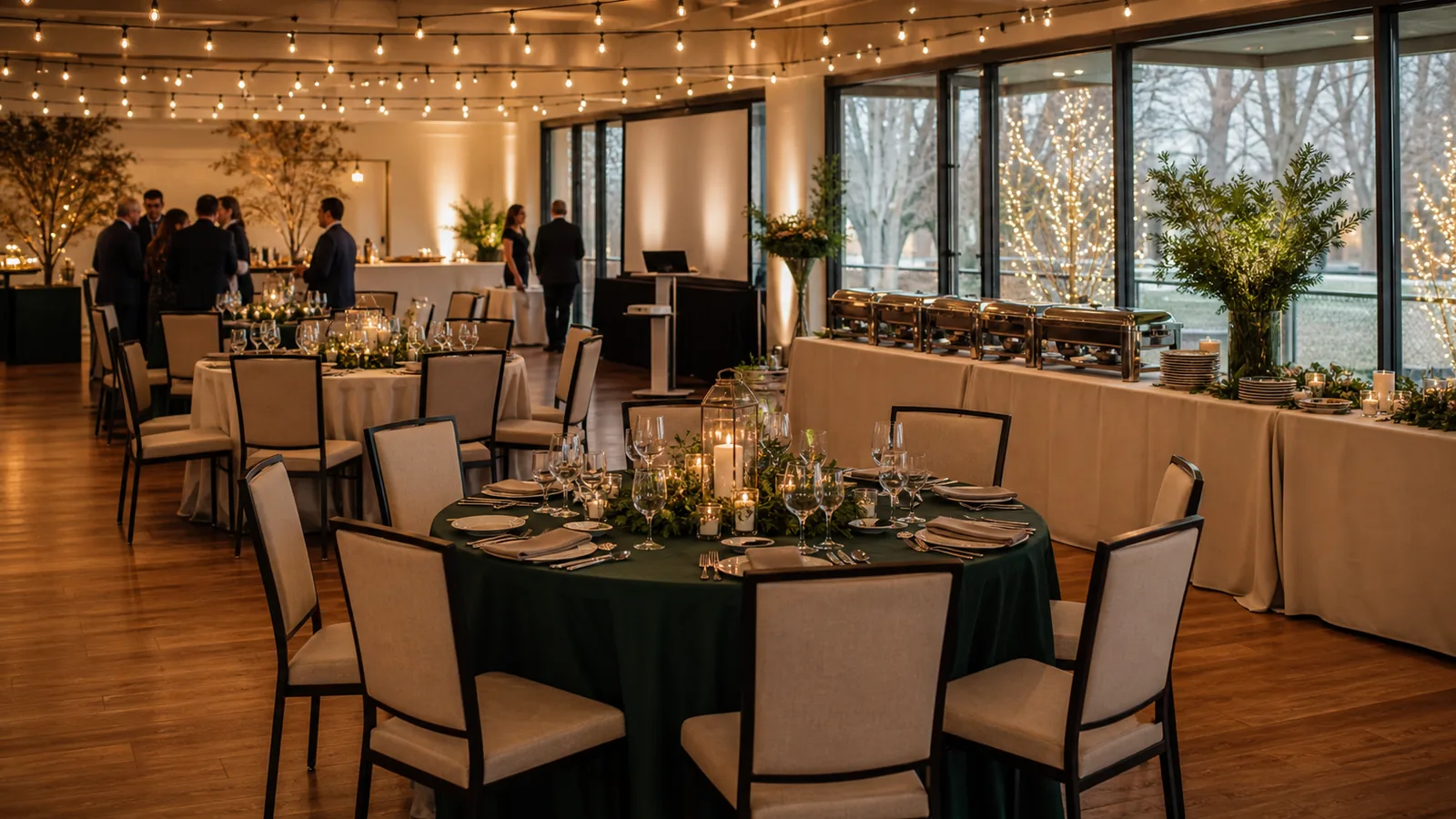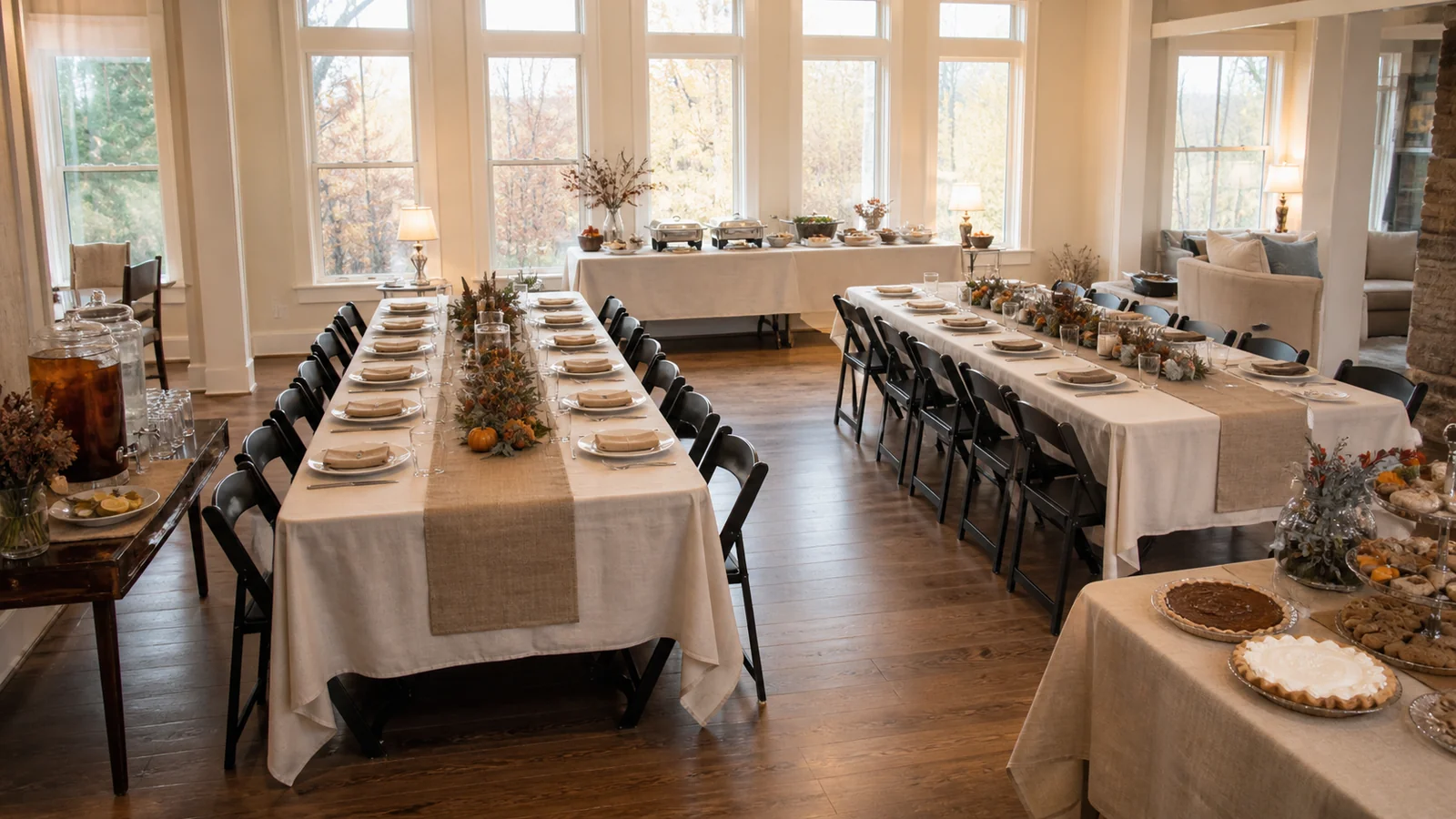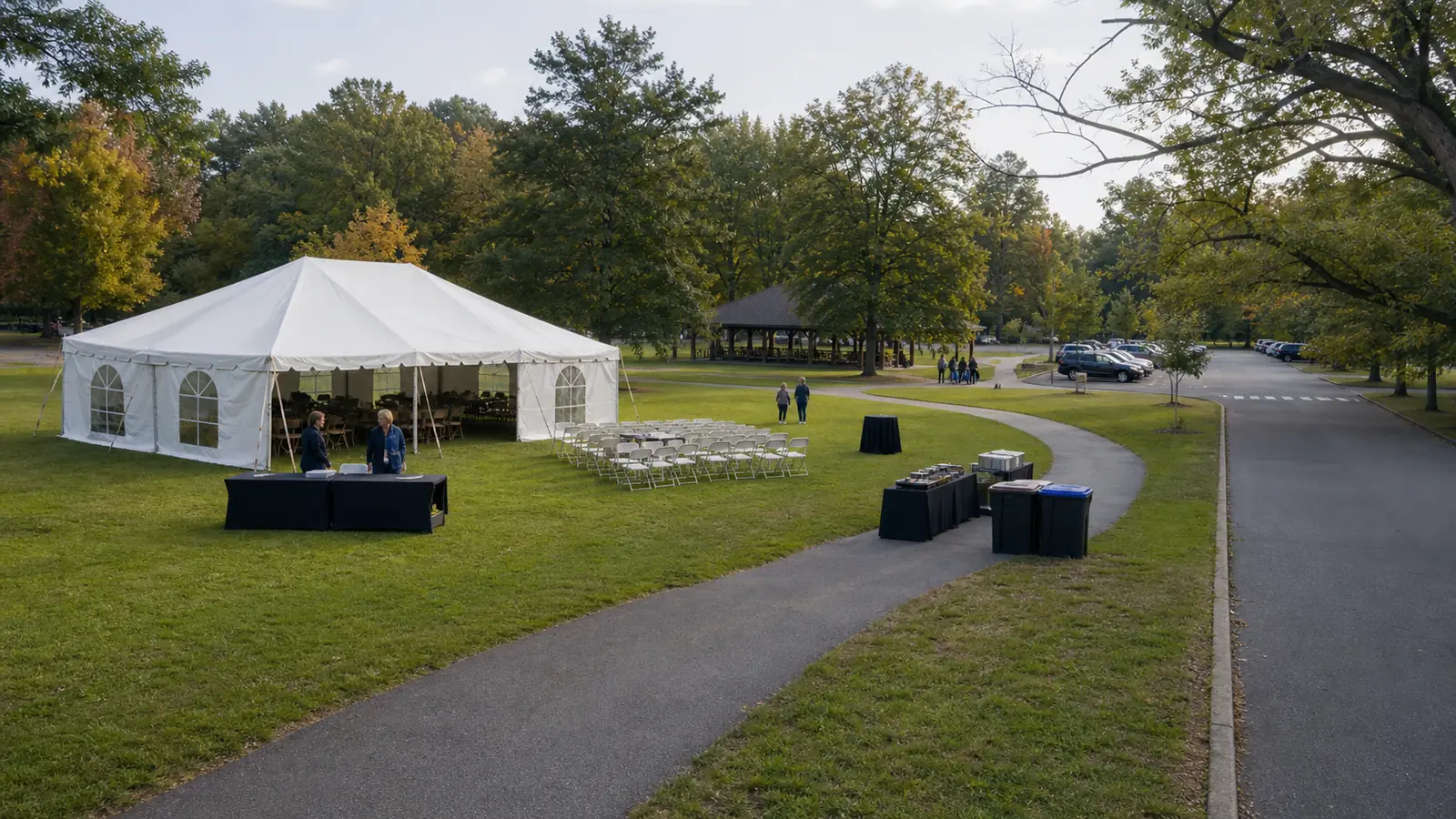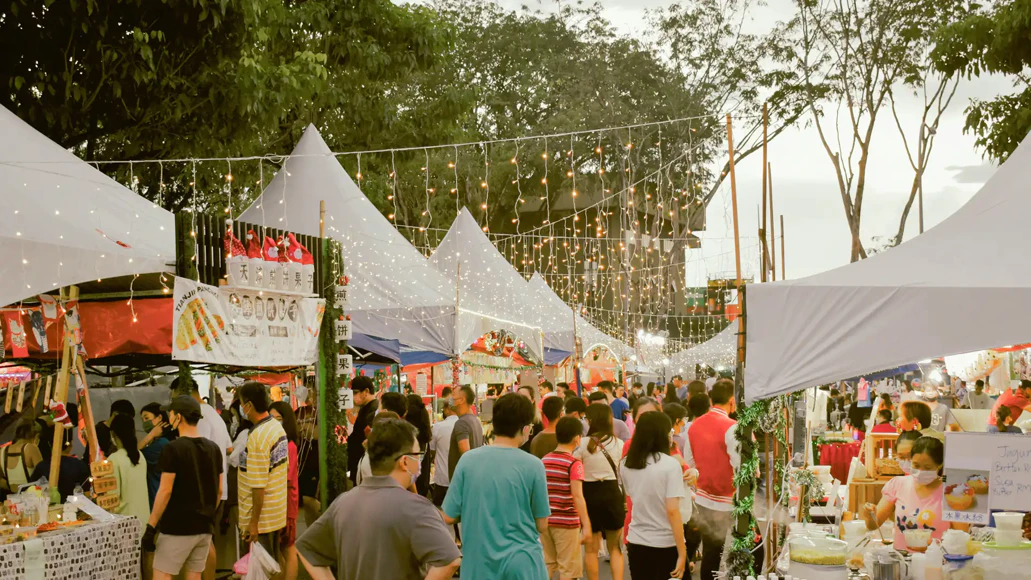

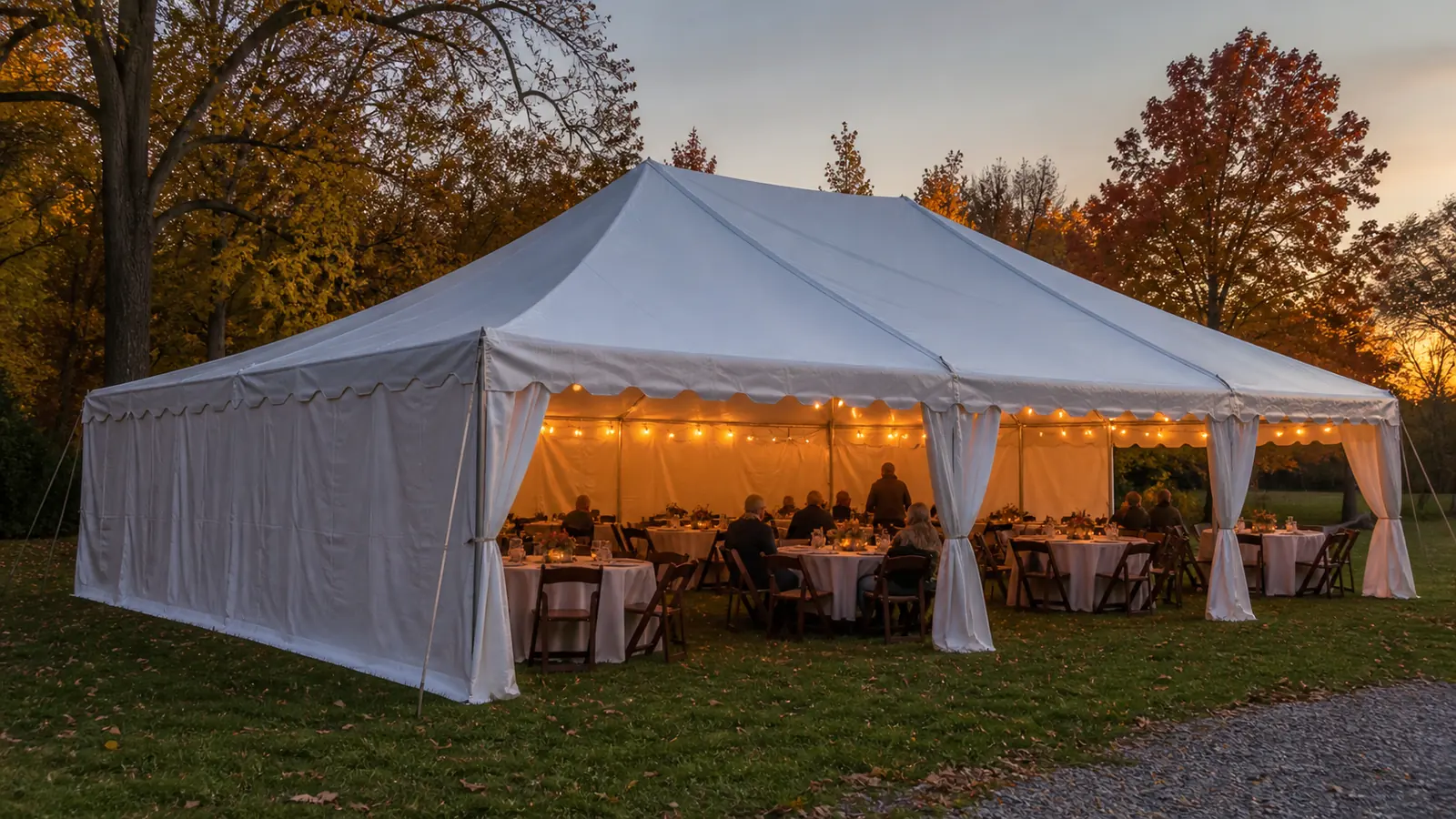
An October tent can feel welcoming long after sunset, but no single rental item creates that result. The comfortable plan starts with the event itself: who is attending, how long they will stay, whether they will sit for dinner or move around, what the site is exposed to, and what the forecast may bring. From there, sidewalls, heat, light, airflow, tables, and a clear arrival path each have a job.
This guide is for hosts planning a fall gathering in Montgomery County and nearby communities. It is a planning guide, not an installation manual or a substitute for venue, fire, electrical, or rental-company directions. Confirm the tent type, current equipment availability, site conditions, power, and all safety requirements with the rental team and the property owner before the event.
Start with comfort, not a product list
The first useful question is not “Do I need a heater?” It is “What will guests be doing in the tent?” A standing reception, a seated dinner, a school function, and a late-night backyard celebration place different demands on the space. A 5:00 p.m. welcome hour may need a different plan than a dinner that continues after dark.
Write down these event details before choosing equipment:
- Date, event hours, setup window, and expected guest count.
- Tent size or the usable area available for a tent.
- Whether guests will be mostly seated, standing, dining, serving food, or moving between zones.
- Exposure to wind, open fields, driveways, shade, and nearby buildings.
- A rain plan and the venue contact who can answer site-rule questions.
- Existing power sources, distance from the tent, and any venue limits on equipment.
Those notes give the rental team a better starting point than a rough request for “a warm tent.” They also make it easier to decide what to reserve first if an autumn weekend is busy.
Think in zones
Divide the tent into simple zones: guest seating, food or beverage service, entry and exit, and equipment or service space. Guests sitting near the perimeter may notice a draft sooner than people in an active standing area. A food-service table needs enough light for safe serving. An entry must remain easy to find and use. Equipment and cords need a planned route that does not cut across guest walkways.
This is also a good time to keep an accessible path in the sketch. Use the U.S. Access Board ADA Standards as a general reference, then ask the venue what it requires for the actual site. Keep routes wide, even, and free of temporary obstacles. Do not assume a rental layout meets a venue rule without confirmation.
What sidewalls can and cannot do
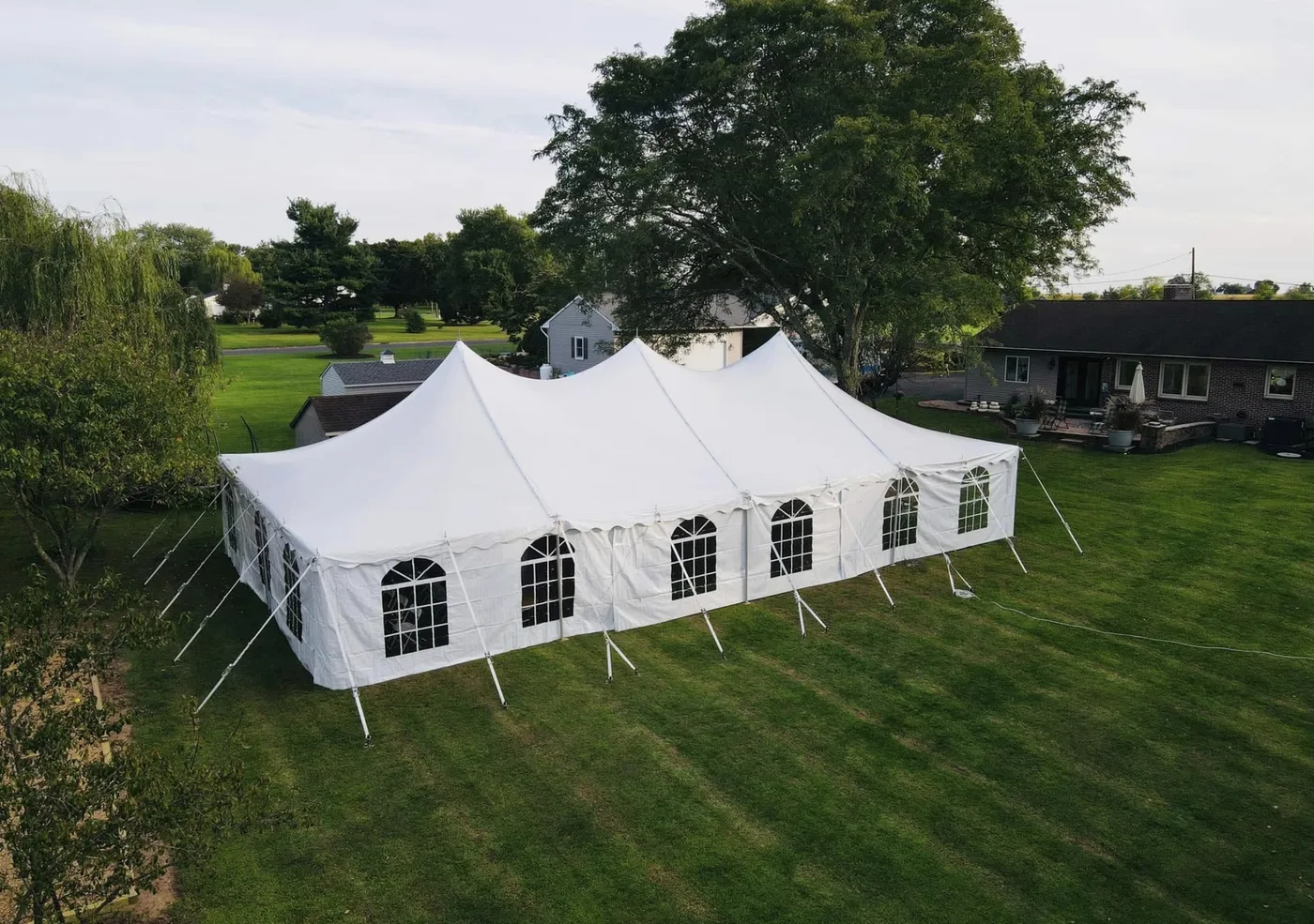
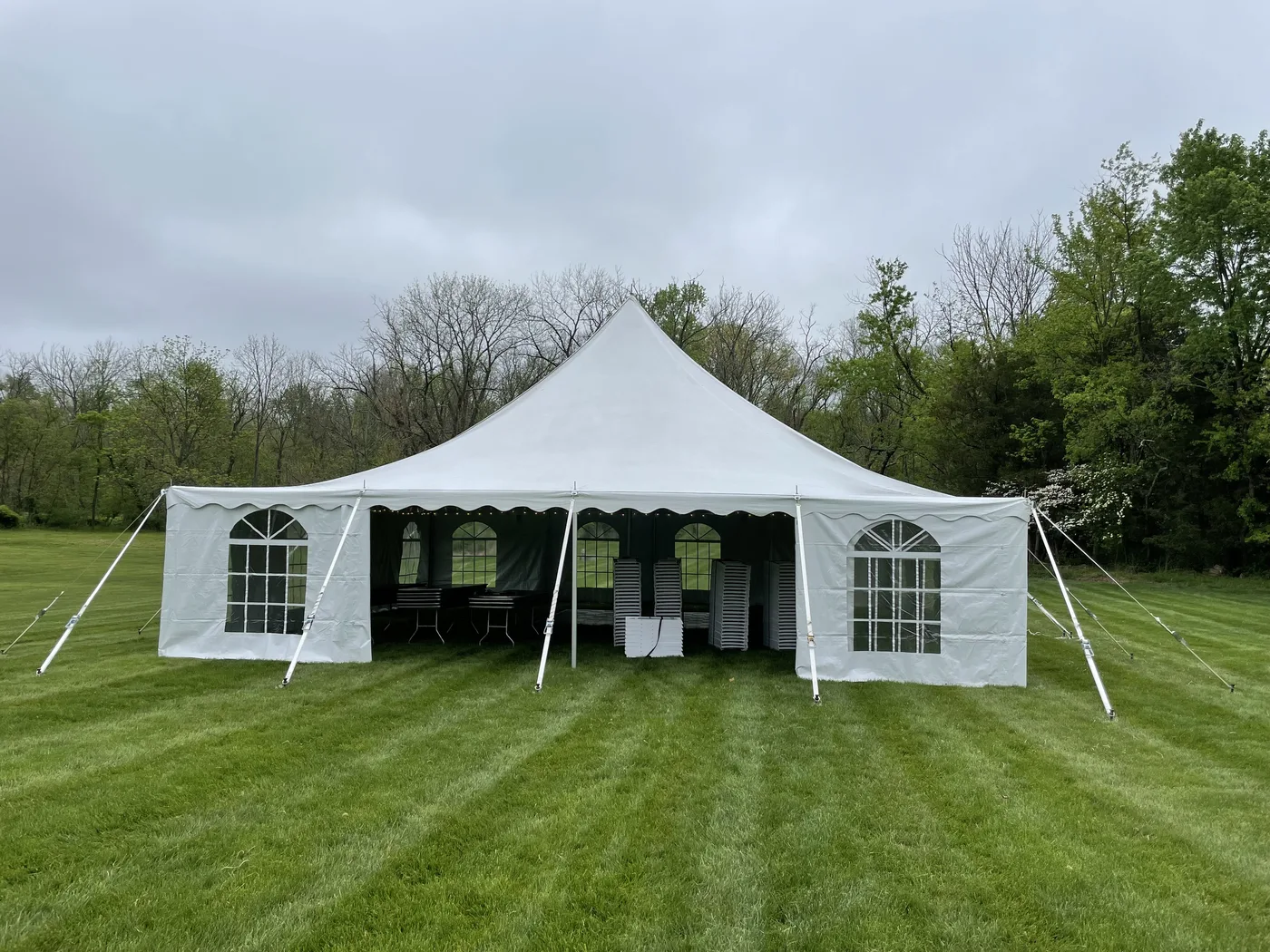
Sidewalls can reduce exposure to wind-driven weather and help define an event boundary. Windowed styles may preserve daylight and views, and solid sections can add a stronger weather screen. The right choice depends on the tent model, the direction of exposure, entry needs, and the forecast. HPR lists tent sidewall accessories, but compatibility and availability should be confirmed for the specific tent and date.
Sidewalls are not an automatic answer to every fall event. Closing every side may change how the space feels, how guests enter and leave, and how air moves through the tent. If heat is part of the plan, ventilation becomes a conversation for the rental provider. Never make placement, venting, fuel, or operation choices from a general article. Follow the heater maker’s instructions and the directions supplied for the rented unit.
Use a weather conversation, not a weather guess
Weather planning works best as a short set of decisions made before delivery day. Identify the likely wind side of the site. Mark the doors and service points that need to remain open. Decide whether a sidewall section may need to stay open for access or airflow. Then ask the rental team what is appropriate for the selected tent and equipment.
If rain is possible, protect more than the guest tables. Think about the check-in surface, the route from parking, food-service work space, and electrical connections. The property owner and rental team should approve the final site plan. For a public or venue-based event, the organizer should also confirm any fire or permit review directly with the authority that governs the site.
Heat needs a site-specific plan
HPR’s public catalog includes a 170,000 BTU tent heater, listed for rental with tent installation. That listing supports a quote conversation. It does not tell a host that a given unit suits every tent, temperature, or event. Tent size, sidewall plan, outdoor temperature, wind, guest activity, and the event schedule all affect the discussion.
The equipment team should determine the unit, fuel arrangement, electrical needs, placement, and operating instructions. Keep guests, furnishings, decorations, exits, and service areas clear as directed. Do not move a heater, alter ducting, cover equipment, or change fuel connections during an event. If a heater seems to be operating unexpectedly, use the rental company’s contact instructions rather than attempting a fix.
The same caution applies to generators. The U.S. Consumer Product Safety Commission warns that portable generators can produce carbon monoxide and should be used outdoors, away from doors, windows, and vents. A generator is not a casual substitute for a power plan. Tell the rental team about every item that may draw power, including lighting, food equipment, sound, and climate equipment.
Review the 170,000 BTU tent heater listing with the rental team as part of a unit-specific installation and operating discussion.
Lighting supports comfort after dark
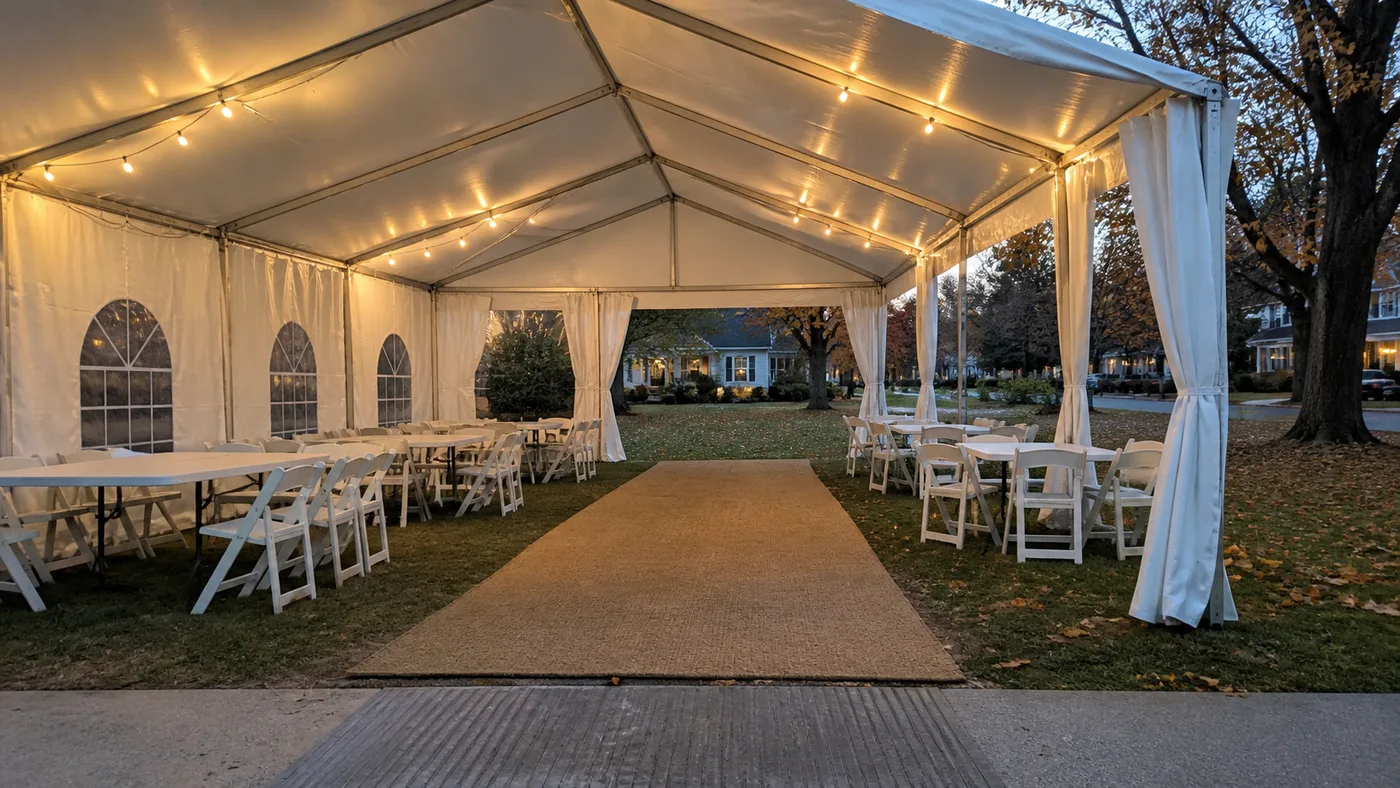
Fall sunsets can arrive during guest arrival, dinner, or cleanup. Good lighting lets people see where they are walking, read a sign, use a buffet, and find an exit without turning the tent into a bright stage. Start by naming the task in each area:
- Arrival and pathways: enough light to guide guests from parking or check-in.
- Dining: light that helps guests see food and table settings without glare.
- Service areas: more focused visibility for hosts and vendors.
- Tent perimeter and exits: clear visual edges and easy-to-find departure points.
- Mood lighting: a secondary layer after routes and work areas are covered.
Ask where cords will run, who will secure them, and what the venue permits. OSHA guidance for temporary electrical work is written for job sites, yet its general lesson still helps event planners: equipment and connections need the right protection and a planned installation. Let qualified rental or venue personnel handle the electrical setup and follow their directions for weather and cable protection.
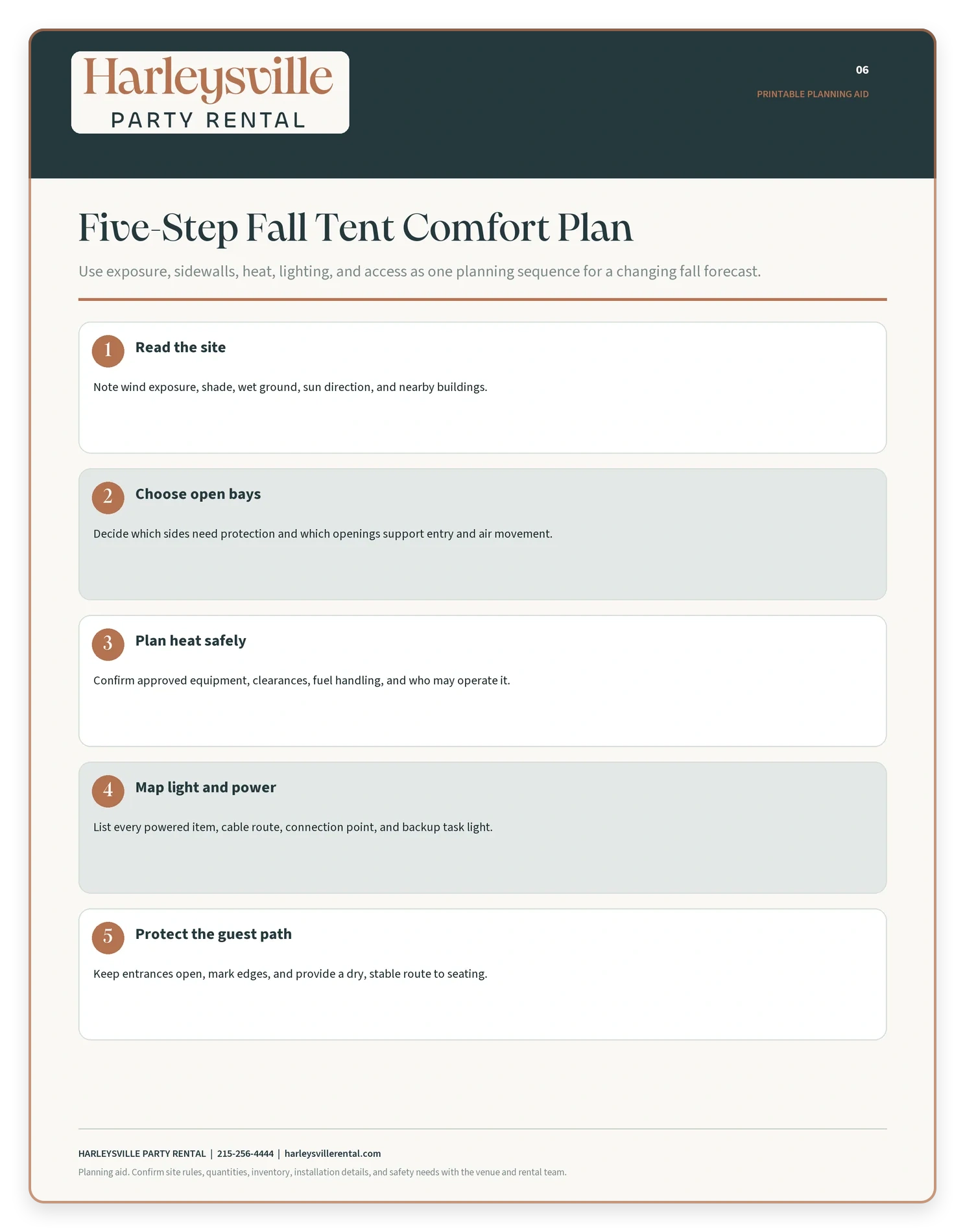
Open the full-resolution planning guide to print or save.
Browse Lighting & Climate Control rentals once the guest routes and work areas are marked on the plan.
Airflow belongs in the same conversation
Airflow may sound like a summer topic, but it matters during a fall event too. A crowd, food service, sidewalls, heat, and changing weather can make one area feel different from another. HPR lists fans in its lighting and climate-control category, but a fan is not a promise of a particular result. Discuss tent size, entrances, sidewalls, heating, and the kind of event with the rental team so the recommendations fit together.
One practical habit is to avoid filling every edge of the tent with tables or décor. Leave a route for arrival, circulation, and staff access. A clear layout gives the crew room to work and guests room to move. It also makes it easier to respond if the weather changes before or during the event.
A five-step fall tent comfort check
- Describe the event. Share guest count, event hours, activities, and whether the tent is for dining, mingling, food service, or all three.
- Map the site. Note slopes, hard surfaces, grass, parking, overhead obstructions, wind exposure, and power locations. The property owner should confirm what is permitted.
- Choose the weather response. Ask about tent options, compatible sidewalls, entrances, lighting, and a rain version of the layout.
- Review heat and power with the rental team. Provide the full equipment list and follow their unit-specific operating, ventilation, electrical, and fuel directions.
- Walk the setup before guests arrive. Check entrances, exits, routes, tables, lighting, and service areas with the people responsible for the event.
Questions to ask before requesting a quote
Bring these questions to the quote conversation. They help turn an early idea into a site-aware rental request.
Is this tent and sidewall combination right for my site?
Share photos and dimensions when the company requests them. Ask what tent styles and sidewall options are compatible with the site and the weather plan. A team member can also flag delivery access or layout issues that a product page cannot see.
Can the heater support the event I am planning?
Give the rental team the full picture: tent, guest use, event hours, expected conditions, sidewall plan, and power. Ask them to explain the unit-specific requirements and who is responsible for following them during the event.
Where should lighting and power go?
Start with guest routes, service stations, and exits. The rental and venue teams can help identify suitable equipment, power needs, and cable routes. Do not make a final electrical plan from a sketch alone.
What should I do if the forecast changes?
Ask before event week how changes are handled and what deadline applies to the order. Availability, equipment, site conditions, and safety direction must be confirmed at that time.
Build the request around the real event
The best fall tent plan is a short description of how guests will use the space, plus an honest picture of the site. Share your date, location, guest count, event hours, photos or measurements, and the comfort concerns you already see. HPR can help you review tent, sidewall, heater, lighting, fan, and power options that are currently available for your event. Request a quote when you are ready to start that conversation.
HPR’s Seasonal & Holiday Gatherings page can help you organize the first equipment conversation.
FAQs
Do sidewalls make a fall tent warmer?
They can reduce exposure to wind and weather, but the effect depends on the tent, the site, the weather, and the rest of the setup. Ask the rental team about compatible sidewalls, entrances, ventilation, and a heat plan for your date.
Can I rent a tent heater for any outdoor tent?
No general article can confirm that. Heater suitability, installation, venting, fuel, power, and operation are unit- and site-specific. Confirm the details directly with the rental company and follow its directions.
Should I reserve lighting for a daytime fall party?
It is worth planning for arrival, sunset, service areas, and departure. Your event hours and the site will determine what type of lighting makes sense.
How early should I ask about a heated tent?
Ask as soon as the date, location, and basic guest count are known. HPR’s booking guide says that holiday weekends may need extra lead time. Current availability still needs confirmation.