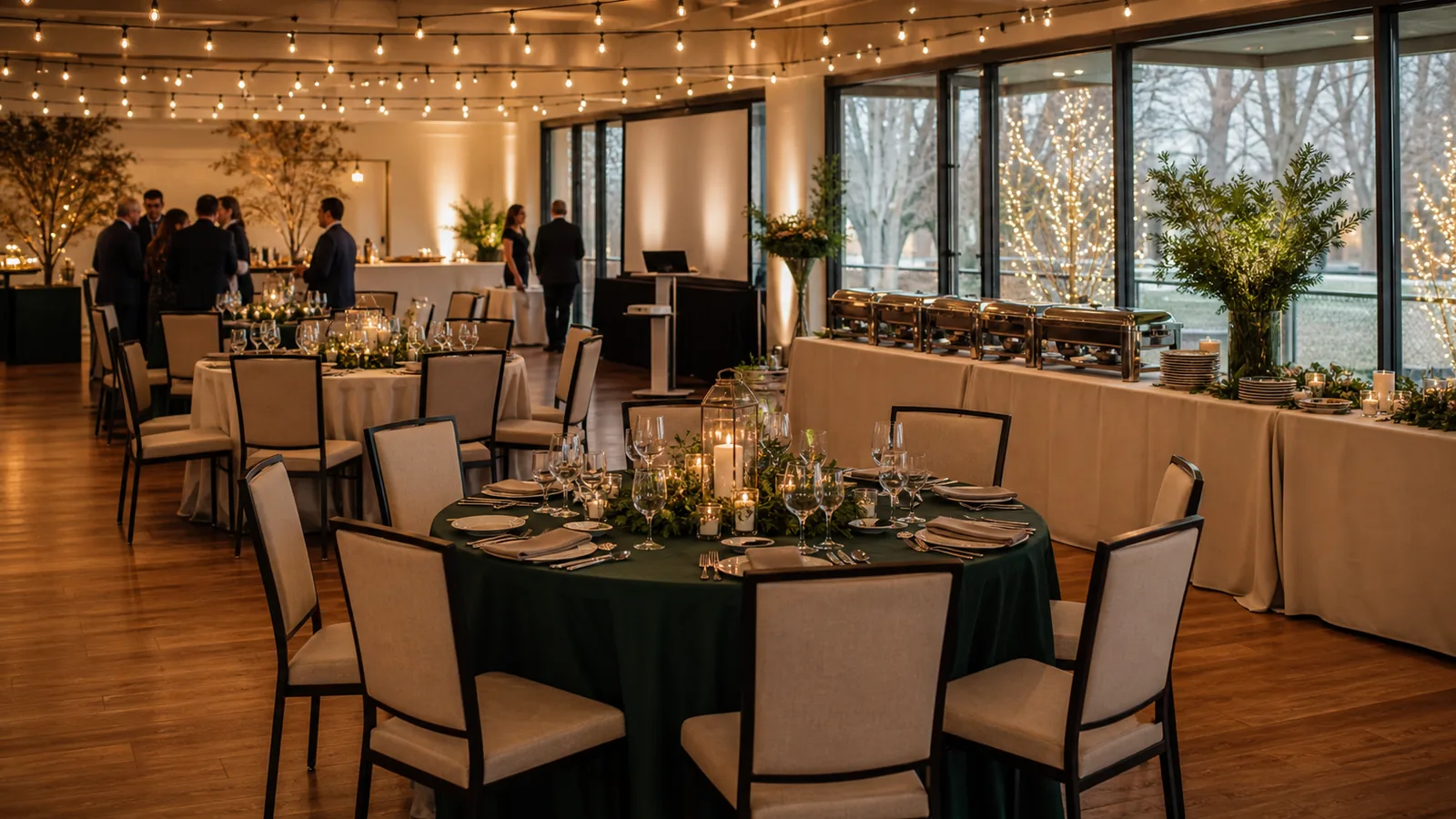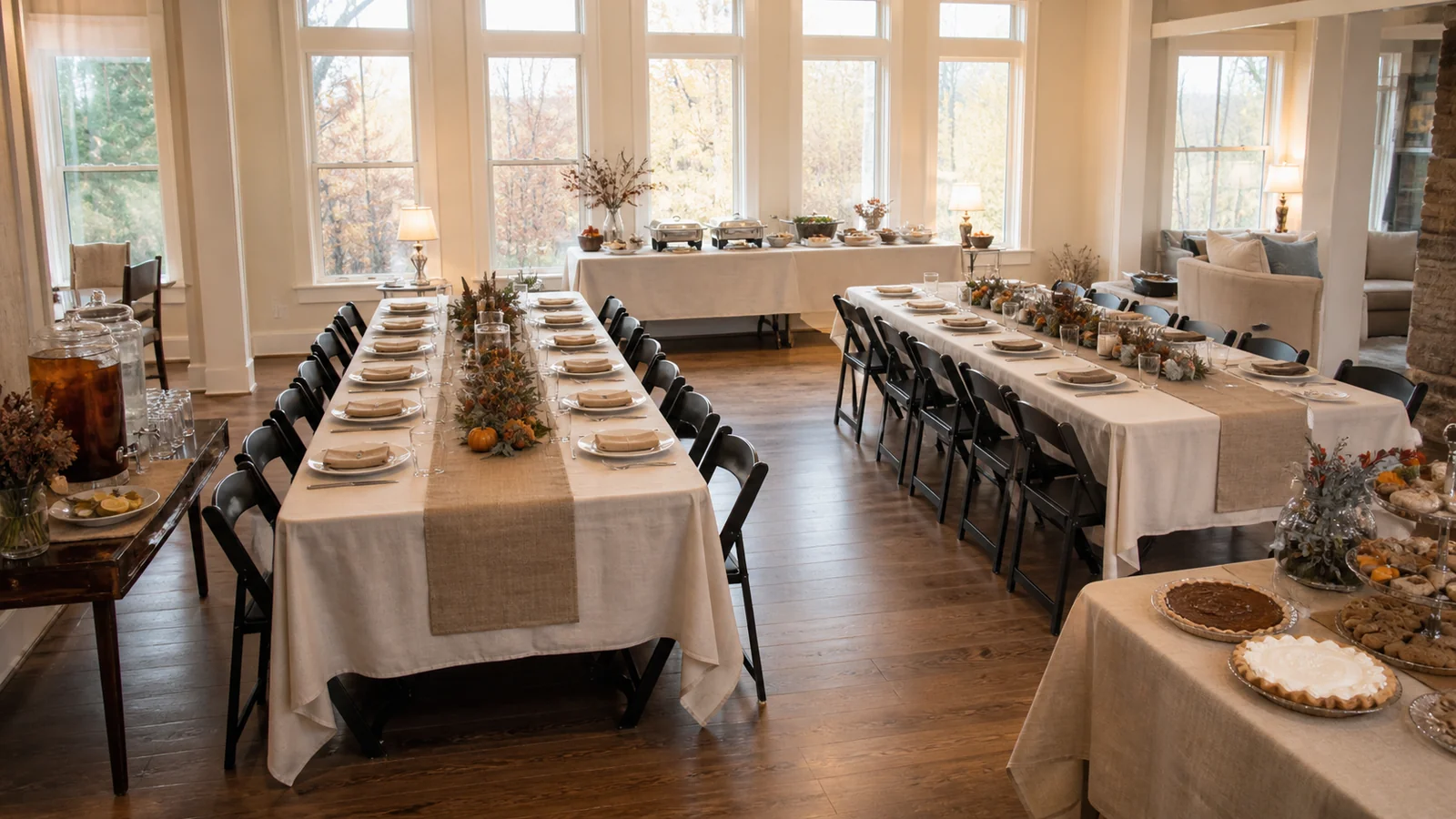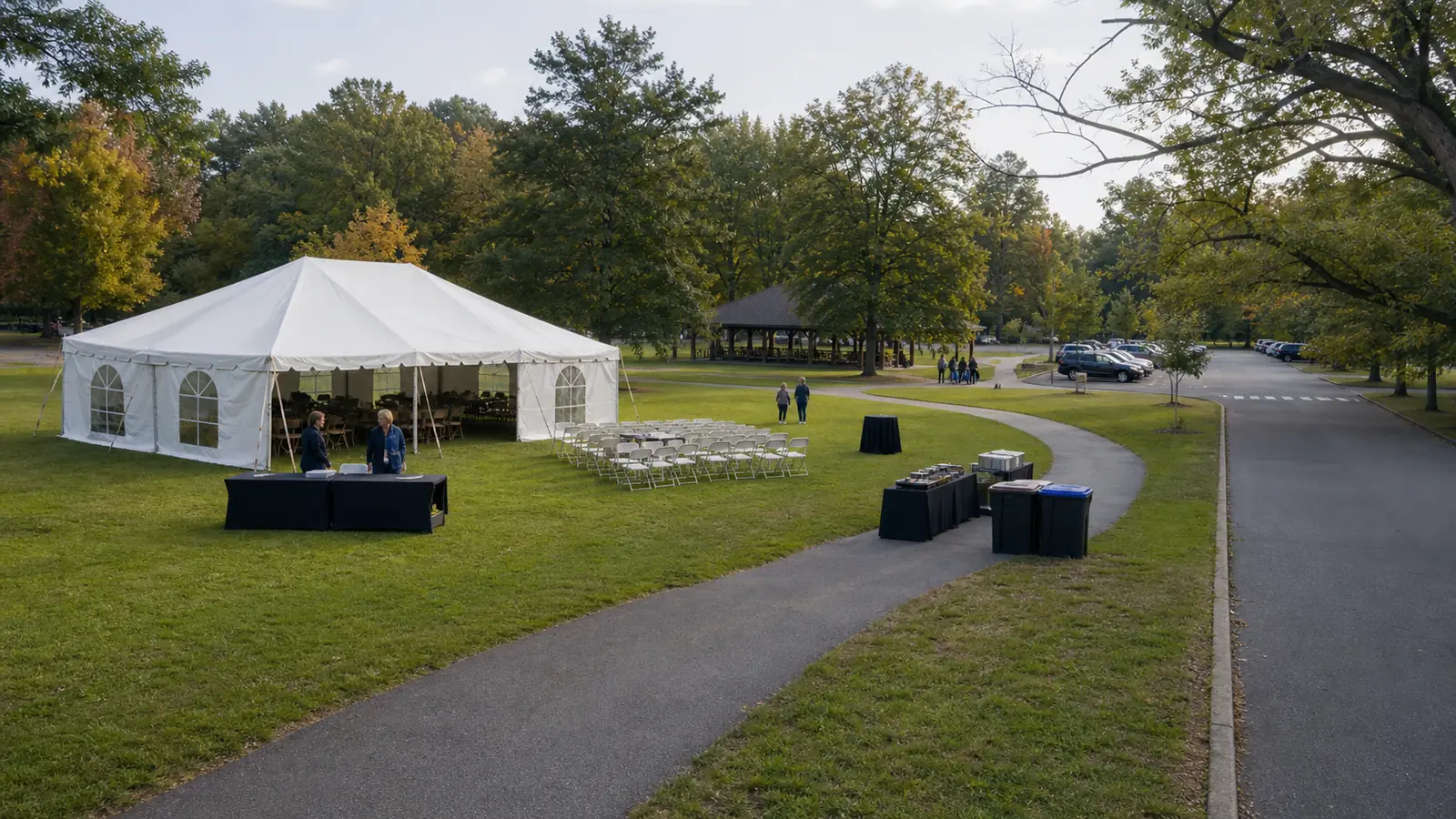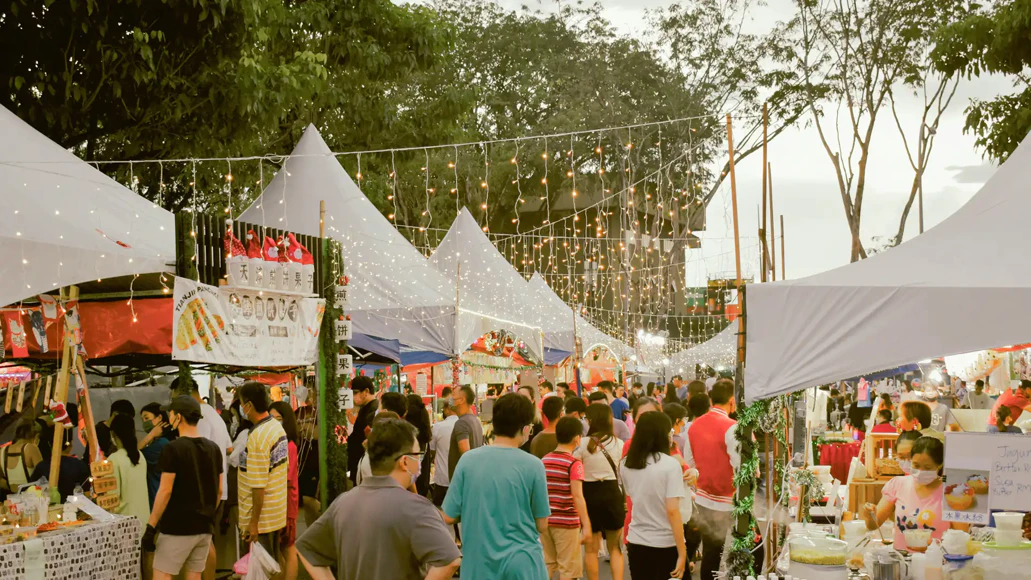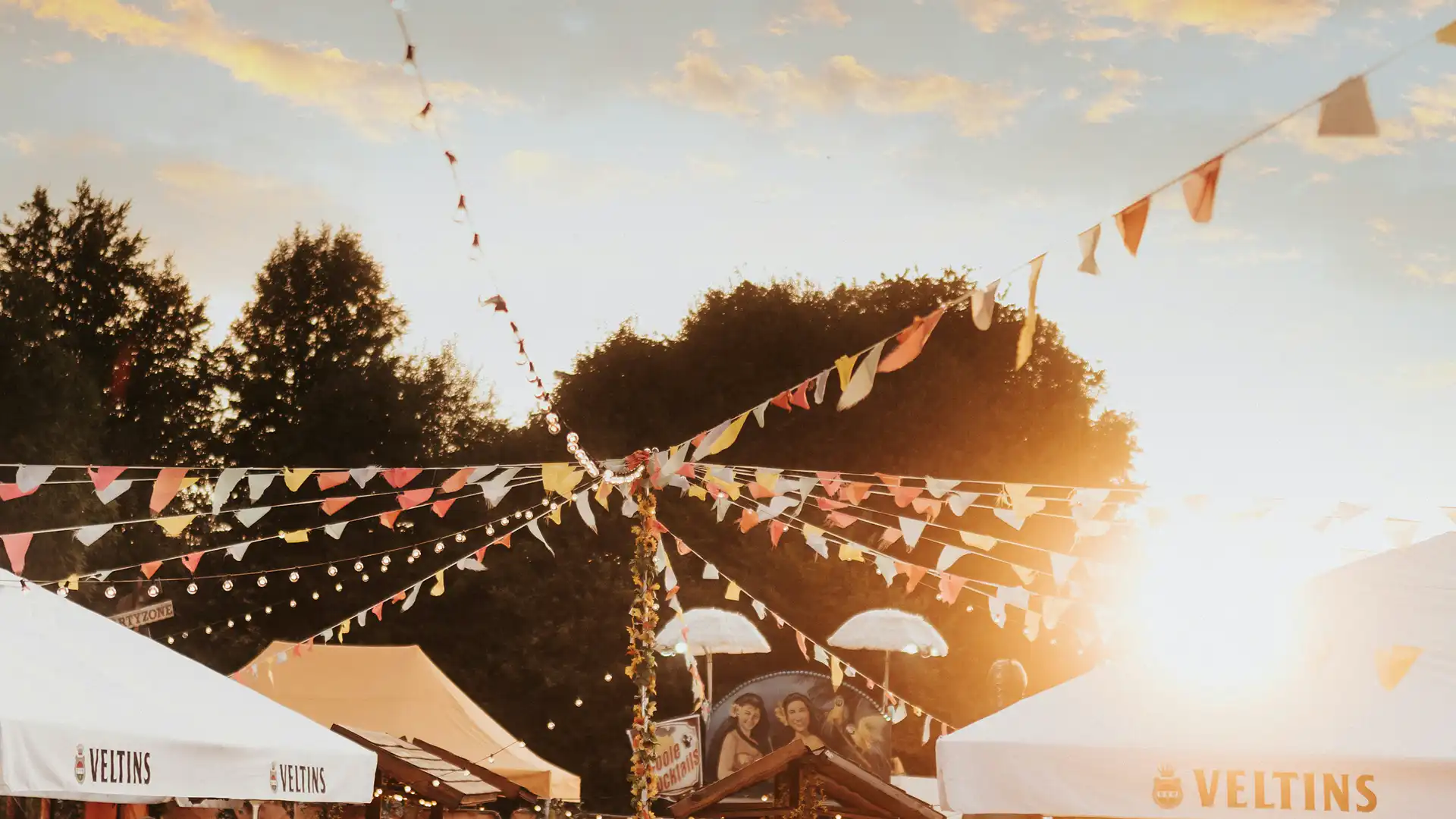

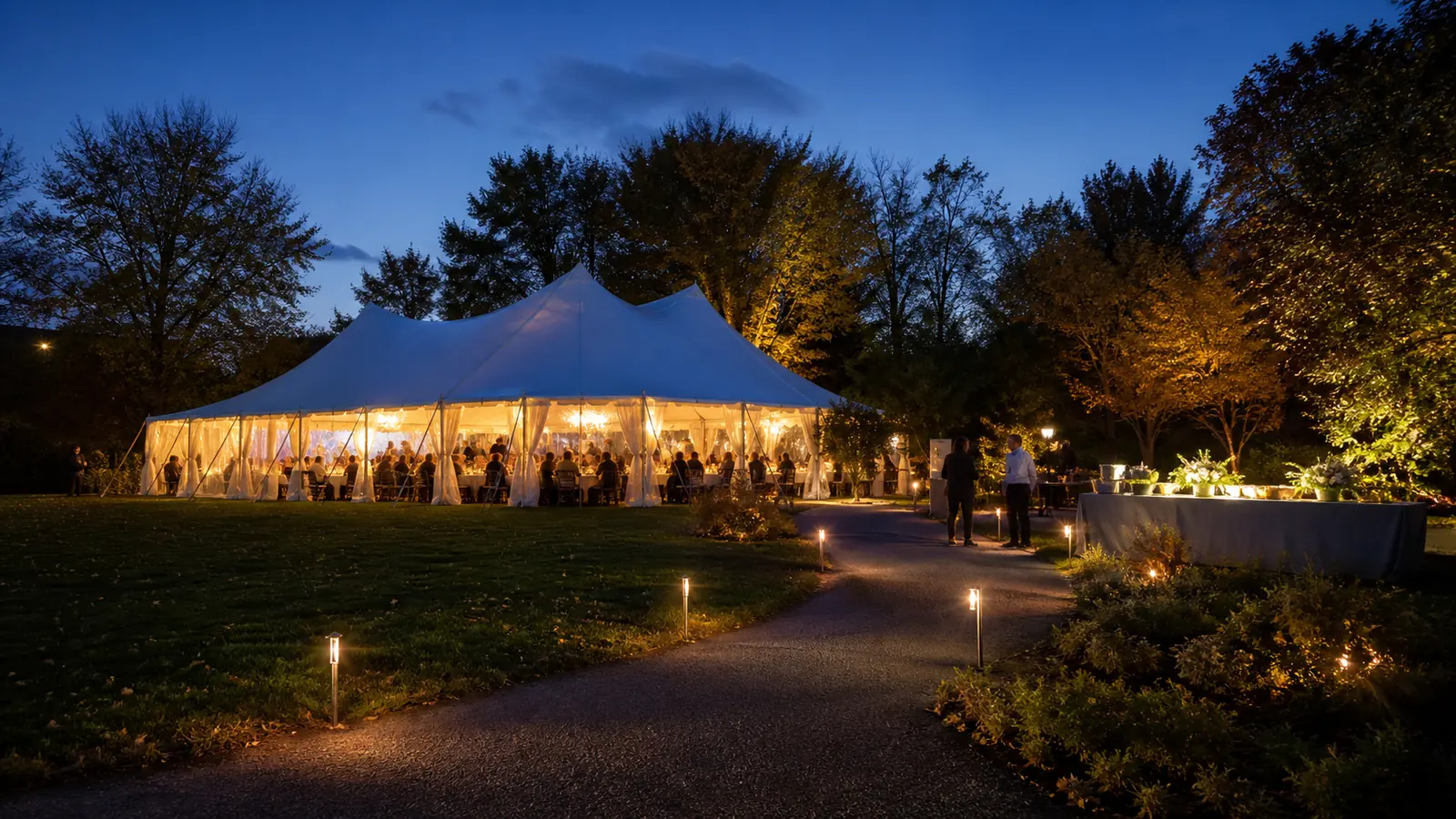
Outdoor event lighting is more than a late-evening decoration. It helps guests find the entrance, read signs, see a step, serve a plate, locate the restroom route, and leave safely when the gathering ends. For a fall event, it belongs in the first site plan, alongside seating, weather cover, food service, and power.
Fall makes this easy to miss. Sunset arrives earlier as the season progresses, so check the local sunset time for the actual event date and walk the site after dark. If guests arrive in daylight but stay through dinner, you need to see the yard as it will look after sunset. The event-day forecast, trees, buildings, and site conditions all affect the final plan.
The best approach is to plan light by purpose. Start with guest movement and task areas, then add the visual character that suits the occasion. HPR’s public pages list lighting and perimeter-lighting options and include a seasonal planning range for power, lighting, and traffic flow. Confirm current items, site fit, and availability for the event date.
Start with a night walk, not a fixture list
Walk the venue or backyard at the same time guests will be arriving or leaving, if possible. Bring a simple map and mark the entrance, parking or drop-off point, check-in table, seating, food service, restroom direction, tent edge, steps, gates, and pickup point. Then ask one basic question at every point: can a first-time guest see where to go and what they need to do?
This exercise usually reveals that one even layer of light is not the goal. A busy walkway may need more attention than a quiet decorative edge. A food station needs enough light to serve safely, but a dining area does not need to feel like a worksite. A clear hierarchy helps the event remain inviting and practical.
Use six lighting zones
1. Arrival and check-in
Guests should be able to recognize the entrance from the street, driveway, or parking area without searching through a dark yard. Light the route from arrival to the welcome point, and make the check-in table easy to find. If signs are part of the plan, test them after dark. A sign that looks clear at noon may disappear at dusk.
Keep this zone simple. The goal is wayfinding, not a bright display. Avoid placing a bright source directly behind a greeter, since it can put the person’s face in shadow and make a sign harder to read.
2. Paths, steps, and changes in level
Routes deserve the first priority. Identify every path guests will use after sunset, including the route from parking to the event, tent entries, restrooms, food service, and exit. Mark steps, curbs, uneven ground, low branches, and transitions from patio to lawn.
- Keep the route visible from one point to the next.
- Avoid aiming light into guests’ eyes as they walk.
- Keep luminaires and cords out of the walking path whenever possible.
- Check the route with someone who was not involved in setting it up. Fresh eyes often catch a dark turn or an unclear step.
Do not create your own electrical or cable solution from a rough sketch. A qualified rental professional or electrician can advise on equipment compatibility, protected routing, and site-specific electrical needs.
3. Tent perimeter and entrances
Tent lighting has two separate jobs: show the tent’s edges and make entrances easy to locate. HPR’s rental catalog currently lists perimeter lighting, and its seasonal page describes lighting as part of a weather-ready event setup. The exact tent, lighting method, anchoring, power source, and placement must be reviewed for the site and confirmed for the date.
At a tent entrance, light the threshold and the first few steps inside. Around the perimeter, use a level that helps guests see the boundary without turning the tent into a glare source. If sidewalls or weather protection are part of the plan, review how they change the light inside and how guests will find the openings.
4. Dining and seating
People need enough light to find a chair, read a menu or place card, and see what is on their plate. They do not need every table to be equally bright. Softer ambient light can work well in a seated area when the routes and service stations are already clear.
Place lighting so it supports conversation rather than shining in faces. Test the view from a seated chair, not only while standing. Avoid putting a bright source where it reflects off glassware or directly into a guest’s line of sight. For a tent dinner, consider the light level at the edges as well as the center, since perimeter seats can become forgotten dark spots.
5. Food, beverage, and service work
Food and beverage stations need task light and an unobstructed service path. A host or server should be able to see labels, utensils, cups, spills, and the edge of the table. Guests should be able to tell where a line begins and ends.
Set the station so the brightest area is directed at the work surface, not across the dining area. Keep any electrical equipment away from spills and follow manufacturer directions for all food and beverage equipment. If the event involves vendors, collect their power and lighting needs early so the plan is reviewed as one site conversation.
6. Accent and gathering areas
Once arrival, routes, tent edges, dining, and service are covered, you can plan light that gives a gathering visual character. This may include a warm wash on a tree, a feature wall, a bar front, or a seating area. Accent light should support the event’s look without becoming the only light guests rely on to move around.
Catalog options can change, so do not assume a particular number, color, or lighting item is open for every event. Include the mood you want in the quote request, then confirm current options with the team.

Use the HPR rental catalog to start the equipment discussion after identifying what each zone needs to do.
Plan power and cable routes early
Lighting decisions are tied to power. Before asking for a quote, list each powered item: lighting, sound, food equipment, climate equipment, and anything a vendor plans to bring. Note the location, estimated use time, and whether it must run at the same time as other items. This helps a professional assess the site rather than trying to solve power needs after furniture and tents are in place.
HPR’s published seasonal planning timeline includes power, lighting, and traffic flow. The final equipment choice and power approach require a current, site-specific discussion. Never overload a household circuit, run cables across active paths, use damaged equipment, or expose connections to water. For unusual loads, long runs, or a site with limited power, use qualified electrical planning.
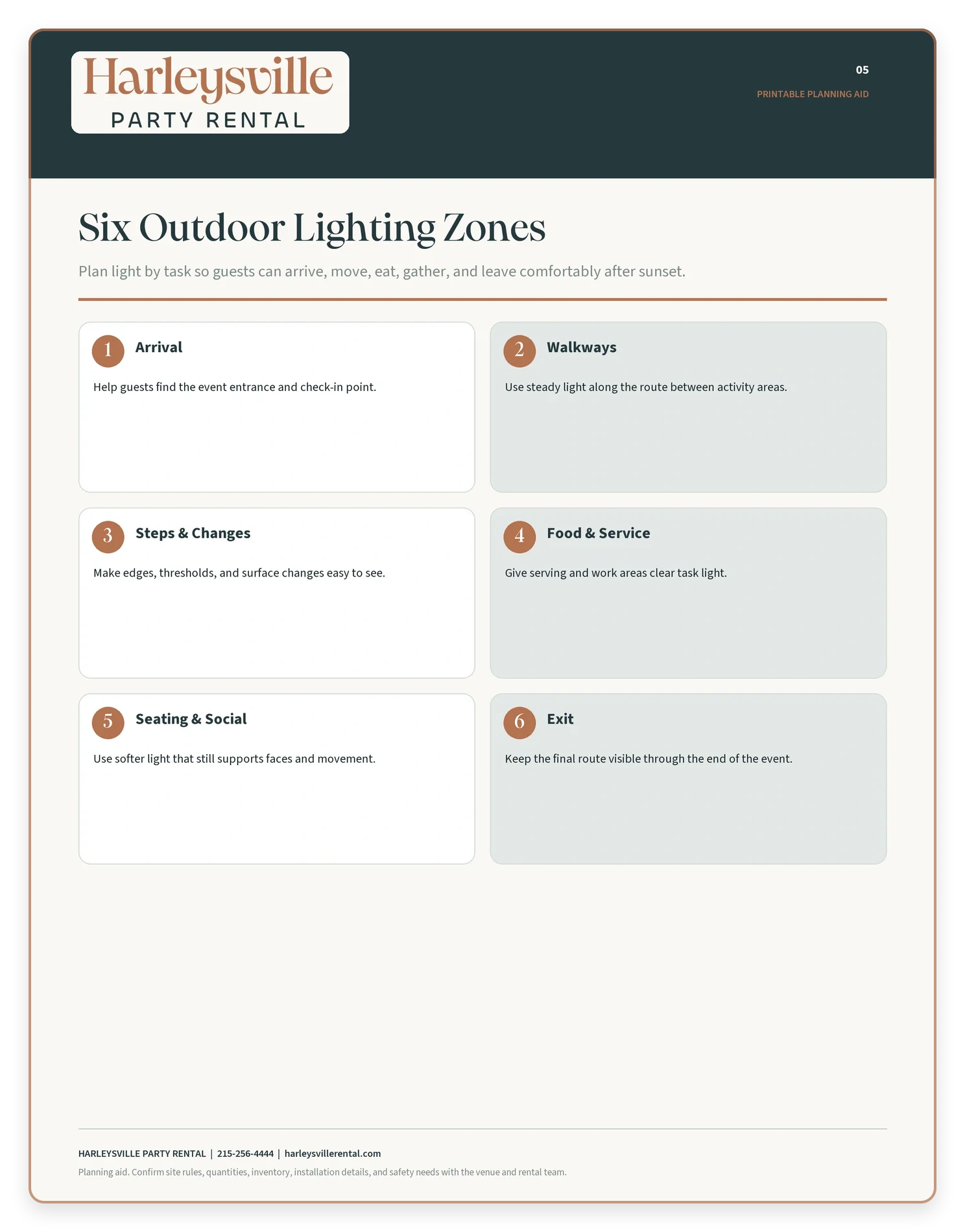
Open the full-resolution planning guide to print or save.
Follow a practical after-dark review
An after-dark test is one of the most useful checks a host can make. Do it before guests arrive and again after the setup changes from dinner to cleanup.
- Arrive as a guest would. Park or walk from the actual arrival point and see whether the entrance is obvious.
- Carry a plate. Walk from seating to the food and drink stations. Look for shadows, crowded turns, and cords near feet.
- Sit in every zone. Check a dining chair, a tent edge, a conversation area, and any viewing area. Notice glare as well as darkness.
- Read the signs. Test welcome signs, restroom directions, parking instructions, and exit information after sunset.
- Walk the departure route. Confirm that the route to vehicles, rides, or pickup is visible and that staff know who will turn off or remove equipment.
This review is about guests’ experience, not electrical installation. If it exposes a power, equipment, or cable concern, pause and ask the appropriate qualified professional for advice.
Match the plan to fall conditions
Light, weather cover, and comfort should be discussed together. A fall gathering may start in daylight, cool down after sunset, and see wind or rain move through later. Sidewalls, fans, heaters, lighting, and power all affect how guests use a tent or outdoor area, but the right arrangement depends on the specific structure, site exposure, forecast, and manufacturer guidance.
HPR’s seasonal page recommends reserving weather-specific items six to ten weeks before a seasonal gathering, then finalizing power, lighting, and traffic flow three to five weeks before. Use those ranges as a reason to start the conversation early, not as a guaranteed lead time. Ask for confirmation of current availability for the event date.
The Seasonal & Holiday Gatherings page is a useful starting point for discussing lighting alongside shelter and weather options.
What to include in an event-lighting quote request
Give the rental team enough detail to understand the night plan. Share the date, site address, guest count, event hours, arrival and end times, venue type, tent or seating plan, and a simple drawing or photos of the space. Add the locations of power sources, food service, walkways, parking or drop-off, and any steps or gates. Describe the purpose of each zone: arrival, path, dining, service, tent perimeter, or accent.
A clear request makes it easier to discuss delivery, setup, and site conditions before event day. Keep the map and notes available when you speak with a rental professional.

Frequently asked questions
When should outdoor event lighting be planned?
Plan it when you choose the event hours and layout. For a fall event near Harleysville, sunset arrives earlier as the season progresses, so an afternoon gathering can still need a full evening route and service plan.
See HPR’s rental booking guide for general lead-time planning.
What areas need light first?
Arrival, walking routes, steps, tent entries, restrooms, and food or beverage service come first. Accent lighting can follow after guests can move and use the event space comfortably.
Can lighting be added after the rest of the setup is placed?
Some additions may be possible, but the safer plan is to address lighting before furniture, tents, food stations, and power demands are fixed. This gives the rental team a clearer view of access, routes, and power needs. Confirm availability for your date.
Do I need a generator for outdoor event lighting?
It depends on the site, available power, total equipment load, distance, and the event plan. A qualified professional should review the site-specific power plan. Do not estimate electrical capacity on your own.
Ready to plan lighting for your fall gathering?
Request a quote from Harleysville Party Rental with your date, event hours, site details, and lighting-zone map. Ask which currently available options fit the event and how delivery and setup can be planned.