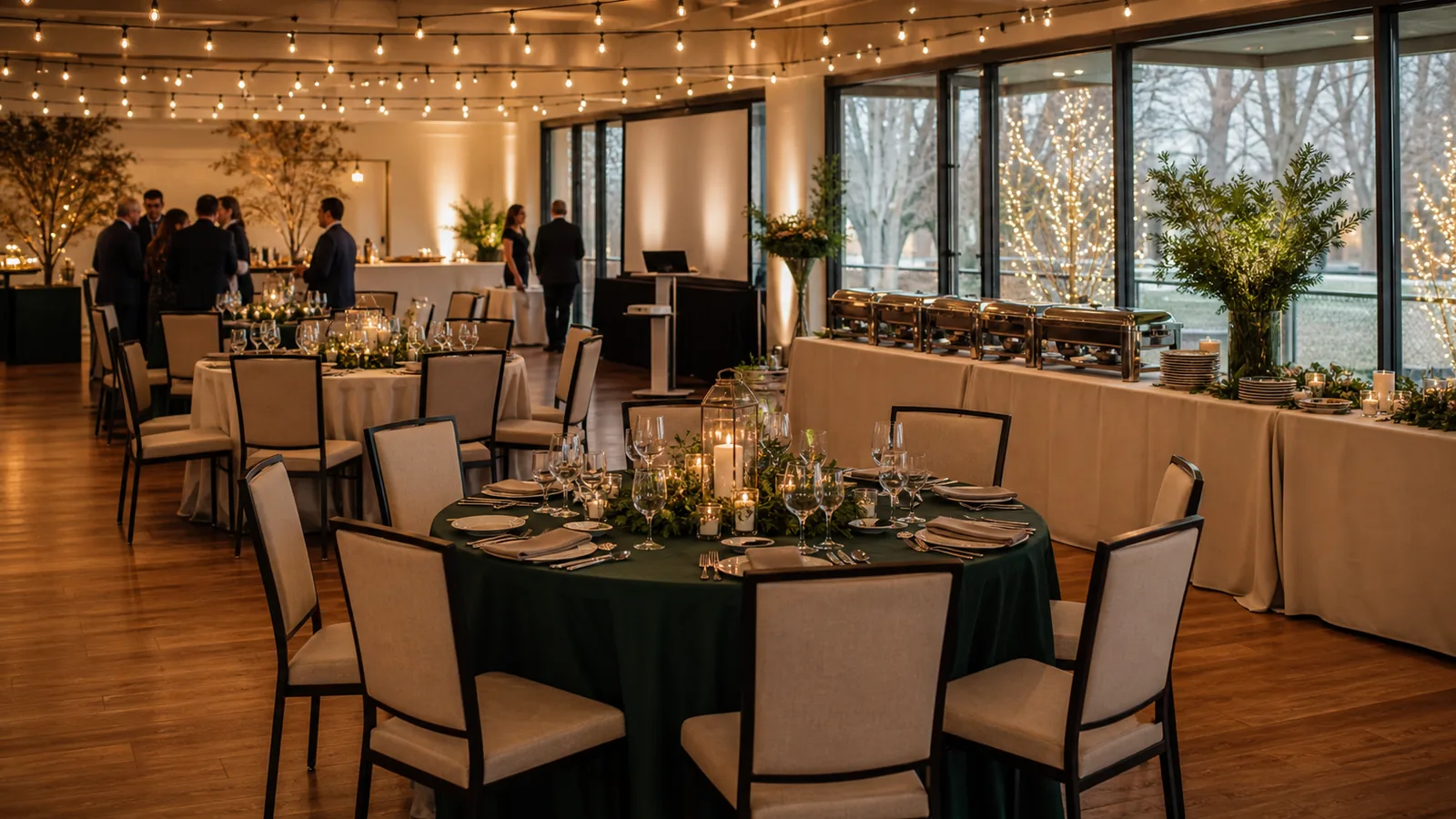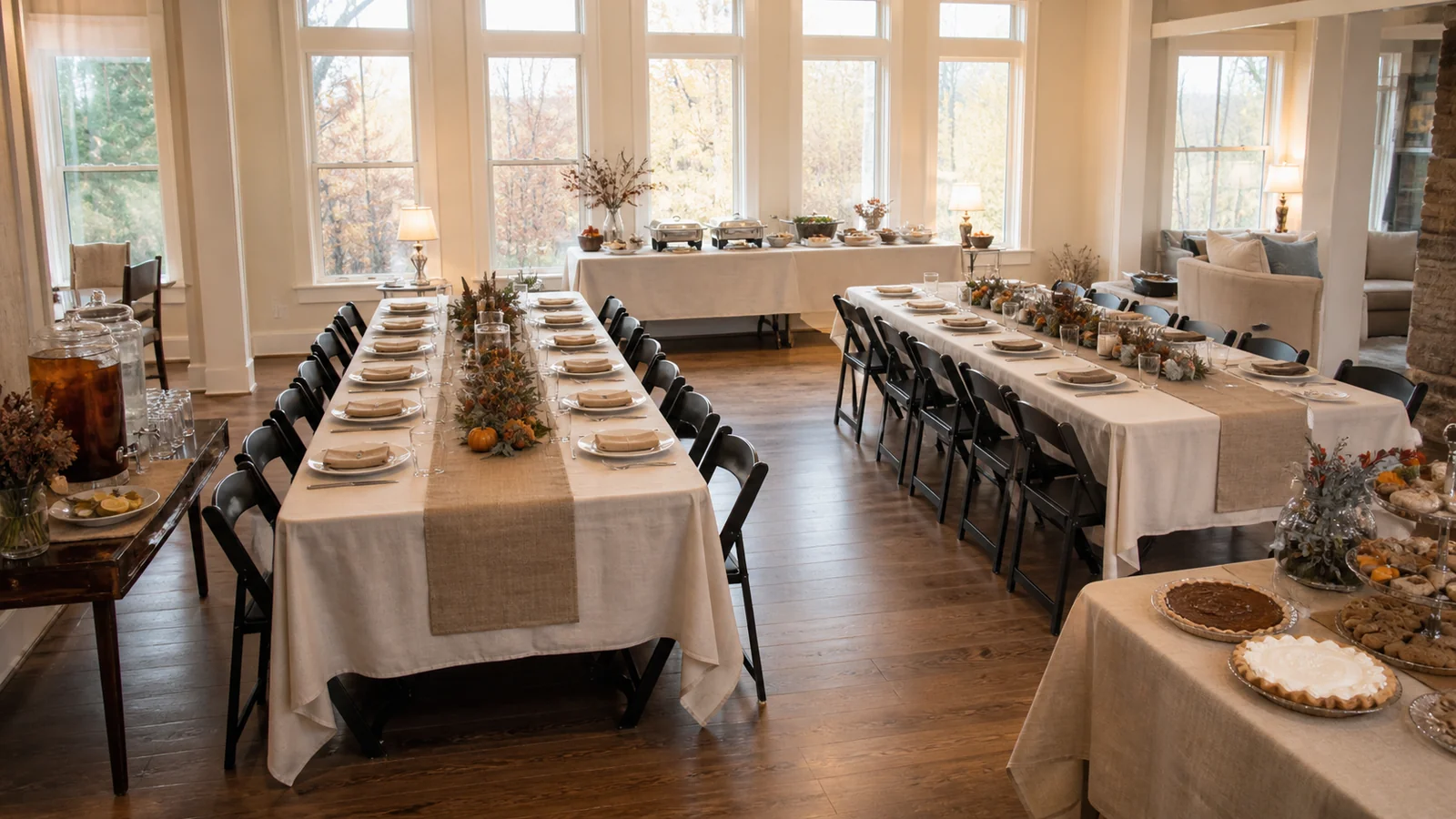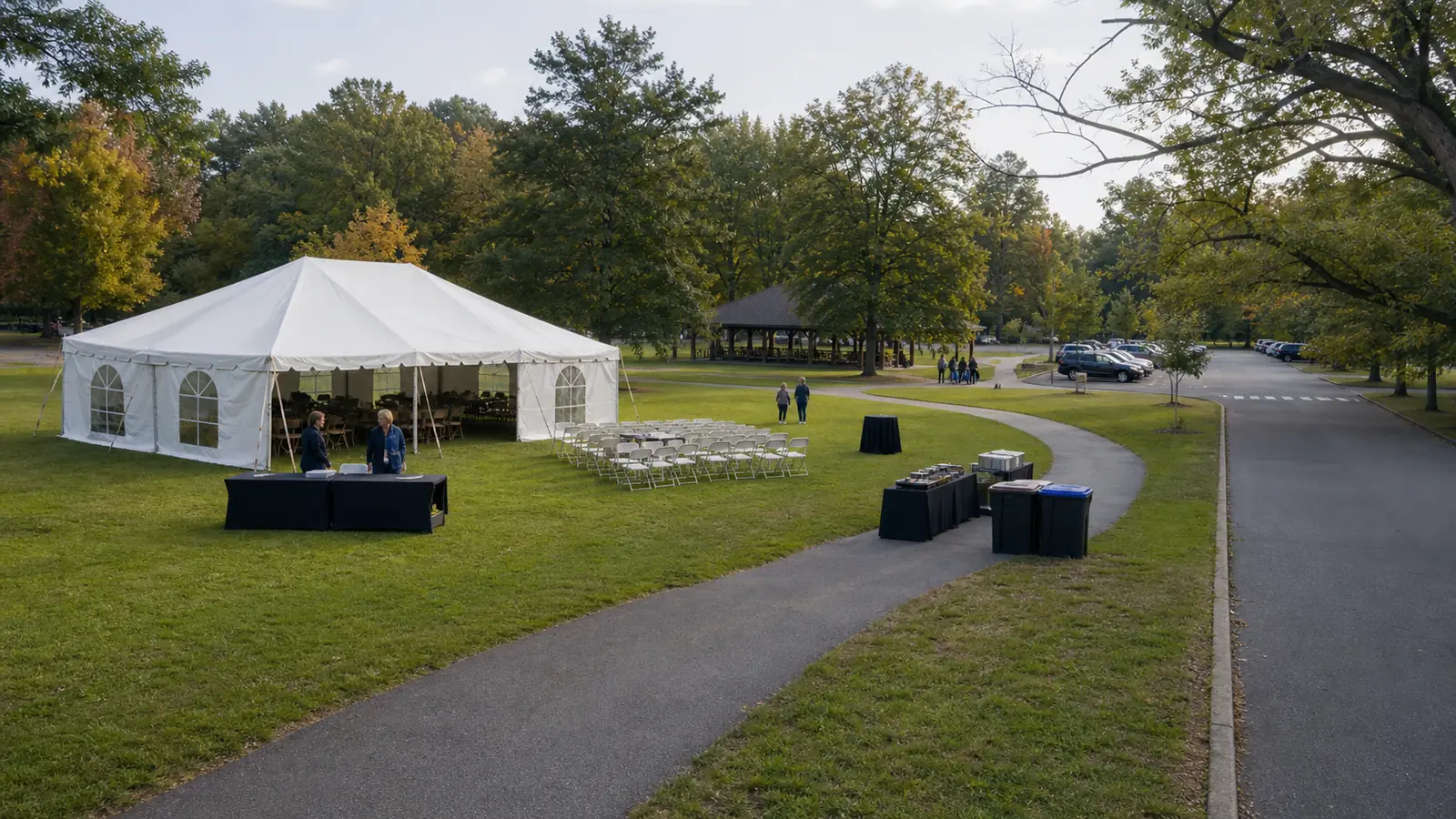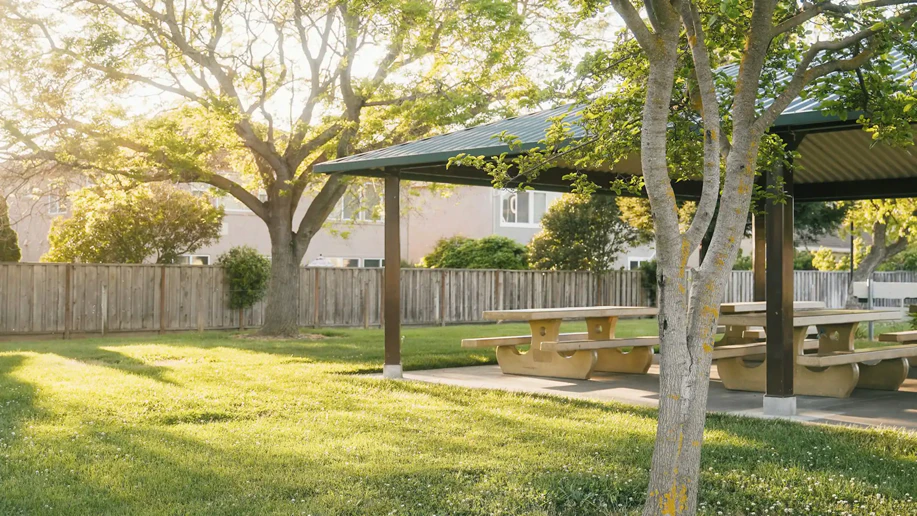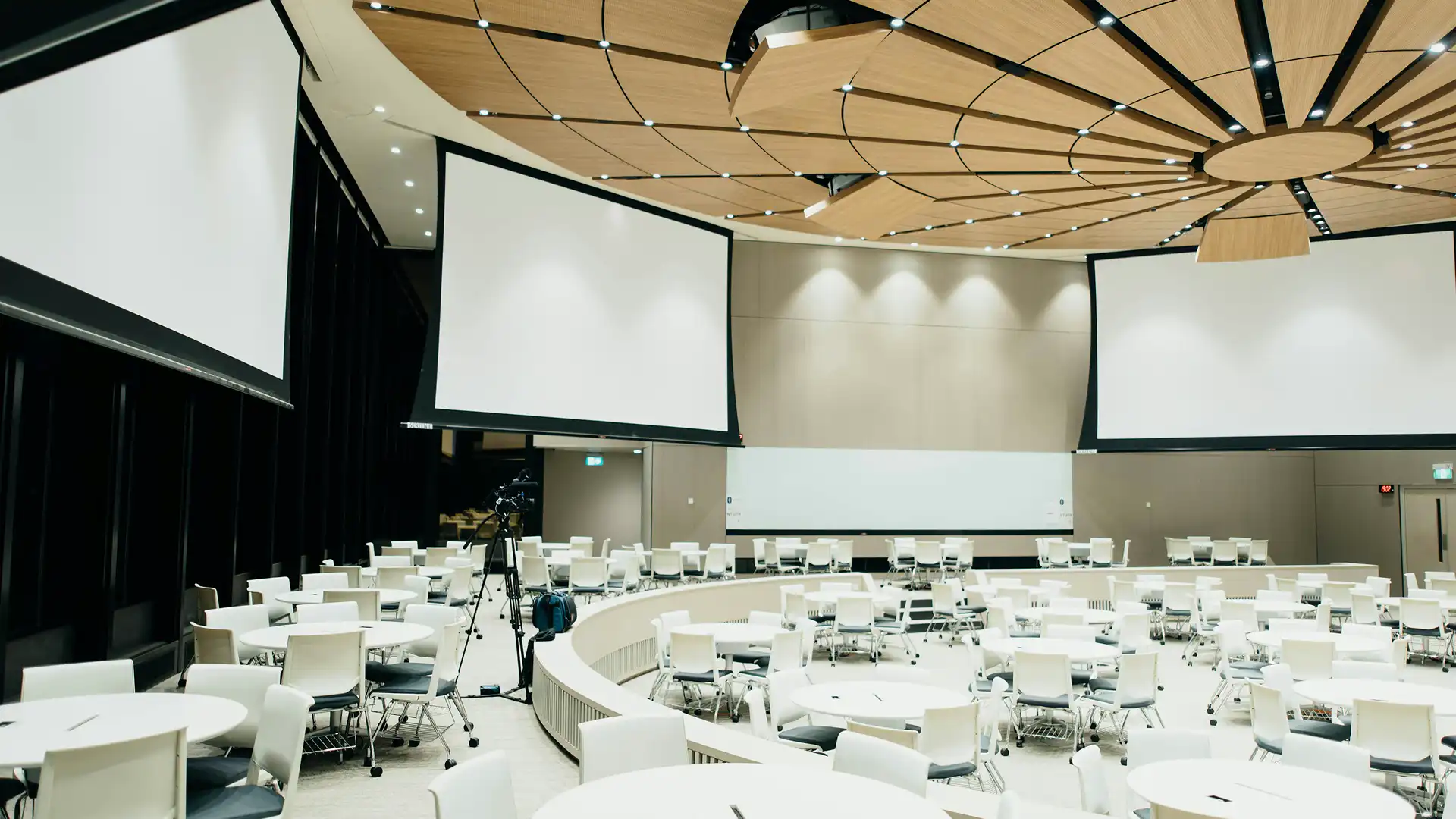


A school fall festival can look busy and still feel easy to navigate. The difference usually comes from the site plan. When families know where to check in, where games begin, where food lines form, and where to find a seat, volunteers spend less time giving directions and more time helping the event run.
Start planning before the rental list. A site plan is a working map that connects school property rules, guest flow, volunteer posts, equipment, and a rain decision. It should show how a child, caregiver, teacher, visitor, vendor, and delivery driver move through the event without avoidable crowding.
This guide is written for PTO teams, booster clubs, school staff, and nonprofit organizers in Montgomery County. It helps you prepare a useful first layout, then confirm facilities rules, accessibility needs, delivery access, supervision, and equipment availability with the people responsible for your event.
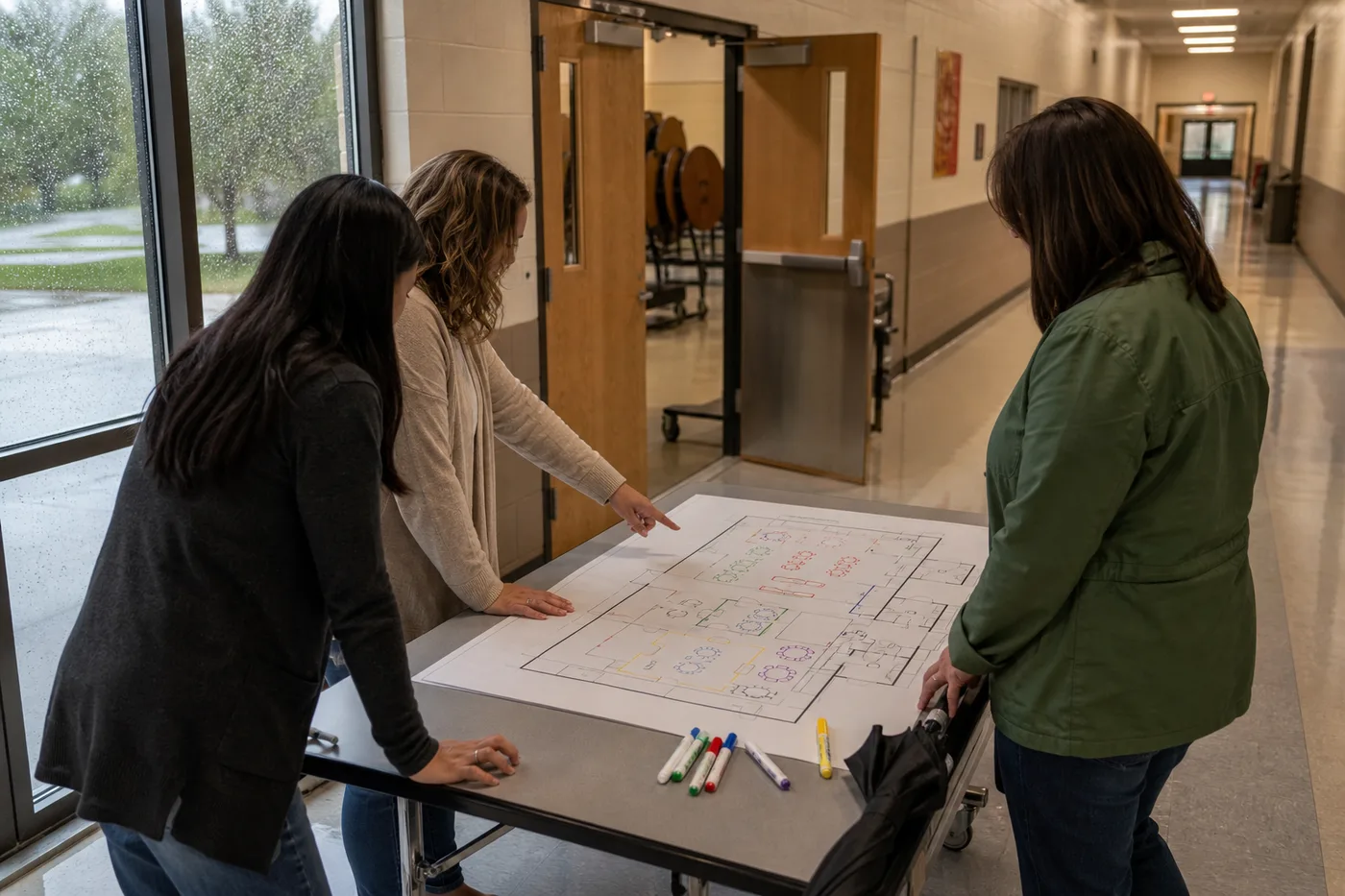
Begin with a short site walk
Invite the school facilities contact, event lead, safety lead, and any activity coordinator to walk the property together. Bring a printed aerial image or campus map and note the details that change the setup:
- Main guest entrance, accessible entrance, and any gates that will be open
- Parent drop-off, bus loops, staff parking, and delivery route
- Grass, pavement, fields, slopes, trees, and drainage concerns
- Restrooms, water access, electrical locations, and indoor backup rooms
- Fire lanes, emergency gates, hydrants, and routes that must remain open
- Locations where tents, stakes, weights, signs, or generators may be restricted
Ask the school to identify the person who can answer property questions on event day. Put that contact, the rental contact, and the weather decision owner on the same planning sheet.
Place zones in the order guests need them
Most family events work well with four public zones, arrival, activities, food, and seating, plus two support zones for volunteers and weather. Giving every zone a job avoids the familiar scene where a popular game, a snack line, and a registration table all compete for one patch of pavement.
Check-in should be the first clear stop
The check-in area belongs near the guest entrance, with enough open space for the largest expected arrival wave. Choose whether families need tickets, wristbands, a sign-in, payment, waivers, a map, or only a welcome greeting. Each extra task adds time per guest, so separate jobs across adjacent tables when possible.
Set up the line so late arrivals do not block families who are still deciding where to park or walk. A tent can help protect volunteers, paper materials, and devices from weather, depending on the approved location. Keep a second route open for families with strollers, wheelchairs, or mobility devices. A small information table can also handle lost-and-found, event questions, and volunteer check-in without stopping the main line.
Use signs to answer the questions people ask before they ask them: where to check in, where games are, where food is, where restrooms are, and when the event ends. Large, short labels work better than a crowded poster.
Put games where queues have room to breathe
Games create energy, sound, and waiting lines. Put them in an area with space for both the activity footprint and a queue that does not spill into the main path. Group similar age ranges together if that makes supervision easier, and leave visible gaps between attractions so adults can see entry and exit points.
For lawn games, you may need tables for prizes, sign-up sheets, or materials, along with chairs for volunteers. For inflatables or other staffed attractions, use the provider’s rules, the school’s requirements, and an assigned operator plan. Every attraction needs a named adult responsible for opening, closing, monitoring capacity, and pausing the activity if weather changes.
Do not route food traffic through the game area. A child carrying a drink should not need to walk past a queue of active participants to reach a table.
Give food service its own route
Food is usually the slowest-moving part of the event. Design it as a mini-route: order or ticket point, pickup, condiments if used, beverage station, seating, trash, and handwashing or sanitizer point as appropriate. A vendor needs enough working room for its own service rules, equipment, staff, and supply storage. Ask before placing a line across a fire lane, doorway, or accessible route.
Tables can separate payment, pickup, drinks, desserts, and volunteer supplies. A tent may provide cover for volunteers or a serving station if the school and provider approve the location. Keep cords and any power equipment out of the guest route. If power is required, tell the rental provider what equipment will connect, where it will sit, and when it operates. That information is far more useful than simply asking for “some power.”

Create a seating zone that supports families and staff
Seating serves more than eating. It gives caregivers a place to regroup, provides a rest point for older family members, and gives volunteers somewhere to take a timed break. Put tables and chairs near food, yet preserve clear routes through and around the area. Choose a location where volunteers can see the public space without sitting in the center of a game queue.
If you plan announcements, a prize drawing, performances, or a short welcome, define the audience area on the map. Decide whether people will stand, sit in rows, gather around a stage, or stay at tables. HPR’s live schools page lists tables, chairs, sound systems, microphones, lawn games, inflatables, lighting, generators, and signage stands among items it can discuss for school events. Treat the list as a starting point, then confirm what fits the program, site, and date.
HPR’s Schools & Non-Profits page provides a starting point for the school’s equipment and setup discussion.
Keep a support zone out of guest traffic
A festival has operations beyond public areas. Set aside a staff-only point for volunteer check-in, radios, schedules, spare supplies, first-aid coordination, lost-child procedure, and an event lead. One table under cover can be enough for a small event, provided it is not hidden from staff or placed in a public line.
Make a separate list of volunteer posts. At a minimum, consider arrival, each active attraction, food-line support, seating and trash checks, floaters, and an event lead. Give every post a start time, break plan, emergency contact process, and the name of the person who takes over if a volunteer must leave. Volunteers do better when they know their zone, not simply “help wherever needed.”
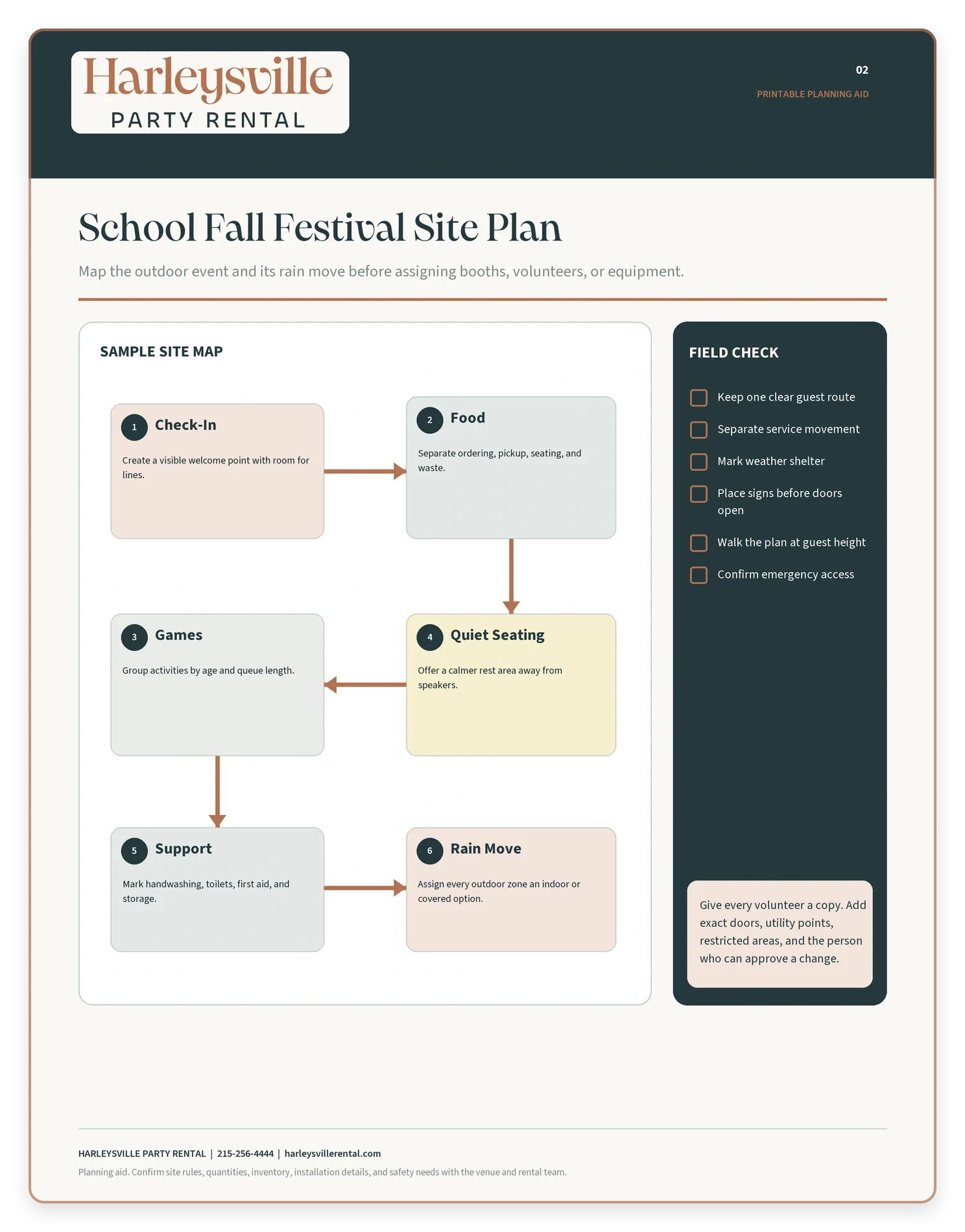
Open the full-resolution planning guide to print or save.
Design the rain version at the same time
Rain planning works when it changes the map, not when it adds a vague note. Make a second version of the plan with a clear trigger, such as a forecast check at a specific time or a decision from the school administrator. Identify what moves indoors, what remains outside under approved cover, what pauses, and what gets cancelled.
Consider these rain-plan questions:
- Which rooms can host check-in, food, or quieter games?
- Which activities cannot operate in rain or unsafe conditions?
- Where do wet umbrellas, strollers, and lines go without blocking doors?
- Can the school support the indoor electrical and custodial needs of the revised plan?
- When will the event team communicate the decision to families, vendors, and volunteers?
HPR’s schools page advises teams to plan zones for check-in, food, activities, and first aid six to eight weeks before an event, then to finalize layout and traffic flow two to four weeks before it. The same page notes tents require flat, open ground and may use staking or weighted options depending on surface. Those are useful prompts, but the school decides which areas and methods are permitted.

Build the rental request from the map
After the map is in place, make the equipment request zone by zone. This reduces omissions and gives suppliers a better way to understand why each item is needed.
Arrival and information
- Registration and information tables
- Chairs for check-in volunteers
- Approved tent cover if the location and weather plan call for it
- Signage locations and displays for maps or instructions
Activities
- Age-appropriate games or inflatables, subject to site and operating rules
- Tables for supplies, prizes, or activity materials
- Volunteer chairs, queue markers, and space for entry and exit
- Lighting if activities continue near dusk
Food, seating, and support
- Food-service tables and guest tables
- Chairs for dining and volunteers
- Trash cans, beverage stations, and handwashing or sanitizer needs
- Power, lighting, or generators only after load and route details are reviewed
- A staffed operations table and any approved weather cover
Compare the equipment list with the rental catalog, then ask the team to confirm site fit and availability.
Follow a seven-step school festival setup process
- Get property approval. Confirm school rules, indoor spaces, gates, access, and any restrictions before promising activities.
- Estimate peak attendance. Plan for the busiest thirty minutes, not only the total number of invited families.
- Draw public and support zones. Place check-in, games, food, seating, volunteer support, and rain alternatives.
- Trace the routes. Walk guest, stroller, wheelchair, vendor, delivery, and emergency routes on the map.
- Assign people to places. Give each activity, line, and support point a named lead and a backup.
- Request equipment by function. Share the date, timing, map, site surface, access photos, guest estimate, and weather version.
- Brief the team. Send the final map, contacts, volunteer assignments, and weather communication plan before setup begins.
FAQs
What should be on a school fall festival site map?
Show entrances, check-in, activities, food, seating, restrooms, accessible routes, volunteer support, emergency access, delivery route, utilities, and the rain version. Add a legend and simple arrows so the map works for first-time volunteers.
How much time should a PTO allow for rental planning?
HPR suggests school and nonprofit teams reserve key equipment six to eight weeks before the event and finalize layout two to four weeks before. Start the property and committee process earlier when approvals, large equipment needs, or fundraising decisions affect the plan. Confirm availability for the actual date.
Can tents be set up on a school field or parking lot?
Possibly, but the school must approve the location and surface method. HPR notes that tents require flat, open ground and can use staking or weights depending on the surface. Confirm site conditions, access, underground considerations, and property rules before arranging a setup.
Who decides if the event moves inside because of rain?
Name that person before the event, usually a school or event leader with authority over the property and program. Share the decision time and communication method with families, volunteers, vendors, and rental providers.
Ready to turn the map into a rental request?
Send Harleysville Party Rental your school-event date, map, guest estimate, access details, and rain version, then request a quote based on the setup you have approved.