

A successful Trunk-or-Treat has a simple promise: families can enjoy decorated vehicles, treats, and activities in a setting that feels easy to navigate. That promise depends less on how many trunks you recruit and more on the plan around them. Vehicles and pedestrians need separate movement patterns. Check-in needs a clear home. Volunteers need specific posts. Guests need room to move, rest, and find the next activity.
This guide helps schools, faith groups, neighborhood teams, and community organizers build that plan. It does not replace property rules, traffic direction, fire requirements, insurance requirements, supervision plans, or local approvals. The organizer should confirm those items with the property owner and the relevant public-safety or municipal contacts. HPR can help plan rentals and site needs, subject to current availability.
Begin with the site, then invite the trunks
Before announcing the event, walk the property with a sketch or printed aerial view. Find the vehicle entrance, vehicle exit, pedestrian arrival point, accessible route, restrooms, emergency access route, and rain alternative. The safest-looking row of decorated trunks is not useful if families must cross active vehicle traffic to reach it.
Choose a site lead who can make decisions on the day. That person should know where volunteers report, where a vehicle should go if it arrives late, and who to call if the plan must change. Ask the property owner about parking, delivery access, tent permissions, stakes or weights, power, quiet hours, waste, and any required documents before equipment is ordered.
Draw a vehicle loop and a family route
A vehicle loop should have a defined entry and exit. A family route should be separated from that loop with distance, barriers, or another method approved for the site. Do not allow arriving or departing vehicles to move through an area where families are collecting treats. If a trunk needs to leave early, the event plan should say who authorizes that movement and how the pedestrian area is cleared.
For an organized event, complete the vehicle setup before opening the pedestrian route. Keep any vehicle movement controlled under the organizer’s rules, and follow site and public-safety direction for every traffic-control plan.
Give every part of the event a zone
The best event maps use simple labels. They do not need to be pretty to be useful. Mark each area with a purpose and a responsible volunteer. A basic layout may include:
- Check-in and welcome: the first stop for waivers, maps, wristbands, or information.
- Trunk route: parked and decorated vehicles after vehicle movement has ended.
- Activity area: games, crafts, or a rental attraction, placed away from the arrival path.
- Food and beverage area: separate from the trunk route so lines do not block families.
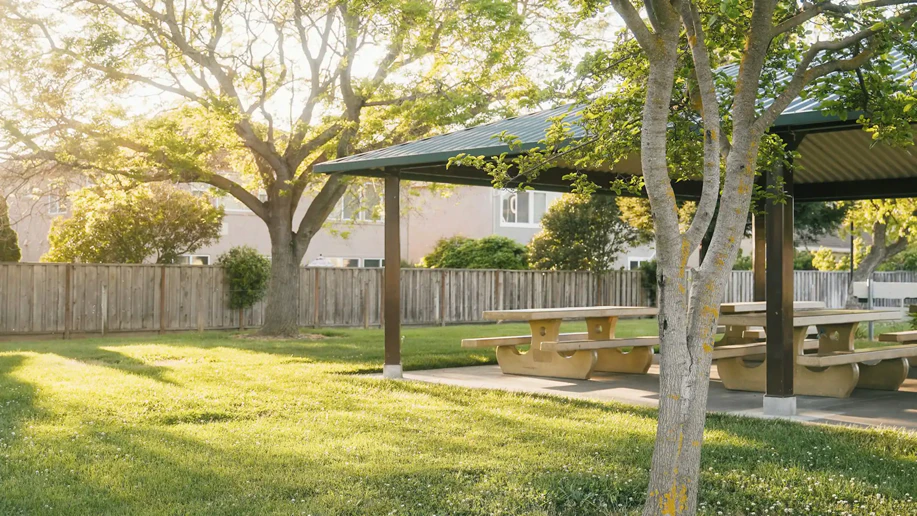
- Seating and quiet space: a place for adults, younger children, or anyone who needs a break.
- Volunteer and service area: supplies, radios, first-aid resources, and event leaders.
- Accessible route and emergency access: kept open throughout the event.
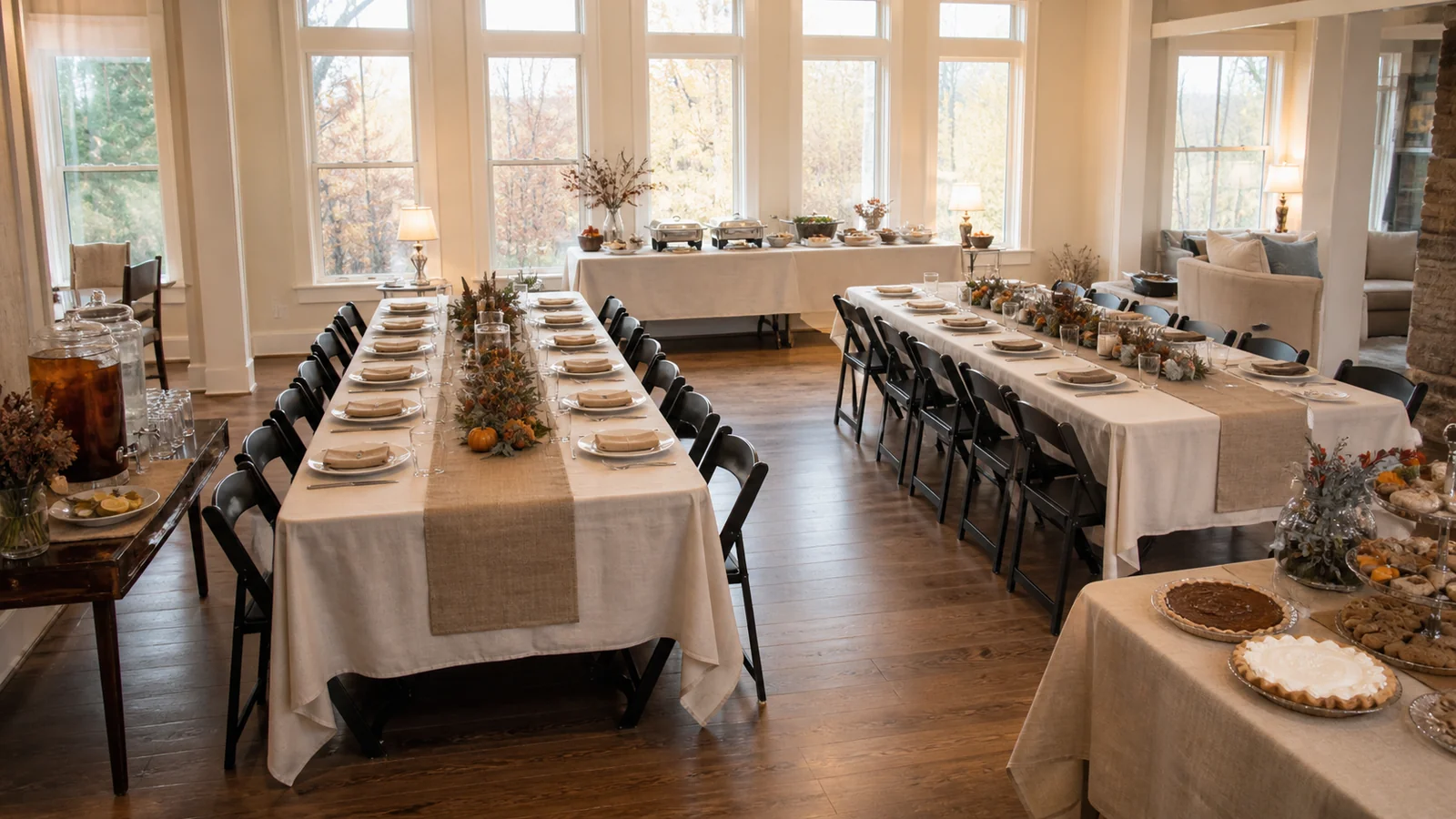
If you are renting a tent, table, chairs, games, lighting, or crowd-control items, mark the location of each item on the first draft of the map. That gives the rental team a chance to spot delivery or spacing concerns. It also prevents a common problem: ordering good equipment without giving it a workable place.
Plan for accessibility and rest
An accessible route is more than a note in a planning file. Consider surface changes, curbs, cords, narrow turns, lines, and the distance between rest areas. The U.S. Access Board provides the ADA Standards as a reference for built environments. The property owner can explain site-specific requirements and accessible parking or route expectations. Keep temporary signs, tables, decorations, and waiting lines out of the route.
Offer a seating or low-stimulation spot that is easy to find. It can be simple: a few tables and chairs away from the main line, supervised as appropriate for the event. This choice helps parents, grandparents, volunteers, and children who need a pause without forcing them to leave the event.

Use the rental catalog to identify possible equipment for each zone, with staffing and site permission decided first.
Build check-in that reduces confusion
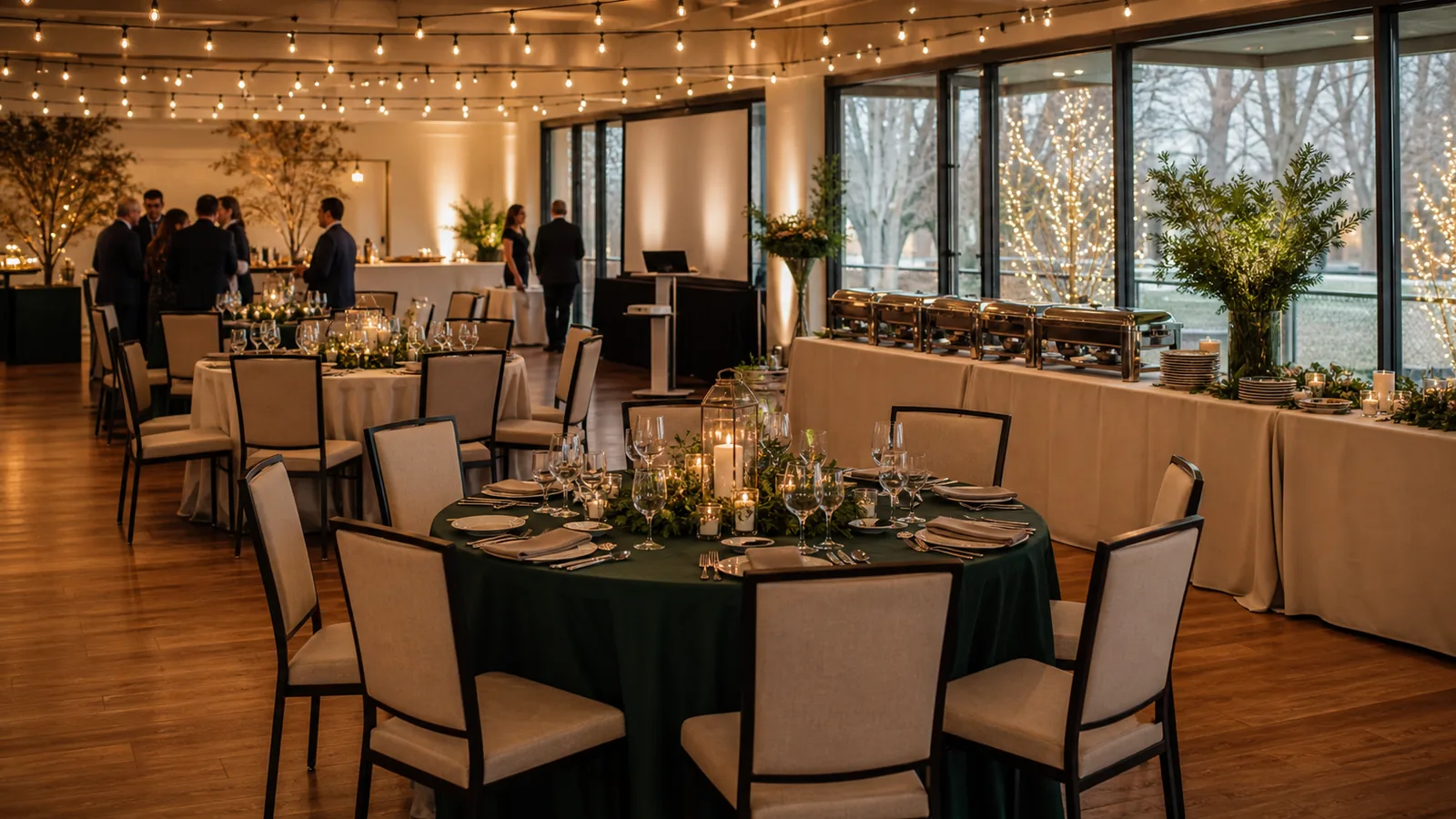
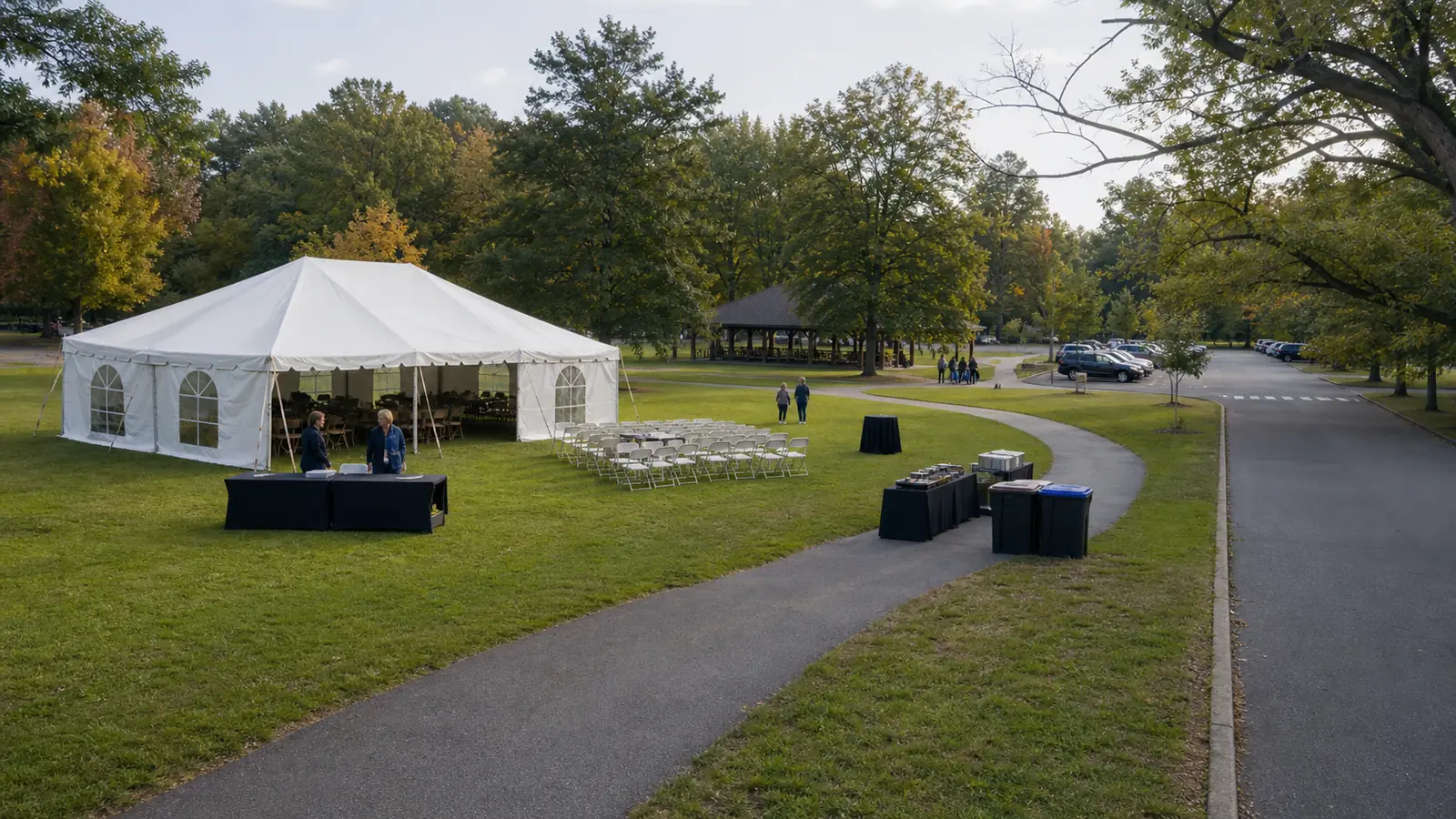
Check-in is where guests learn the rules of the event. Place it before the trunk route, not halfway through it. A tent can provide weather cover, and tables can give volunteers room for signs, supplies, and a clear guest line. Confirm the tent size, installation surface, and current availability with HPR rather than assuming a standard setup fits every property.
At check-in, tell families where to start, where to exit, which activities require adult supervision, and what to do if they become separated from their group. Use large, plain signs. Assign one volunteer to answer questions and another to watch the line. For a school or youth event, the organizing group should set and communicate its own youth-supervision and photo policies.
Treat lighting as part of the route
Halloween events often begin in daylight and end after sunset. Lighting belongs in the first map, especially at parking, check-in, the trunk route, food service, restrooms, and exits. The goal is visibility, not a dramatic effect. Guests should be able to see a route change, a step, a sign, and the person beside them.
Ask the venue and rental team how lighting and power can be planned safely for the specific site. Keep cords and equipment away from pedestrian routes as directed. Do not add power strips, change connections, or move rental electrical equipment during the event without the responsible provider’s direction. If a generator is proposed, remember that the U.S. Consumer Product Safety Commission says portable generators produce carbon monoxide and must operate outdoors, away from doors, windows, and vents. The provider and site authority should determine the actual equipment location and use.
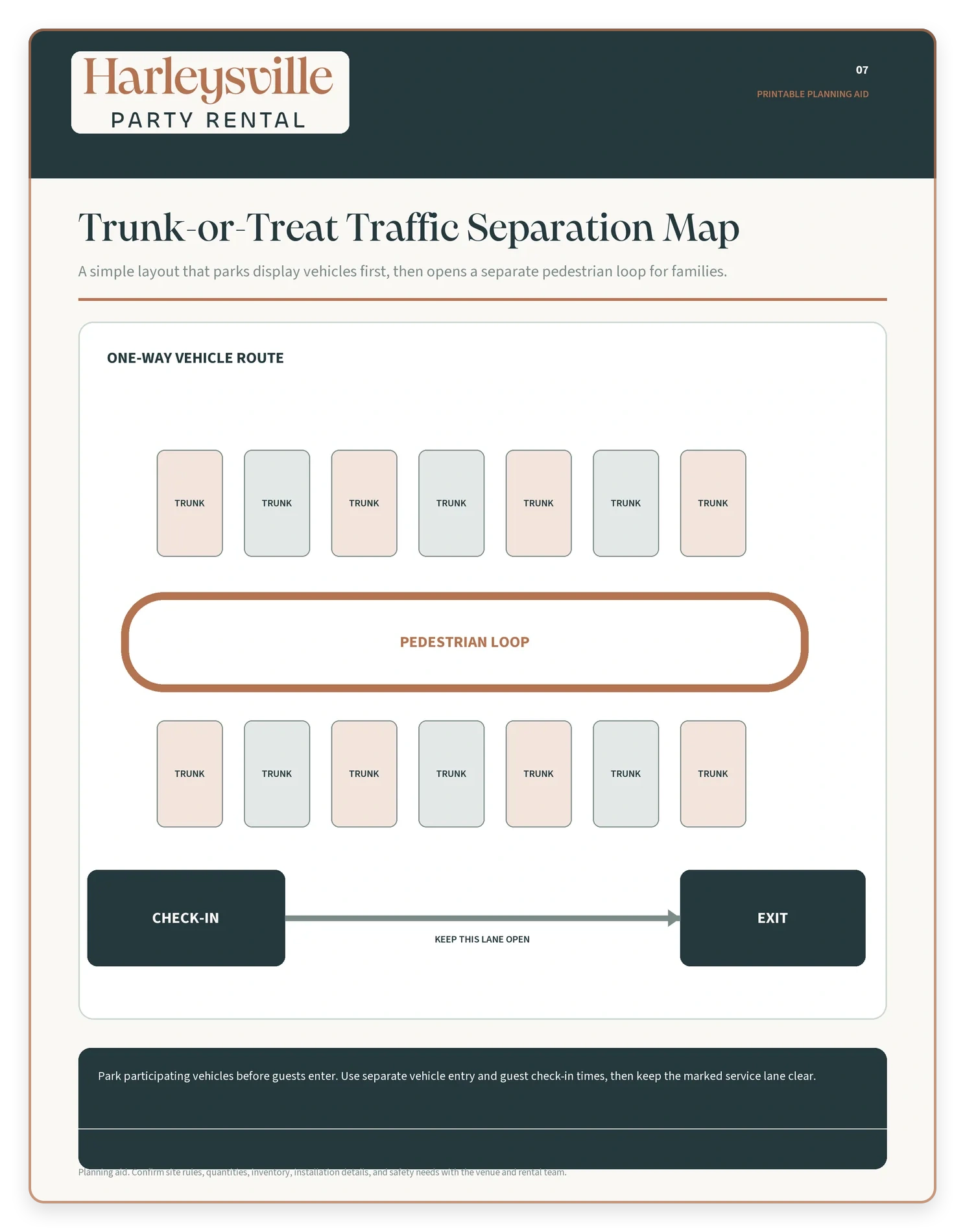
Open the full-resolution planning guide to print or save.
Choose activities with supervision in mind
Extra activities can help spread out the crowd, but each one adds a staffing question. A game table may need one volunteer. A craft table may need supplies, cleanup, and adult oversight. An inflatable or other rental attraction may have item-specific rules, setup limits, and staffing expectations. Ask HPR for the current product information and follow the directions that come with the item.
Place high-energy activities outside the trunk line. Give guests a visible way to enter and leave each activity zone. If children of different ages are expected, consider separate activity times or areas rather than asking older and younger children to use the same activity at once. The event organizer remains responsible for supervision, behavior expectations, and the attendee plan.
Create a rain version before the forecast arrives
Rain planning is not a last-hour decision. Write the alternate layout when you build the first one. If the event moves indoors, decide which activities come inside, how families will enter, and whether the trunk route becomes a table-based treat route. If it remains outdoors with tents, ask the property owner and rental team what is permitted and suitable for the site.
Do not assume a tent makes every outdoor activity workable in severe weather. The organizer should monitor local conditions, follow property and public-safety direction, and have a communication plan for postponement, cancellation, or early departure. Share that plan with volunteers before guests arrive.

A six-step setup sequence
- Confirm the property. Get written or documented approval for the date, event footprint, parking, rentals, and any required review.
- Map vehicles and pedestrians separately. Mark vehicle entry and exit, then draw a family route that does not cross moving traffic.
- Assign event zones. Put check-in, trunks, activities, food, seating, volunteer space, accessible travel, and emergency access on the same map.
- Collect rental details. Share site photos, measurements, delivery access, event hours, and the plan for tents, tables, chairs, lighting, games, or crowd control.
- Staff the map. Give each volunteer post a job, shift, contact method, and clear instructions for guests.
- Walk it before opening. Check signs, routes, lighting, equipment, exits, and the rain plan with the site lead and the people responsible for the event.
Make the rental request useful
Rental planning goes faster when the request includes details a catalog cannot see. Include the event date, location, guest range, set-up and event hours, property surface, delivery route, equipment list, and a simple map or photos. Name the purpose of every item. “Three tables for check-in” is more useful than “three tables.” “Lighting for the trunk route and exit” gives a different starting point than “some lights.”
HPR’s Schools & Non-Profits and Seasonal & Holiday Gatherings pages show that the company serves event types that may need tents, tables, chairs, games, lighting, and more. Inventory varies, so reserve decisions should follow a current quote and site review. The organizer should keep control of rules, volunteers, permits, and safety planning.
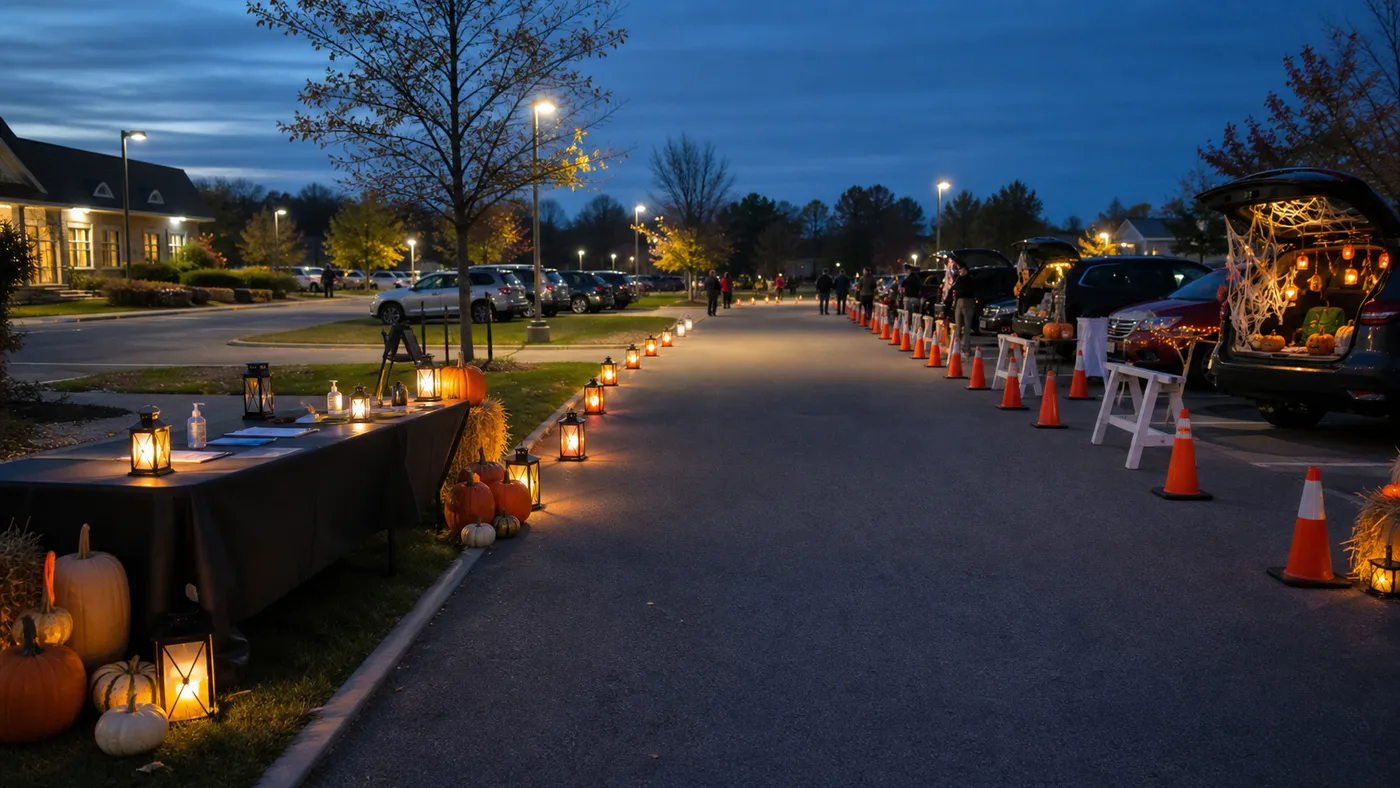
HPR’s Schools & Non-Profits and Seasonal & Holiday Gatherings pages provide starting points for the equipment discussion.
FAQs
How should I arrange cars for a Trunk-or-Treat?
Use a vehicle arrangement approved for the site that gives cars a defined entry and exit and keeps families out of the vehicle-movement area. Complete vehicle parking before opening the pedestrian route, then follow the organizer’s and property owner’s direction for any late departure.
Do we need a tent for check-in?
A tent may help with weather cover and a visible welcome point. The right option depends on the space, surface, weather plan, venue rules, and current availability. Share a map and site photos when requesting a quote.
How can we make a Halloween event more accessible?
Ask the property owner about site rules, keep the accessible route clear, place seating where guests can find it, use readable signs, and avoid cords or queue lines across travel paths. The U.S. Access Board ADA Standards are a useful reference, but they do not replace site-specific direction.
What should volunteers know before guests arrive?
They should know their post, shift, event map, communication method, guest route, separation procedure, weather plan, and who makes day-of decisions. Give them a short written brief before the event opens.
Ready to map the event?
Bring HPR the date, site, guest estimate, event hours, a basic map, and the equipment you are considering. The team can discuss rental options that are currently available for your Trunk-or-Treat or community Halloween event. Request a quote to begin the equipment conversation.